
The four rentals worth buying instead
Most wedding advice is about trimming the flowers. These four are the line items where buying outright costs less than one night of hire, and three of them resell afterwards.
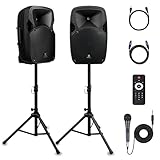 PRORECK Party 12 Powered PA System
A DJ is one of the biggest line items on any wedding budget. If someone you know can run a playlist, this is the difference between hiring one and not.
See it on Amazon →
PRORECK Party 12 Powered PA System
A DJ is one of the biggest line items on any wedding budget. If someone you know can run a playlist, this is the difference between hiring one and not.
See it on Amazon →
 Amazon Basics 46,000 BTU Patio Heater
Outdoor evening receptions live or die on this. Renting three for a night often costs more than buying two.
See it on Amazon →
Amazon Basics 46,000 BTU Patio Heater
Outdoor evening receptions live or die on this. Renting three for a night often costs more than buying two.
See it on Amazon →
 DazzlingStage Wireless Battery Uplights (6)
Battery uplights need no cable runs, so a venue that bans taped-down leads still lets you use them. The cheapest thing that changes how a room photographs.
See it on Amazon →
DazzlingStage Wireless Battery Uplights (6)
Battery uplights need no cable runs, so a venue that bans taped-down leads still lets you use them. The cheapest thing that changes how a room photographs.
See it on Amazon →
 Efavormart 8 ft Gold Hexagonal Arch
Heavy-duty metal rated to 100 lbs, and it resells afterwards, which is the part hiring one never does.
See it on Amazon →
Efavormart 8 ft Gold Hexagonal Arch
Heavy-duty metal rated to 100 lbs, and it resells afterwards, which is the part hiring one never does.
See it on Amazon →
As an Amazon Associate we earn from qualifying purchases. Prices and availability change; check before you buy.
The Wedding Payment Landscape Has Changed
If you recently got engaged, one of the first questions that likely crossed your mind was "who pays for this?" The answer is more complex today than it was for your parents or grandparents, and the traditional rules that once governed wedding finances have largely given way to a more flexible, often more equitable approach.
Understanding both traditional expectations and modern realities will help you navigate what can be one of the most sensitive aspects of wedding planning. Money conversations are never easy, but approaching them with knowledge, tact, and clear communication can prevent misunderstandings and preserve family relationships throughout your engagement.
The Modern Reality
of couples now pay for their entire wedding themselves, without any parental contributions
This statistic represents a seismic shift from just a generation ago, when the bride's family paying for the wedding was the default expectation. Several factors have driven this change: couples are marrying later in life when they have established careers, families have become more geographically and financially diverse, and the cultural expectation that a bride's family "gives her away" along with a financial contribution has faded.
Yet traditional expectations persist in many families, and understanding where these customs originated can help you have more productive conversations with parents and in-laws about wedding finances.
As an Amazon Associate, we earn from qualifying purchases.
Wedding Budget Essentials
 Wedding Planner & Organizer
 LED String Lights (100ft)
 Bridal Emergency Kit
 Champagne Flutes Set
Traditional Wedding Payment Breakdown
Traditional wedding payment customs developed centuries ago when weddings were smaller, less expensive affairs and when a bride was literally being transferred from her father's household to her husband's. The financial arrangements reflected this transfer of responsibility. While these traditions no longer reflect modern relationship dynamics, many families still use them as a starting framework.
What the Bride's Family Traditionally Pays For
| Expense Category | Typical Cost Range | Notes |
|---|---|---|
| Ceremony venue and officiant | $500-$5,000+ | Church fees, ceremony site rental |
| Reception venue | $3,000-$25,000+ | Including rental fees and setup |
| Catering and bar service | $5,000-$30,000+ | Food, beverages, service staff |
| Wedding flowers and decor | $1,500-$8,000+ | Ceremony and reception florals |
| Photography and videography | $3,000-$10,000+ | Capturing the day's memories |
| Music and entertainment | $1,000-$6,000+ | DJ, band, ceremony musicians |
| Wedding cake and desserts | $400-$2,000+ | The traditional wedding cake |
| Wedding invitations | $300-$2,000+ | Invitations, programs, signage |
| Bride's wedding attire | $1,000-$5,000+ | Dress, veil, accessories |
| Transportation | $500-$2,000+ | Limousine or car service |
What the Groom's Family Traditionally Pays For
| Expense Category | Typical Cost Range | Notes |
|---|---|---|
| Rehearsal dinner | $2,000-$10,000+ | Dinner for wedding party and families |
| Marriage license | $25-$150 | Varies by state/county |
| Officiant fee | $200-$1,000 | Clergy or officiant honorarium |
| Bride's bouquet | $150-$400 | Yes, traditionally the groom's family |
| Boutonnieres and corsages | $100-$300 | For immediate families |
| Honeymoon | $3,000-$15,000+ | Post-wedding travel |
| Groom's attire | $200-$1,500+ | Suit or tuxedo, accessories |
Historical Context: These traditions developed when the average wedding cost was a fraction of today's prices and when weddings typically happened in the bride's hometown church with a reception in a church hall or family home. The bride's family was essentially hosting the community celebration, while the groom's family contributed to starting the new household.
Modern Payment Splits: How Couples Actually Divide Costs
Today's couples have largely abandoned strict traditional divisions in favor of more practical arrangements that reflect each family's financial situation and willingness to contribute. Here are the most common modern approaches to splitting wedding costs.
The 50/50 Family Split
Both families contribute equally, regardless of traditional roles. This works well when both families have similar financial means and want equal involvement in the celebration.
The Three-Way Split
The couple and both sets of parents each contribute roughly one-third. This acknowledges both family support and the couple's financial independence.
Proportional to Ability
Each family contributes what they can comfortably afford, regardless of whether amounts are equal. Focuses on participation rather than parity.
Couple Pays All
The couple finances the entire wedding themselves. Provides complete creative control and eliminates any sense of obligation to contributors.
The Hybrid Approach: Category-Based Contributions
Many families find success assigning specific categories to different contributors rather than splitting overall costs. This gives each party a clear area of responsibility and often connects contributions to what matters most to each family.
Advantages
- Clear ownership and boundaries
- Contributors can choose meaningful categories
- Easier to manage budgets separately
- Reduces conflict over shared expenses
Considerations
- Categories have vastly different costs
- Requires upfront coordination
- Can create uneven contributions
- May need adjustment as plans evolve
For example, the bride's parents might cover the venue and catering, the groom's parents handle the rehearsal dinner and photography, and the couple pays for flowers, music, and honeymoon. This approach works particularly well when families have strong preferences about certain elements.
Having "The Money Talk" with Parents
Perhaps no conversation in wedding planning causes more anxiety than discussing finances with parents. The key is approaching these discussions with sensitivity, clarity, and zero assumptions. Here's how to navigate this delicate territory.
When to Have the Conversation
Timing matters significantly. Have initial financial conversations early in your engagement, before you start touring venues or falling in love with vendors. Knowing your total budget upfront prevents the heartbreak of planning a wedding you can't afford.
Choose a calm, private moment without distractions. A quiet dinner at their home or a relaxed weekend visit works better than a crowded holiday gathering or rushed phone call. Both partners should be present when discussing contributions with each set of parents.
Scripts for Different Scenarios
Opening the Conversation
When Parents Offer a Specific Amount
When Parents Want to Contribute but Haven't Named an Amount
When You Suspect Parents Cannot Contribute
Navigating Unequal Contributions
In most modern weddings, parental contributions are not equal. One family may have greater financial means, one may have stronger feelings about contributing, or one may choose not to participate financially at all. Handling this disparity with grace is essential to preserving family relationships.
The Golden Rules
Keep amounts private. Never share what one family contributed with the other family. This information serves no purpose and can only create hurt feelings or competition.
Equal respect regardless of contribution. Both families should feel equally valued in the planning process and on the wedding day, regardless of financial participation.
Money does not equal decision-making power. Establish early that contributions are gifts, not investments that come with voting rights on wedding decisions.
Find non-financial ways for all families to participate. Ask one family to host the rehearsal dinner, another to arrange transportation, or both to contribute family traditions to the ceremony.
Thank everyone equally. Your wedding speech and written thank-you notes should express gratitude to both families regardless of contribution amounts.
Address disparities as a united couple. Any discussions about one family's contribution should happen with both partners present and on the same page.
Perspective Shift: Try to view contributions as gestures of love rather than dollar amounts. A family that contributes $2,000 when that represents a significant sacrifice is showing profound love. A family that contributes $20,000 when that's barely noticeable to them is also showing love, but in a different context. Both deserve equal gratitude.
When Contributions Come with Strings Attached
Perhaps the most challenging wedding finance scenario is when a generous contribution comes with expectations, demands, or conditions. This is more common than many couples expect, and handling it requires both diplomacy and self-awareness.
Common "Strings" Parents Attach
- Guest list additions: "We're giving you $15,000, and we expect to invite our 50 closest friends."
- Venue requirements: "We'll pay for the reception, but it has to be at our country club."
- Religious expectations: "Our contribution is contingent on a church ceremony."
- Tradition requirements: "We're paying, so we expect a traditional white wedding."
- Vendor preferences: "We want you to use our friend's catering company."
- Timeline demands: "We'll contribute, but only if you wait until next year."
How to Respond
Before reacting emotionally, take time to honestly assess each condition. Ask yourself: Is this truly unreasonable, or does it just differ from what we envisioned? Could we compromise? What would it mean to accept versus decline?
Your Options When Facing Conditions
Accept and Adapt
- Take the contribution with conditions
- Adjust your plans accordingly
- Works when conditions align somewhat with your vision
- Choose your battles wisely
Decline Gracefully
- Thank them for the generous offer
- Explain you need to plan your own way
- Offer alternative ways they can participate
- Be prepared for disappointment
Negotiating Conditions
Remember that once you accept money with conditions, renegotiating later becomes much more difficult. Have these conversations before deposits are made or invitations sent. Some couples find it helpful to write down agreed-upon expectations, not as a formal contract but as a reference that prevents misunderstandings.
Cultural Variations in Wedding Payments
Wedding payment traditions vary dramatically across cultures, and many couples today navigate expectations from multiple cultural backgrounds. Understanding these differences can help prevent misunderstandings and honor both families' traditions.
Chinese and Chinese-American Traditions
The groom's family traditionally pays for the majority of wedding expenses, including a bride price (pin jin) given to the bride's family. The bride's family typically covers the dowry and trousseau. Modern Chinese-American families often blend these traditions with American customs.
Indian Wedding Traditions
Traditionally, the bride's family hosts and pays for the wedding ceremony and reception (often multiple events over several days). The groom's family may host separate events like the sangeet or reception in their hometown. Wedding expenses in Indian families can be substantial and are often shared among extended family.
Hispanic and Latino Traditions
The padrino/madrina (godparent) system allows extended family and community members to sponsor specific wedding elements: arras (coins), lazo (wedding lasso), wedding Bible, kneeling pillow, cake, flowers, or music. This distributes costs while honoring important relationships.
Jewish Wedding Traditions
Traditionally, expenses are split equally between both families. The bride's family often pays for her dress and the invitations, while the groom's family covers the rabbi, chuppah, and wedding rings. Modern Jewish families frequently divide all costs 50/50.
African and African-American Traditions
Many African cultures involve community-wide contributions to weddings, with extended family and community members contributing financially or through services. Specific traditions vary widely by country and region of origin. African-American weddings often blend these communal traditions with American customs.
Korean Wedding Traditions
The groom's family traditionally pays for the wedding ceremony and provides the wedding house (or funds toward a home). The bride's family provides the wedding chest (ham) containing gifts for the groom's family. Modern Korean-American couples often adapt these traditions to their circumstances.
Navigating Multi-Cultural Weddings: If you and your partner come from different cultural backgrounds, have explicit conversations about each family's expectations early. Look for creative ways to honor both traditions, and be prepared to explain customs to family members unfamiliar with the other culture's practices.
Practical Steps for Managing Contributions
Once you understand who will contribute what, managing multiple funding sources requires organization and clear communication.
Set Up a Dedicated Wedding Account
Open a separate checking or savings account specifically for wedding expenses. This provides transparency, simplifies tracking, and prevents wedding funds from mixing with everyday finances. Both partners should have access, and you should establish whether contributions will be deposited here or held separately by each family.
Create a Detailed Budget Early
Work with your total confirmed budget, not hoped-for amounts. If parents have said they "might" contribute or "will let you know," budget as if that money won't materialize. You can always upgrade if additional funds arrive, but you can't easily downgrade after signing contracts.
Document Everything
Keep records of contribution amounts, any associated expectations, and how funds will be disbursed. This isn't about distrust but about preventing the confusion that naturally occurs during stressful planning periods.
Establish a Communication Rhythm
If parents are contributing significantly, they'll want to feel involved. Establish how you'll keep them updated. Monthly email updates? Shared Pinterest boards? Regular phone calls? Setting expectations for communication prevents them from feeling excluded and you from feeling micromanaged.
Regional Considerations in the United States
Wedding payment traditions vary not only by culture but also by geographic region within the United States. Regional differences in cost of living, cultural norms, and family expectations all influence who pays for weddings.
The Northeast (New York, New Jersey, Connecticut, Massachusetts)
Weddings in the Northeast tend to be among the most expensive in the country, with average costs 30-40% above national averages. Family contributions are common, though couples increasingly pay for themselves due to higher dual incomes. Formal venues like country clubs and historic estates are popular, driving up costs.
The South (Texas, Georgia, Tennessee, North Carolina)
Southern weddings often maintain stronger ties to traditional payment arrangements, with the bride's family still frequently covering the majority of expenses. Hospitality culture means larger guest lists and more elaborate entertaining. Church weddings remain popular, often keeping ceremony costs lower.
The Midwest (Illinois, Ohio, Michigan, Minnesota)
Midwestern weddings tend toward practical, budget-conscious approaches. Couples frequently pay for themselves or split costs evenly with families. Church receptions, backyard celebrations, and community hall venues are widely accepted without stigma. Guest list sizes are often larger due to extended family involvement.
The West Coast (California, Washington, Oregon)
West Coast couples are most likely to pay for their own weddings, with self-funding rates approaching 50-55%. Non-traditional venues (wineries, ranches, outdoor spaces) are popular. Higher costs of living in cities like San Francisco and Seattle mean higher wedding costs, but more flexibility in format and style.
The Southwest (Arizona, Colorado, New Mexico)
Destination wedding elements are common even for local couples, with resorts and outdoor venues being popular. Blended cultural traditions (particularly Hispanic influences) affect payment arrangements. Costs vary significantly between major cities and smaller communities.
Cost Comparison: The same wedding that costs $35,000 in the Midwest might cost $55,000-$70,000 in Manhattan or the Bay Area. When comparing your situation to national averages or family expectations, always consider regional cost differences.
Related Planning Resources
Understanding who pays for the wedding is just one piece of your financial planning puzzle. These resources will help you navigate other aspects of wedding budgeting:
Who Pays for the Rehearsal Dinner?
The groom's family traditionally hosts, but modern arrangements vary widely. Learn about costs, guest lists, and alternative approaches.
Who Pays for the Honeymoon?
From traditional expectations to honeymoon funds, explore how couples finance their post-wedding getaway.
Who Pays for the Bridal Shower?
Bridesmaids, maid of honor, or family? Understand how pre-wedding celebration costs are typically handled.
Budget Planning Tools
- Wedding Budget Calculator - Build a complete budget based on your total available funds
- Ultimate Wedding Budget Guide 2026 - Comprehensive strategies for wedding budgeting
- Wedding Budgets by Amount - See realistic breakdowns for $10K, $20K, $30K, and $50K+ weddings
- Vendor Cost Guides - Understand what photographers, caterers, florists, and other vendors charge
- Wedding Timing Guides - How seasonal and day-of-week choices affect your overall costs
Frequently Asked Questions
Traditionally, the bride's family pays for the majority of wedding expenses including the ceremony, reception venue, catering, flowers, photography, music, wedding cake, and the bride's attire. The groom's family traditionally covers the rehearsal dinner, officiant fee, marriage license, honeymoon, and the bride's bouquet. However, these traditions originated when weddings were smaller and less expensive, and most modern couples now split costs differently.
According to recent surveys, approximately 44% of couples pay for their entire wedding themselves without parental contributions. Of the remaining couples, many receive partial contributions from both sets of parents. The average parental contribution when offered is around $19,000-$25,000, though this varies significantly by region and family financial situation.
Have a calm, private conversation early in your engagement. Start by sharing your initial wedding vision and estimated budget. Ask open-ended questions like "We're starting to plan and wanted to understand if contributing to the wedding is something you've thought about." Make it clear there's no expectation or pressure. Whatever their answer, express gratitude and give them time to consider before following up.
Unequal contributions are common and should be handled with grace. The key is to avoid letting money equal decision-making power. Treat both families with equal respect regardless of contribution size. Keep contribution amounts private between you and your partner. Create meaningful ways for both families to participate beyond finances, such as involvement in planning or special roles on the wedding day.
First, have an honest conversation to understand their expectations clearly. Common strings include guest list additions, venue preferences, or tradition requirements. If the conditions are acceptable, document the agreement in writing. If the conditions conflict with your vision, you have options: negotiate a compromise, accept less money for more freedom, or politely decline the contribution entirely. Remember that accepting money doesn't mean giving up all control, but it does mean considering their input.
Wedding payment traditions vary significantly across cultures. In many Asian cultures, the groom's family pays for most wedding expenses, sometimes including a bride price. Indian weddings often have the bride's family covering the wedding and the groom's family hosting the reception. Hispanic traditions may include padrinos (sponsors) who each fund specific wedding elements. Jewish weddings traditionally split costs equally between families. Many African cultures involve extended family and community contributions. Understanding your family's cultural expectations is crucial when planning your approach.
The average wedding cost in 2026 is approximately $33,000-$35,000, though this varies significantly by region. Metropolitan areas like New York and San Francisco average $50,000-$70,000, while Midwest and Southern weddings average $25,000-$30,000. The median (middle) wedding cost is around $22,000-$24,000, which better represents what typical couples spend since it is not skewed by very expensive weddings.
This requires careful consideration. Money can complicate already strained relationships and may come with expectations that create stress. Consider: Will accepting increase conflict or create leverage? Can you set clear boundaries and enforce them? Is declining financially feasible? Sometimes paying for your own wedding provides peace and autonomy worth more than the contribution. If you do accept, get agreements in writing and maintain firm boundaries.
Same-sex couples often create their own approaches since traditional bride vs. groom family distinctions do not apply. Common solutions include: splitting costs equally between families, having whoever offers contribute what they are comfortable with, or the couple funding the wedding themselves. The most important factor is open communication with both families about expectations, capabilities, and desires to participate.
Declining graciously is acceptable, especially if you value financial independence or anticipate strings attached. Thank them sincerely, explain that you want to do this yourselves, and suggest alternative ways they can contribute (hosting a brunch, contributing a family heirloom, helping with specific planning tasks). Some couples accept a symbolic contribution as a compromise. Whatever you decide, express genuine gratitude for the offer itself.
Ready to Build Your Wedding Budget?
Now that you understand who might contribute to your wedding, use our free calculator to build a realistic budget based on your total available funds.