Enter your total wedding budget below and customize the percentage breakdown to see exactly how much to allocate to each category.
By WeddingBudgetCalc Team · Updated January 19, 2026
$
Percentages total 100%. Adjust to equal 100%.
Total: 100%
The four rentals worth buying instead
Most wedding advice is about trimming the flowers. These four are the line items where buying outright costs less than one night of hire, and three of them resell afterwards.
Our wedding budget calculator makes financial planning simple and visual. Follow these steps to create your personalized budget breakdown:
Enter your total budget: Input the complete amount you have available for your wedding. Include contributions from all sources—your savings, family gifts, and any expected income before the wedding.
Review default percentages: The calculator starts with industry-standard allocations based on thousands of real weddings. These represent typical spending patterns.
Customize your priorities: Click on any percentage field and adjust it to match your preferences. If photography matters more than flowers to you, increase photo and decrease florals.
Watch the totals: The calculator automatically updates dollar amounts and the visual chart as you adjust percentages. Keep an eye on the percentage total—it should stay at 100%.
Use the print button to save your budget breakdown for vendor meetings and planning discussions.
Understanding Your Results
The calculator provides both dollar amounts and visual breakdowns to help you understand your wedding budget:
Category amounts: Each line shows exactly how many dollars to allocate based on your total budget and the percentage assigned. These are your target spending limits.
Percentage total: This should equal 100%. If it's higher, you're planning to overspend; if lower, you have unallocated funds. The warning appears when percentages don't add up.
Donut chart: The visual representation helps you see proportionally where your money goes. Larger slices represent bigger expenses.
Buffer category: The 7% default buffer covers unexpected costs, tips, service charges, and last-minute additions. Never skip this category.
Remember: these are planning targets, not hard limits. Actual spending may vary by a few percent in each category.
Factors That Affect Your Budget Allocations
Several factors influence how you should adjust the default percentages:
Location
Major cities: Venues in NYC, LA, San Francisco, or Chicago may require a higher venue percentage (50-55%) due to premium pricing.
Rural or suburban areas: Lower venue costs might allow more allocation to other categories like photography or florals.
Destination weddings: May require additional budget for travel-related expenses and fewer local vendor options.
Guest Count
Large weddings (150+): Catering dominates the budget. You may need to increase venue/catering to 50-55%.
Intimate weddings (under 50): Lower catering costs allow more spending on photography, flowers, and attire.
Micro-weddings (under 20): You can dramatically shift percentages toward personal touches and premium vendors.
Personal Priorities
Photography-focused: Couples who prioritize photos should increase to 15-18% for premium photographers.
Entertainment-focused: Live bands or elaborate DJ setups may need 12-15% allocation.
Decor-focused: Elaborate floral installations or themed decor can justify 15-20% for flowers and design.
Tips for Accurate Budget Planning
Get the most from this calculator by following these best practices:
Be realistic about your total: Only enter money you actually have or will definitely have. Aspirational numbers lead to debt.
Include all sources: Add contributions from parents, savings, and any wedding-specific income before entering your total.
Keep the buffer: Never reduce the buffer below 5%. Wedding surprises always happen, and you'll need financial cushion.
Get vendor quotes first: Before finalizing percentages, get rough estimates from local vendors to ensure your allocations are realistic for your market.
Plan for hidden costs: Tips (typically 15-20% for most vendors), service charges, taxes, and delivery fees add 15-25% to quoted prices.
Track actual spending: Use this calculator as a starting point, then track real expenses in a spreadsheet as you book vendors.
Related Calculators and Resources
Continue planning your wedding with these complementary tools:
Guest List Calculator - Determine your guest count and understand how it affects per-person costs.
Catering Calculator - Estimate food and beverage costs for your guest count.
Alcohol Calculator - Calculate bar quantities and costs for your reception.
Tip Calculator - Figure out appropriate gratuities for all your vendors.
Wedding Setup Shopping Lists - Ready-to-shop DIY decor kit, emergency kit, and budget reception lists with real products and prices.
How to Plan Your Wedding Budget Like a Pro
Planning a wedding budget is one of the most important—and often stressful—steps in your wedding journey. Before you start pinning centerpiece ideas or touring venues, you need a clear understanding of what you can actually afford and how to allocate those funds wisely. Our calculator uses industry-standard percentages based on data from thousands of real weddings to help you create a realistic spending plan.
The good news? Having a budget doesn't mean sacrificing your dream wedding. It means making intentional choices about where to invest your money for maximum impact. Couples who create detailed budgets before booking vendors report significantly less financial stress throughout the planning process and are more satisfied with their final celebrations.
Understanding Wedding Budget Percentages
The venue and catering typically consume nearly half of most wedding budgets—we recommend allocating 45-50% to this category. This includes your ceremony venue, reception space, all food and beverages, and often includes tables, chairs, linens, and setup. It's the largest line item for a reason: the venue sets the entire tone of your celebration and feeds every single guest.
Photography and videography claim the second-largest piece at 10-12%. This might seem like a lot until you consider that photos and videos are the only tangible items you'll have after the wedding day. The flowers will wilt, the cake will be eaten, but your wedding photos will hang on walls and fill albums for generations. Professional photographers and videographers charge what they do because they're capturing irreplaceable moments.
Flowers and decor typically require 8-10% of your budget. This covers ceremony arrangements, reception centerpieces, the bridal bouquet, boutonnieres, corsages, and any additional decorative elements. Fresh flowers are expensive because they're perishable and require skilled labor to arrange.
Why These Specific Percentages Work
Our default percentages aren't arbitrary—they're based on national averages compiled from wedding industry research organizations including The Knot, WeddingWire, and Brides magazine. These organizations survey thousands of real couples annually to understand actual spending patterns.
However, every couple's priorities are different. Some couples prioritize photography to capture every moment in stunning detail. Others prefer to invest more in entertainment to keep guests dancing all night. Some want an elaborate floral installation that transforms their venue, while others are content with simple greenery.
The beauty of this calculator is its flexibility. You can adjust any category's percentage while watching the dollar amounts update in real-time. Just remember that if you increase one category, you'll need to decrease another to stay within budget.
Setting Your Total Wedding Budget
Before you can break down percentages, you need to establish your total budget number. This conversation often involves multiple parties: you and your partner, both sets of parents if they're contributing, and anyone else who's helping financially.
Be honest about what you can afford without going into significant debt. Wedding loans and maxing out credit cards lead to financial stress that can strain a new marriage. A beautiful wedding that launches you into debt isn't worth the price.
When determining your budget, consider:
Current savings: How much do you already have set aside for the wedding?
Monthly contributions: How much can you save each month between now and the wedding?
Family contributions: Are parents or other family members offering to help? Get specific amounts in writing before planning.
Timeline flexibility: Could a longer engagement help you save more before the big day?
Category-by-Category Breakdown
Venue & Catering (45-50%): This is your foundation. Venue costs vary dramatically by location, day of week, and season. Saturday evening weddings in peak season (May-October) command premium pricing. Consider Friday or Sunday weddings, brunch receptions, or off-season dates for significant savings. Catering typically runs $75-250 per person depending on style and location.
Photography & Video (10-12%): Quality wedding photographers typically charge $3,000-8,000 for full-day coverage. Videographers add another $2,000-5,000. This is one area where experience matters—reviewing portfolios and reading reviews is essential before booking.
Flowers & Decor (8-10%): Floral costs can spiral quickly. Individual centerpieces range from $75-300 depending on size and flower selection. Bridal bouquets cost $150-350 on average. Save money by using in-season flowers, incorporating greenery, or mixing real and silk blooms.
Music & Entertainment (7-8%): Live bands run $3,000-10,000 for a reception, while DJs typically charge $1,000-3,000. Consider what matters for your crowd—some guests want to dance all night, while others prefer background music for conversation.
Attire & Beauty (6-8%): This covers the wedding dress, alterations, accessories, hair and makeup for the wedding day, plus the partner's attire. Don't forget shoes, undergarments, and any beauty prep like facials or teeth whitening in the months before.
Tips for Customizing Your Budget
Prioritize ruthlessly: Identify 2-3 elements that matter most to you both and allocate extra funds there. Everything else can be trimmed.
Always keep a buffer: We recommend 7-10% for unexpected costs, last-minute additions, and inevitable price increases. You will encounter surprises.
Consider guest count first: More guests means higher per-person costs for catering, rentals, favors, and invitations. A smaller guest list can dramatically reduce costs while creating a more intimate celebration.
Factor in your location: Urban weddings in major metros like NYC, LA, or San Francisco cost 30-50% more than suburban or rural venues. The same wedding in Kansas City costs half what it would in Manhattan.
Track every expense: Use a spreadsheet or budgeting app to log every deposit and payment. It's easy to lose track of small purchases that add up quickly.
Get quotes before committing: Before you fall in love with any vendor, confirm their pricing fits your budget. Emotional decisions lead to overspending.
Common Budget Mistakes to Avoid
Even organized couples make budgeting mistakes. Here are the most common ones we see:
Forgetting hidden costs: Vendor tips, service charges, taxes, delivery fees, and setup costs can add 15-25% to quoted prices.
Underestimating attire: Alterations often cost $300-600 on top of the dress price. Accessories, shoes, and beauty trials add up quickly.
Skipping the buffer: Something will go wrong or change. Having emergency funds prevents financial panic.
Letting emotions drive decisions: Visiting dream venues before understanding your budget leads to disappointment or overspending.
Ignoring per-person costs: Adding "just 20 more guests" might mean $3,000-5,000 in additional catering, alcohol, and rental costs.
Remember, these percentages are guidelines, not rules. The perfect wedding budget is one that reflects your values and priorities as a couple. Use this calculator as a starting point, then adjust based on what matters most to you. The goal isn't to hit exact percentages—it's to create a celebration you can afford without regret.
Frequently Asked Questions
The venue and catering typically account for 45-50% of your total wedding budget, making it the largest expense. This includes the ceremony and reception venue rental, catering costs, and often bar service. For a $30,000 wedding, expect to spend $13,500-$15,000 on venue and catering.
Photography and videography typically account for 10-12% of your wedding budget. For a $30,000 wedding, this means $3,000-$3,600. This covers your photographer's time, editing, and final deliverables. Consider this a priority investment as photos are your lasting memories.
The average U.S. wedding cost in 2026 is approximately $35,000, though this varies significantly by location. Weddings in major metros like NYC or San Francisco average $50,000-$70,000, while weddings in less expensive regions can be beautifully executed for $15,000-$25,000.
Adjust your budget breakdown based on your priorities. If photography is paramount, increase that percentage and reduce elsewhere. Our calculator lets you customize each category's percentage while ensuring everything adds up to 100%. Common trade-offs include reducing florals to increase photography or choosing a less expensive venue to splurge on entertainment.
We recommend keeping 7-10% of your budget as a buffer for unexpected expenses. This covers vendor tips, last-minute additions, service charges not included in quotes, and the inevitable "we forgot about that" moments. Couples who skip the buffer often end up overspending their total budget by 15-20%.
Hidden costs include: vendor gratuities (15-20%), service charges (often 18-22% on catering), sales tax, delivery fees, overtime charges if events run late, dress alterations ($300-600), marriage license, officiant fees, vendor meals, and transportation. These can add 20-30% to your quoted prices.
Have explicit conversations about contribution amounts before planning. Get specific figures in writing. Discuss whether contributions come with expectations (guest list additions, venue preferences). Add all contributions together to determine your total budget, then use our calculator to allocate funds. Keep communication open about spending decisions.
Absolutely. A $10,000 wedding requires strategic choices: smaller guest list (50-75 guests), off-peak timing, creative venue choices (parks, restaurants, backyards), DIY elements, simplified flowers, and prioritizing what matters most. Many couples create stunning celebrations at this budget by focusing on meaningful moments rather than expensive extras.
We strongly advise against wedding loans or credit card debt. Starting marriage in debt creates stress that far outweighs any wedding extras. Plan a wedding you can afford now. Consider a longer engagement to save more, reduce guest count, choose budget-friendly alternatives, or have a smaller celebration with a larger anniversary party later.
Use our calculator to set initial targets, then create a spreadsheet to track actual spending. Record every deposit, payment, and expense—including small purchases that add up. Compare budgeted versus actual amounts monthly. Many couples use dedicated wedding planning apps or shared spreadsheets. Save all receipts and contracts in one place for reference.
Continue Your Budget Planning
After creating your budget breakdown, use these tools to plan specific categories:
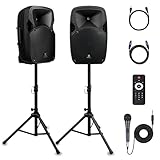 PRORECK Party 12 Powered PA System
A DJ is one of the biggest line items on any wedding budget. If someone you know can run a playlist, this is the difference between hiring one and not.
See it on Amazon →
PRORECK Party 12 Powered PA System
A DJ is one of the biggest line items on any wedding budget. If someone you know can run a playlist, this is the difference between hiring one and not.
See it on Amazon →
 Amazon Basics 46,000 BTU Patio Heater
Outdoor evening receptions live or die on this. Renting three for a night often costs more than buying two.
See it on Amazon →
Amazon Basics 46,000 BTU Patio Heater
Outdoor evening receptions live or die on this. Renting three for a night often costs more than buying two.
See it on Amazon →
 DazzlingStage Wireless Battery Uplights (6)
Battery uplights need no cable runs, so a venue that bans taped-down leads still lets you use them. The cheapest thing that changes how a room photographs.
See it on Amazon →
DazzlingStage Wireless Battery Uplights (6)
Battery uplights need no cable runs, so a venue that bans taped-down leads still lets you use them. The cheapest thing that changes how a room photographs.
See it on Amazon →
 Efavormart 8 ft Gold Hexagonal Arch
Heavy-duty metal rated to 100 lbs, and it resells afterwards, which is the part hiring one never does.
See it on Amazon →
Efavormart 8 ft Gold Hexagonal Arch
Heavy-duty metal rated to 100 lbs, and it resells afterwards, which is the part hiring one never does.
See it on Amazon →
 Wedding Planner & Organizer
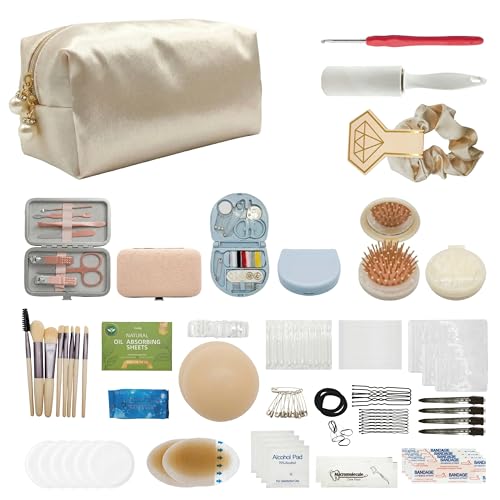 Bridal Emergency Kit
 LED String Lights (100ft)
 Champagne Flutes Set
