A free alcohol estimator for your wedding reception. Calculate exactly how much beer, wine, and liquor you need. Enter your details below for instant recommendations.
The four rentals worth buying instead
Most wedding advice is about trimming the flowers. These four are the line items where buying outright costs less than one night of hire, and three of them resell afterwards.
Buy 10-15% extra to ensure you don't run out. Many stores allow returns of unopened bottles—check their policy before purchasing.
Want to keep this result?
Get your numbers plus the free printable wedding kit shopping lists (decor, day-of emergency kit, reception) by email.
Free. No spam. Unsubscribe anytime.
Written by the WeddingBudgetCalc Editorial Team · Last updated January 07, 2026
Our team combines wedding planning expertise with financial analysis. Data sourced from The Knot, Zola, and vendor surveys across 50 states.
How to Use This Calculator
Our wedding alcohol calculator takes the guesswork out of bar planning. Follow these simple steps to get accurate quantities for your reception:
Enter your guest count: Input the total number of guests expected to attend. Include all adults; you can mentally subtract known non-drinkers when reviewing results.
Select reception length: Choose how many hours your reception will run from cocktail hour through the last dance. Most weddings run 4-5 hours.
Choose drinking level: Select light for morning weddings or older crowds, moderate for typical evening receptions, or heavy for party-focused celebrations.
Pick your bar type: Choose between full bar (beer, wine, and liquor) or beer and wine only. The calculator adjusts quantities accordingly.
Results update instantly as you adjust any input, letting you explore different scenarios and see how each choice affects quantities and costs.
Understanding Your Results
The calculator provides four key outputs to guide your alcohol purchasing:
Wine Bottles: The number of 750ml bottles needed, plus how many cases to order. Plan for 5 glasses per bottle when budgeting.
Beer Cases: How many 24-pack cases you need, plus total bottle/can count. Kegs are an alternative if you have 75+ beer drinkers.
Liquor Bottles: For full bar service, how many 750ml bottles of spirits are needed. Each bottle yields approximately 17 mixed drinks.
Estimated Cost: A price range based on average retail costs. Actual costs vary by brand selection and where you purchase.
These quantities include a built-in buffer, but consider adding 10-15% more to ensure you don't run out during peak drinking hours.
Factors That Affect Your Calculations
Several variables influence actual alcohol consumption at your wedding:
Guest Demographics
Age of guests: Younger crowds (21-35) typically drink more than older guests. College friends will consume differently than your parents' church group.
Non-drinkers: If a significant portion of your guest list doesn't drink alcohol, reduce quantities proportionally.
Cultural factors: Some families or communities have traditions that affect alcohol consumption, either higher or lower.
Event Timing and Style
Time of day: Evening weddings see heavier drinking than morning or afternoon events.
Season and weather: Summer weddings often see more beer and white wine consumption; winter weddings lean toward red wine and spirits.
Reception style: A party-focused reception with lots of dancing leads to more drinking than a formal seated dinner.
Food and Timing
Food service: Heavy appetizers and full dinner service slow alcohol consumption. Cocktail-only receptions see heavier drinking.
Bar accessibility: Multiple bar stations lead to faster consumption than a single bar with longer lines.
Cash vs. open bar: Open bars see 25-30% higher consumption than cash bars.
Tips for Accurate Inputs
Get the most accurate estimates by following these guidelines:
Know your crowd: Think honestly about your guest list. Are they party animals or wine-with-dinner types? Choose your drinking level accordingly.
Count actual attendees: Use your RSVP count, not your invite list. Fewer guests means less alcohol needed.
Consider the venue: A destination wedding where everyone is staying on-site may see heavier drinking than a local wedding with designated drivers.
Factor in ceremony time: A long Catholic mass before the reception means thirstier guests at cocktail hour.
Run multiple scenarios: Try different drinking levels to see the range of possibilities. Order based on moderate estimates with some buffer.
Related Calculators and Resources
Continue planning your wedding reception with these complementary tools:
Catering Calculator - Estimate food quantities and catering costs to pair with your bar planning.
Guest List Calculator - Determine your guest count and understand cost-per-guest implications.
Planning the right amount of alcohol for your wedding reception is a balancing act. Order too little and you'll have disappointed guests at an empty bar; order too much and you're stuck with cases of unused beer and wine. Our calculator uses industry-standard formulas based on average consumption rates, reception length, and your specific crowd to help you hit the sweet spot.
The general rule of thumb is to plan for one drink per person per hour during the first hour, then 0.5 drinks per person per hour after that. However, the first hour is typically the heaviest drinking period—guests arrive thirsty, especially after a warm ceremony. Consumption naturally tapers during dinner and picks back up during dancing.
Understanding Drink Consumption Rates
Not all wedding crowds drink the same way. Consider these factors when selecting your drinking level:
Light drinking (0.5 drinks/hr): Morning or afternoon weddings, crowds with many non-drinkers, family-oriented celebrations, or events with mostly older guests
Moderate drinking (1 drink/hr): Evening weddings, mixed-age crowds, most celebrations. This is the safest default choice.
Heavy drinking (1.5 drinks/hr): College reunions, young crowds who love to party, destination weddings where guests are staying nearby
Consider your specific guest list. If you know half your crowd doesn't drink alcohol, adjust accordingly. Similarly, if you're inviting your college friends known for epic parties, plan for heavier consumption.
Full Bar vs. Beer and Wine Only
One of the biggest decisions affecting your alcohol budget is whether to offer a full open bar or stick with beer and wine only. Here's what to consider:
Full bar includes beer, wine, and a selection of liquors for mixed drinks. This gives guests maximum choice but comes with higher costs and complexity. You'll need vodka, gin, rum, whiskey, and tequila at minimum, plus mixers like tonic, soda, juices, and garnishes. Full bars require more bartending staff and equipment.
Beer and wine only satisfies the vast majority of guests while saving 30-40% on alcohol costs. Wine pairs beautifully with dinner, and beer satisfies those who don't drink wine. Fewer options also means faster bar service and fewer lines. Most guests won't even notice the difference, especially if you offer quality selections.
A smart middle ground is offering beer, wine, and two signature cocktails. This gives variety without the full bar complexity. Choose cocktails that can be batched in advance—like a crowd-pleasing margarita or Moscow mule—to speed up service.
Wine Selection and Quantities
For wine, plan on five glasses per 750ml bottle. A case of 12 bottles provides 60 glasses. For mixed crowds, aim for 40-50% white wine, 30-40% red wine, and 10-20% rosé or sparkling, though this varies seasonally—summer weddings lean white, fall weddings lean red.
Wine pricing varies enormously. Restaurant-quality wines from regions like Spain, Portugal, Argentina, and Chile often cost $8-15 per bottle wholesale while tasting fantastic. You don't need expensive Napa Cabernet when serving 150 guests—focus on quality everyday wines that you've tasted and enjoy.
For cocktail hour, consider serving sparkling wine or champagne for the toast. Prosecco and cava provide excellent bubbles at $8-15 per bottle compared to $30-50+ for French Champagne. Most guests can't distinguish in a blind tasting, especially during a busy reception.
Beer Selection and Quantities
A standard case of beer contains 24 bottles or cans. For kegs, a half-barrel (full keg) serves approximately 165 twelve-ounce glasses, while a quarter-barrel (pony keg) serves about 82 glasses.
Offer variety without overwhelming choices. A good setup includes one light domestic beer (Bud Light, Miller Lite, Coors Light), one craft or import option (IPA, wheat beer, or Mexican lager), and potentially a local favorite if you're getting married in a region with popular craft breweries.
Kegs make sense for 75+ guests who are beer drinkers. At $150-200 per keg serving 165 glasses, you're paying under $1.25 per serving versus $1.50-2.00+ for bottled beer. However, kegs require proper tapping equipment and ice to stay cold, so confirm your venue can accommodate them.
Liquor Quantities for Mixed Drinks
If offering a full bar, expect a 750ml bottle to yield approximately 17 mixed drinks (1.5 oz pours). For a 100-guest wedding with moderate drinking over 5 hours, you'd need roughly 6 bottles covering your core spirits.
Stock ratios depend on your crowd, but a common split is: 30% vodka (the most popular base), 25% whiskey/bourbon, 20% rum, 15% gin, and 10% tequila. Adjust based on whether you're serving in Kentucky bourbon country or California wine country.
Don't forget mixers: tonic water, club soda, cola, ginger ale, orange juice, cranberry juice, lime juice, and simple syrup. Mixers often get overlooked in budget planning but add up quickly. Plan on about 1 liter of mixer per bottle of corresponding liquor.
Tips for Reducing Wedding Alcohol Costs
Buy wholesale: Costco, Sam's Club, and Total Wine offer 20-40% savings on bulk purchases. Many don't require membership for alcohol purchases depending on state law.
Skip the full bar: Beer and wine only can save 30-40% while satisfying most guests perfectly well.
Consider kegs for beer: A standard keg ($150-200) serves 165 glasses at under $1.25 each versus $2+ per bottle.
Signature cocktails only: Offer 2-3 pre-batched cocktails instead of full bar service—guests love specialty drinks and you control costs.
Close during dinner: Serve wine with dinner but close the bar during the meal to reduce overall consumption.
Buy on sale: Stock up when your local stores have sales on wines you've already tasted and approved.
Skip top-shelf liquor: For mixed drinks, mid-tier spirits taste nearly identical to premium options. Save the fancy stuff for sipping drinks you're not serving.
What to Do with Leftover Alcohol
Plan ahead for leftovers—they're almost inevitable if you've ordered properly. Many wholesale clubs and liquor stores accept returns of unopened bottles and cases. Costco, Total Wine, and Trader Joe's generally accept returns with receipt; always verify the policy before purchasing.
Leftover wine and spirits also make excellent thank-you gifts. Send your wedding party or parents home with a case of wine as a thank-you for their help. Some couples save champagne bottles to open on future anniversaries—the 1st, 5th, and 10th become especially meaningful celebrations.
If you've truly overbought and can't return, don't despair. Host a post-wedding brunch, a thank-you dinner for your wedding party, or stock your home bar for years of entertaining. Quality wine stores well, and spirits last indefinitely. Think of the excess as your future dinner party supplies.
Non-Alcoholic Options
Don't forget guests who don't drink alcohol. Always offer appealing non-alcoholic options beyond basic sodas: sparkling water with citrus, artisanal sodas, mocktails, fresh lemonade, or iced tea. These should be equally accessible—don't hide them behind the bar where guests have to ask.
Pregnant guests, designated drivers, and those who simply don't drink deserve delicious options too. Consider a signature mocktail that mirrors your cocktail offerings, so non-drinkers don't feel excluded from the fun.
Frequently Asked Questions
Yes. This free wedding alcohol calculator works as an alcohol estimator for your wedding reception: enter your guest count, reception length, drinking level, and bar type, and it estimates the wine bottles, beer cases, and liquor bottles you need plus an estimated cost. The standard formula is one drink per guest for the first hour and half a drink per guest each hour after. For 100 guests at a 5-hour reception with moderate drinking, that works out to roughly 60 bottles of wine, 7 cases of beer, and 6 bottles of liquor for a full bar.
For 100 guests at a 5-hour reception with moderate drinking, you'll need approximately 60 bottles of wine, 7 cases of beer (168 bottles), and 6 bottles of liquor for a full bar. For beer and wine only, plan for 80 bottles of wine and 10 cases of beer. Always buy 10-15% extra to ensure you don't run out.
An open bar is traditional but not required. Consider your budget, guest preferences, and venue policies. Alternatives include beer and wine only (saves 30-40%), limited bar hours, signature cocktails only, or a consumption bar with a cap. Many couples find beer and wine service perfectly satisfies guests while significantly reducing costs.
Buy from wholesale clubs like Costco or Sam's Club for 20-40% savings. Choose beer and wine only instead of full bar. Buy in bulk and return unopened bottles (check store policies). Consider kegs for beer ($150-200 serves 165 glasses). Serve signature cocktails instead of full bar. Have the bar close during dinner service.
For most weddings, plan for 60% wine and 40% beer consumption. Within wine, aim for 50% white, 30% red, and 20% rose or sparkling—adjust seasonally with more whites in summer and reds in winter. Know your crowd: some groups strongly prefer beer, while others are primarily wine drinkers.
Many stores accept returns of unopened bottles with a receipt. Costco, Total Wine, and Trader Joe's generally allow returns—always confirm the policy before purchasing. Keep all receipts and don't open cases until needed. Some states restrict alcohol returns, so check local laws if you're unsure.
The standard ratio is one bartender per 50 guests for beer and wine service, or one per 35-40 guests for full bar with mixed drinks. For 100 guests with a full bar, plan for 3 bartenders. Having adequate staff prevents long lines and keeps guests happy, especially during peak cocktail hour.
Offer crowd-pleasing, food-friendly options. For white, choose Sauvignon Blanc or Pinot Grigio. For red, opt for Pinot Noir or lighter-style Merlot. Add a rose for versatility and Prosecco or champagne for toasts. Avoid polarizing varieties like heavily oaked Chardonnay or bold Cabernet unless you know your crowd loves them.
Kegs can save money if you have 75+ beer drinkers. A half-barrel keg costs $150-200 and serves 165 twelve-ounce glasses—under $1.25 per drink versus $1.50-2.00+ per bottle. However, kegs require proper tapping equipment, ice to stay cold, and a venue that can accommodate them. Consider the logistics before committing.
Choose cocktails that can be batched in advance for quick service. Popular options include margaritas, Moscow mules, mojitos, sangria, and Aperol spritzes. Offer one lighter and one stronger option. Name them creatively after you and your partner or wedding theme. Batched cocktails serve faster than made-to-order drinks.
Always offer appealing non-alcoholic options beyond basic soda. Provide sparkling water, artisanal sodas, fresh lemonade, iced tea, and mocktail versions of your signature drinks. Display them prominently—don't make guests ask. Consider the growing popularity of non-alcoholic beers and wines for those who want the social experience without alcohol.
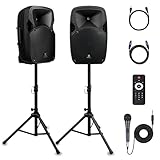 PRORECK Party 12 Powered PA System
A DJ is one of the biggest line items on any wedding budget. If someone you know can run a playlist, this is the difference between hiring one and not.
See it on Amazon →
PRORECK Party 12 Powered PA System
A DJ is one of the biggest line items on any wedding budget. If someone you know can run a playlist, this is the difference between hiring one and not.
See it on Amazon →
 Amazon Basics 46,000 BTU Patio Heater
Outdoor evening receptions live or die on this. Renting three for a night often costs more than buying two.
See it on Amazon →
Amazon Basics 46,000 BTU Patio Heater
Outdoor evening receptions live or die on this. Renting three for a night often costs more than buying two.
See it on Amazon →
 DazzlingStage Wireless Battery Uplights (6)
Battery uplights need no cable runs, so a venue that bans taped-down leads still lets you use them. The cheapest thing that changes how a room photographs.
See it on Amazon →
DazzlingStage Wireless Battery Uplights (6)
Battery uplights need no cable runs, so a venue that bans taped-down leads still lets you use them. The cheapest thing that changes how a room photographs.
See it on Amazon →
 Efavormart 8 ft Gold Hexagonal Arch
Heavy-duty metal rated to 100 lbs, and it resells afterwards, which is the part hiring one never does.
See it on Amazon →
Efavormart 8 ft Gold Hexagonal Arch
Heavy-duty metal rated to 100 lbs, and it resells afterwards, which is the part hiring one never does.
See it on Amazon →
 Champagne Flutes (Set of 12)
 LED String Lights
 Wedding Planner Book
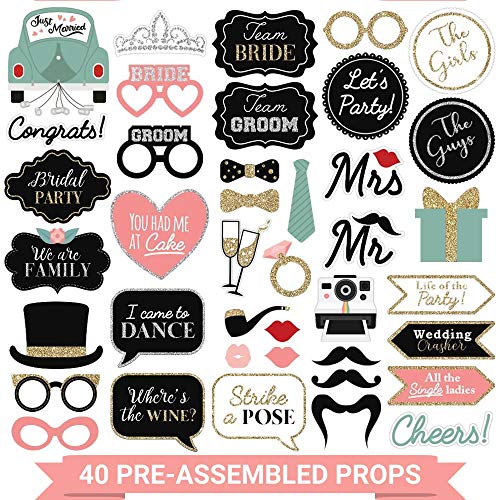 Photo Booth Props
