Enter your vendor costs below to calculate appropriate gratuities. Tips are a wonderful way to thank vendors for exceptional service on your special day.
The four rentals worth buying instead
Most wedding advice is about trimming the flowers. These four are the line items where buying outright costs less than one night of hire, and three of them resell afterwards.
As an Amazon Associate we earn from qualifying purchases. Prices and availability change; check before you buy.
Calculate Vendor Tips
Total Tips Budget$0
Want to keep this result?
Get your numbers plus the free printable wedding kit shopping lists (decor, day-of emergency kit, reception) by email.
Free. No spam. Unsubscribe anytime.
Note: Tips are not required if the vendor is the business owner. Consider a heartfelt thank-you note or online review instead. Always check if gratuity is already included in your contract.
Written by the WeddingBudgetCalc Editorial Team · Last updated January 07, 2026
Our team combines wedding planning expertise with financial analysis. Data sourced from The Knot, Zola, and vendor surveys across 50 states.
How to Use This Calculator
Our wedding tip calculator helps you plan appropriate gratuities for all your vendors. Follow these steps:
Enter vendor costs: For each vendor category, input the total cost of their service (before any included gratuity).
Review tip guidelines: Each vendor row shows the customary tipping range for that category.
See calculated tips: The calculator automatically applies industry-standard tip percentages to your costs.
Check your total: The total tips budget shows your complete gratuity needs for easy budgeting.
Leave fields empty for vendors you're not using. The calculator only includes vendors with entered costs in your total.
Understanding Your Results
The calculator provides tips based on industry standards:
Percentage-based tips: Most vendors are calculated at 15-20% of their service cost, reflecting standard gratuity rates.
Flat-rate tips: Some vendors like officiants and valets receive flat tips rather than percentages.
Total Tips Budget: The combined amount you should set aside for all vendor gratuities.
These are starting points—adjust based on exceptional service, ownership status, and whether gratuity is already included in contracts.
Factors That Affect Tip Amounts
Several considerations should influence your final tip decisions:
Service Quality
Above and beyond: Vendors who exceeded expectations, handled emergencies, or went the extra mile deserve higher tips.
Standard service: If service met expectations, standard percentages apply.
Poor service: Reduce or skip tips for vendors who underperformed or caused problems.
Vendor Status
Employees: Always tip employees—they earn wages and expect gratuities.
Business owners: Tips are optional for owners who set their own prices and profit directly.
Included gratuity: Check contracts—many caterers include 18-22% service charges already.
Tips for Accurate Planning
Get the most from this calculator with these guidelines:
Enter base costs only: Don't include taxes, service charges, or any gratuity already in your contract.
Check contracts first: Look for "gratuity included," "service charge," or similar language before planning tips.
Ask about ownership: Confirm whether vendors are employees or business owners to guide your decisions.
Prepare cash: Tips should be in cash in labeled envelopes, ready before the wedding day.
Plan distribution: Assign a trusted person (planner, best man) to distribute tips during the event.
Related Calculators and Resources
Continue planning your wedding budget with these tools:
Tipping your wedding vendors is a thoughtful way to show appreciation for their hard work in making your day special. While tips are not legally required, they are customary for most service providers and especially valued after exceptional service. Understanding tipping etiquette helps you budget appropriately and ensures the people who made your celebration memorable feel appreciated.
Unlike restaurant tipping where 15-20% is nearly universal, wedding tipping varies dramatically by vendor type, their ownership status, and your location. This guide breaks down exactly who to tip, how much to tip, and when tipping isn't expected.
The Golden Rule: Employees vs. Owners
The most important distinction in wedding tipping is whether your vendor is an employee or the business owner. Tipping is customary and expected for employees who work for a company. Tipping is not expected (though always appreciated) for business owners who set their own prices and profit directly from the service.
How do you know if someone is the owner? Ask directly, or check their business card and website. Photographers, DJs, florists, and planners are often owner-operators. Catering staff, bartenders, makeup artists, and delivery people are typically employees.
Vendor-by-Vendor Tipping Guide
Photographer and Videographer (15-20% or $50-200 per person)
Your photographer and videographer spend 8-12+ hours on their feet capturing your day. If they're employees of a studio, tip 15-20% of the service fee or $100-200 per person. If they own their business, a tip isn't expected, but $50-100 is a lovely gesture for exceptional work. Second shooters and assistants should each receive individual tips.
DJ or Band (10-15% or $50-150 for DJ, $25-50 per musician)
A great DJ or band sets the tone for your entire reception. For employee DJs, tip 10-15% or $50-150. For bands, tip each musician $25-50 in individual envelopes. If the DJ is the owner, tipping is optional. Consider tipping more generously if they learned special songs, accommodated last-minute requests, or kept the dance floor packed all night.
Catering Staff (15-20% if not included)
First, check your catering contract—many include automatic gratuity (typically 18-22%) in the final bill. If gratuity isn't included, tip 15-20% of the catering total to be distributed among the staff. Give the tip to the catering manager or head server with instructions for distribution. Alternatively, tip $20-50 per server if you know the staff size.
Bartenders (10-15% or $20-50 each)
Bartenders often receive tips directly from guests at the bar, but many couples put out tip jars (controversial) or provide a cash tip at the end of the night. If there's no tip jar and gratuity isn't included, give each bartender $20-50 or 10-15% of the bar bill divided among them.
Florist and Delivery Staff (10-15% for delivery team)
If the florist is delivering and setting up personally as the owner, tipping isn't expected. For the delivery team and setup crew, tip $10-20 per person or 10-15% of the floral bill split among them. Consider the complexity of the setup—a team spending 3 hours placing arrangements deserves more than a quick drop-off.
Officiant ($50-100 donation)
Religious officiants are typically not tipped directly. Instead, make a donation of $50-200 to their house of worship. For secular officiants who own their business, tipping isn't expected, but a $50-100 gift or donation to their chosen charity is thoughtful. For judge or courthouse officiants, $50-100 is customary.
Hair Stylists and Makeup Artists (15-25%)
Tip each person who works on you and your wedding party 15-25% of their individual service fee. If one artist did hair and makeup for five bridesmaids at $150 each, tip them $110-185 on the $750 total. These are often the first people you see on your wedding day, and generous tips for great work are remembered!
Wedding Planner or Coordinator (10-20% if employee, optional for owner)
Wedding planners who work for a company should receive 10-20% of their planning fee, or a flat amount like $500-1,000 for exceptional service. For owner-operators, a tip isn't expected, but a thoughtful gift, glowing online review, or referrals to engaged friends means the world. Day-of coordinators typically receive $100-500.
Transportation (15-20% or $25-50 per driver)
Limo, car service, and shuttle drivers should receive 15-20% of the transportation cost or a flat $25-50 per driver. Check your contract first—many limo companies include gratuity. For shuttle services with multiple drivers, have individual envelopes ready or give one envelope to the lead driver for distribution.
Valet Attendants ($1-5 per car or flat tip)
Some couples prepay a flat tip to the valet service ($50-100 total) so guests don't need to carry cash. Others allow guests to tip directly. If you're prepaying, let guests know with a small sign: "Valet gratuity has been taken care of by the bride and groom."
When to Give Tips
Prepare all tips before the wedding day in clearly labeled envelopes. Trying to calculate tips during your reception is stressful and likely to be forgotten. Options for distribution:
Before the event: Tip hair and makeup artists when they finish their work
During the event: Designate your wedding planner, best man, or a trusted friend to distribute tips at appropriate moments
After the event: Mail tips with thank-you notes within a week for vendors you missed
What to Put in the Envelopes
Use cash for vendor tips—it's preferred universally. Include a brief handwritten note thanking them for their role in your day. Label each envelope clearly: "For [Vendor Name] – Thank you!" Some couples include the company name in case the individual isn't present and someone else receives the envelope.
When Tipping Isn't Expected
Tipping is optional or not expected in these situations:
The vendor is the business owner and set their own prices
Gratuity is already included in your contract (check carefully!)
The service was disappointing or problematic
The vendor explicitly declined tips in advance
Even when tipping isn't required, showing appreciation matters. Alternatives to cash tips include heartfelt thank-you cards, detailed positive online reviews (extremely valuable for small businesses!), social media tags and shares, referrals to engaged friends, and thoughtful gifts like gift cards to their favorite coffee shop or restaurant.
Regional Tipping Differences
Tipping customs vary by region. In major metropolitan areas (NYC, LA, Chicago), tips often trend higher—15-20% is standard. In smaller markets or the South, 10-15% is common. When in doubt, ask your wedding planner or venue coordinator what's customary locally.
International weddings have entirely different norms. In the UK, Australia, and much of Europe, tipping wedding vendors is far less common than in the US. Research local customs if you're having a destination wedding.
How Much Should Your Total Tip Budget Be?
A common rule of thumb is to budget 10-15% of your total wedding budget for vendor tips. For a $30,000 wedding, that's $3,000-4,500 in tips. This may seem high, but remember that you're not tipping every vendor this amount—you're distributing smaller amounts across many people who made your day possible.
If your tip budget is tight, prioritize the service workers earning hourly wages (catering staff, bartenders, drivers, setup crews) over business owners who profit directly from your payment. A smaller tip is always better than no tip at all, and no one will fault you for giving what you can genuinely afford.
Frequently Asked Questions
For wedding photographers, a tip of $50-200 per photographer is customary, or 10-15% of the total photography package. If the photographer is also the business owner, tipping is optional but appreciated. Consider the length of coverage and quality of service when deciding.
Yes, wedding DJs are typically tipped $50-150 or 10-15% of their fee. If they went above and beyond, kept the dance floor packed, and made special accommodations, tip on the higher end. If the DJ is the owner of the company, tipping is optional.
Tipping wedding planners depends on whether they own the business. For planner employees, tip 15-20% of their fee or $500-1000 for exceptional service. For business owners, a tip is not expected but a thoughtful gift or glowing review is appreciated.
Many caterers include 18-22% gratuity or service charge in their contracts. Read your catering agreement carefully—look for "service charge," "gratuity," or "administrative fee." If gratuity is included, you don't need to tip the catering staff separately, though you can give extra to exceptional servers.
Tipping business owners is optional since they set their own prices and profit directly. If you want to show appreciation, alternatives include a heartfelt handwritten thank-you note, a detailed positive online review, social media shoutouts, referrals to engaged friends, or a thoughtful gift. A tip is still welcome if you want to give one.
Prepare tips before the wedding in labeled envelopes. Tip hair and makeup artists when they finish (before the ceremony). Assign a trusted person—your wedding planner, best man, or maid of honor—to distribute tips to other vendors at appropriate moments during the event. Tips you miss can be mailed within a week with thank-you notes.
Tip bartenders $20-50 each or 10-15% of the bar bill divided among them. First check if gratuity is included in your bar package. Some couples put out tip jars (though this is debated), while others provide cash tips at the end of the night. Ensure bartenders know if tipping is being handled so they're not expecting guest tips.
Plan for tips to be 10-15% of your total wedding budget. For a $30,000 wedding, budget $3,000-4,500 for gratuities. This accounts for all vendor tips distributed across different categories. If budget is tight, prioritize hourly workers (servers, drivers, setup crews) over business owners.
Yes, tip each artist individually—15-25% of their service fee. If one person did hair for your entire bridal party at $150 each for 5 people, tip them 15-25% of $750 ($112-188). These vendors are among the first you'll see on your wedding day, so have tips ready in envelopes for when they finish.
Religious officiants typically aren't tipped directly—instead, make a donation of $50-200 to their house of worship. Secular officiants who own their business don't expect tips, but $50-100 as a gift or donation to their preferred charity is thoughtful. For courthouse officiants, $50-100 is customary.
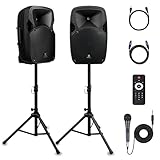 PRORECK Party 12 Powered PA System
A DJ is one of the biggest line items on any wedding budget. If someone you know can run a playlist, this is the difference between hiring one and not.
See it on Amazon →
PRORECK Party 12 Powered PA System
A DJ is one of the biggest line items on any wedding budget. If someone you know can run a playlist, this is the difference between hiring one and not.
See it on Amazon →
 Amazon Basics 46,000 BTU Patio Heater
Outdoor evening receptions live or die on this. Renting three for a night often costs more than buying two.
See it on Amazon →
Amazon Basics 46,000 BTU Patio Heater
Outdoor evening receptions live or die on this. Renting three for a night often costs more than buying two.
See it on Amazon →
 DazzlingStage Wireless Battery Uplights (6)
Battery uplights need no cable runs, so a venue that bans taped-down leads still lets you use them. The cheapest thing that changes how a room photographs.
See it on Amazon →
DazzlingStage Wireless Battery Uplights (6)
Battery uplights need no cable runs, so a venue that bans taped-down leads still lets you use them. The cheapest thing that changes how a room photographs.
See it on Amazon →
 Efavormart 8 ft Gold Hexagonal Arch
Heavy-duty metal rated to 100 lbs, and it resells afterwards, which is the part hiring one never does.
See it on Amazon →
Efavormart 8 ft Gold Hexagonal Arch
Heavy-duty metal rated to 100 lbs, and it resells afterwards, which is the part hiring one never does.
See it on Amazon →


