Enter your guest count to calculate invitations needed, table requirements, venue size, and estimated cost per guest.
The four rentals worth buying instead
Most wedding advice is about trimming the flowers. These four are the line items where buying outright costs less than one night of hire, and three of them resell afterwards.
Get your numbers plus the free printable wedding kit shopping lists (decor, day-of emergency kit, reception) by email.
Free. No spam. Unsubscribe anytime.
Written by the WeddingBudgetCalc Editorial Team · Last updated January 07, 2026
Our team combines wedding planning expertise with financial analysis. Data sourced from The Knot, Zola, and vendor surveys across 50 states.
How to Use This Calculator
Our wedding guest list calculator makes planning logistics simple. Follow these steps to get accurate estimates for your wedding:
Enter your expected guest count: Input the total number of people you plan to invite. This is your maximum potential attendance, not confirmed RSVPs.
Select guests per table: Choose your table size based on your venue and desired atmosphere. Standard 60-inch rounds seat 8-10 guests comfortably.
Enter your total wedding budget: Input your complete wedding budget to calculate your cost per guest and understand how guest count affects spending.
Choose your household ratio: Select whether your guest list includes mostly couples, many families, or many single guests to accurately estimate invitation quantities.
The calculator instantly updates as you adjust any value, allowing you to experiment with different scenarios and find the right balance for your wedding.
Understanding Your Results
The calculator provides four key metrics that inform your wedding planning decisions:
Invitations Needed: This number accounts for household groupings (couples and families share one invitation) plus a 10% buffer for addressing errors and keepsakes. Order this quantity from your stationer.
Tables Required: The minimum number of tables needed for your guest count. Remember to add 1-2 tables for the wedding party, plus cocktail tables, gift tables, and cake tables in your venue planning.
Venue Size: The square footage range shows the minimum space needed for a seated dinner with dancing. The lower number is tight but workable; the higher number provides comfortable flow.
Cost Per Guest: This divides your total budget by guest count, showing how much you're spending per person. Use this to evaluate whether adding or removing guests makes sense for your budget.
These results are estimates based on industry standards. Your actual numbers may vary based on your specific choices and local market rates.
Factors That Affect Your Calculations
Several variables influence how accurate these estimates will be for your specific situation:
Guest Composition
Couple-heavy lists: If most guests are married or partnered couples, you'll need fewer invitations but similar table counts.
Family attendance: Guests with children require different seating considerations and may affect your cost per guest depending on kids' meal pricing.
Single guests: More single guests means more invitations needed and potentially different table dynamics.
Venue and Style Considerations
Reception style: Cocktail receptions require less space per person than seated dinners. Buffet service needs room for food stations.
Dance floor size: A larger dance floor cuts into seating space; a smaller one means more tables fit but less room to party.
Table shapes: Long farm tables seat guests differently than rounds, affecting both capacity and atmosphere.
Budget Variables
Location: Wedding costs vary dramatically by region. A $300 per-guest budget stretches further in the Midwest than in Manhattan.
Vendor choices: Premium catering, open bar versus beer and wine, and luxury rentals all impact cost per guest.
Season: Peak season (May-October) often commands higher vendor prices than off-peak months.
Tips for Accurate Inputs
Get the most reliable results from this calculator by following these best practices:
Use your A-list count: Enter the number of "must-have" guests rather than everyone you might invite. This gives you realistic minimums.
Account for declines: If entering your total invite list, expect 15-20% of local guests and 30-50% of destination guests to decline.
Be realistic about budget: Enter your actual available funds, not aspirational numbers. This keeps cost-per-guest calculations grounded.
Consider your crowd: Think about your specific social circles when selecting the household ratio. Young professional friends are often single; family-heavy lists are often couples.
Run multiple scenarios: Calculate with 80 guests, 100 guests, and 120 guests to understand how changes affect your needs and costs.
Related Calculators and Resources
Continue planning your wedding with these complementary tools:
Wedding Budget Calculator - Create a complete budget breakdown based on your guest count and total spending.
Seating Chart Calculator - Plan your table assignments and seating arrangements once you have your final guest count.
Catering Calculator - Estimate food and beverage costs based on your guest count and menu preferences.
Alcohol Calculator - Calculate exactly how much wine, beer, and spirits you need for your bar.
Invitation Calculator - Get detailed invitation suite quantities and cost estimates.
Your guest count is the single most important number in wedding planning. It determines everything else: venue selection, catering costs, invitation quantities, table rentals, party favors, and ultimately your total budget. Every additional guest adds $150-400+ to your wedding costs depending on your location and style. Understanding exactly what your guest count means for logistics, space, and money empowers you to make confident planning decisions.
How to Create Your Guest List
Building your guest list is often emotionally charged. Start by creating categories: immediate family, extended family, close friends, work colleagues, and social acquaintances. Assign each category a priority level and work from the top down until you reach your target number.
A helpful approach is the "three lists" method:
A-List: Must-haves — people you can't imagine celebrating without. These guests get invited first.
B-List: Important but not essential — people you'd love to have but could manage without if space or budget is tight.
C-List: Nice to have — distant relatives, work acquaintances, or casual friends. Only invite if others decline.
Set clear boundaries early. Common approaches include adults-only (no children under 16), no plus-ones for single guests unless in serious relationships, or limiting extended family to those you've seen in the past two years. Whatever rules you set, apply them consistently to avoid hurt feelings.
Understanding Wedding Invitation Math
Invitations are sent per household, not per person. This is where many couples get confused. A married couple living together receives one invitation. A family of four receives one invitation. Two single friends sharing an apartment each get their own invitation.
For a typical guest list composition, here's what to expect:
100 guests with mostly couples: Approximately 60-70 invitations needed
100 guests with many families: Approximately 55-65 invitations needed
100 guests with many singles: Approximately 70-80 invitations needed
Always order 15-20% more invitations than your calculation suggests. You'll need extras for addressing mistakes (one wrong letter ruins an envelope), keepsakes for parents and yourselves, and the inevitable last-minute additions you forgot initially.
RSVP Response Rate Expectations
Not everyone you invite will attend. The typical RSVP acceptance rate ranges from 75-85%, though this varies significantly by factors like:
Location: Local weddings see 80-90% acceptance. Destination weddings average 50-70%.
Day of week: Saturday weddings have higher attendance than Friday or Sunday.
Season: Summer and holiday weekends may have more conflicts.
Guest age: Older relatives are more likely to attend than young professionals with busy schedules.
Plan your seating and final counts assuming 80% of invited guests will attend. If more accept, that's wonderful—you can adjust. If fewer accept, consider inviting B-list guests to fill the space.
Table Planning and Seating Arrangements
Table planning goes beyond simple math. While our calculator tells you how many tables you need, creating the actual seating chart requires thoughtful consideration of relationships, dynamics, and logistics.
Table size options:
60-inch round tables: Comfortably seat 8-10 guests. The most common choice for weddings. Promotes conversation across the table.
72-inch round tables: Seat 10-12 guests. Good for larger venues with more space between tables.
Mix of sizes: Some couples use rounds for guests and one long table for the wedding party.
Seating chart strategies:
Group by relationship (college friends, family, work colleagues) while ensuring each table has outgoing personalities to drive conversation
Place parents' tables near the head table or dance floor
Keep exes and feuding family members at opposite ends of the room
Seat elderly guests away from speakers and closer to restrooms
Position single guests together (they often appreciate it!) or intersperse them with friendly couples
Venue Size Requirements by Guest Count
Choosing a venue that fits your guest count is crucial. Too small and guests feel cramped; too large and the space feels empty. Here are space requirements for different reception styles:
Seated dinner with dancing (most common): 25-30 square feet per guest
50 guests: 1,250-1,500 sq ft
100 guests: 2,500-3,000 sq ft
150 guests: 3,750-4,500 sq ft
200 guests: 5,000-6,000 sq ft
Cocktail reception (standing/mingling): 10-12 square feet per guest
100 guests: 1,000-1,200 sq ft
150 guests: 1,500-1,800 sq ft
Beyond guest seating, account for:
Dance floor: 3-4 square feet per expected dancer. If 60% of guests dance, that's 200-250 sq ft for 100 guests.
Bar stations: 10x10 ft per bar (one bar per 75 guests recommended)
DJ/Band setup: 150-400 sq ft depending on band size
Gift and cake tables: 30-50 sq ft
Buffet stations: If applicable, 100 sq ft per serving station
The True Cost Per Guest
Understanding your cost per guest helps you make informed decisions about your final list. The per-guest cost includes:
Catering: $75-250+ per person (biggest component)
Bar/Alcohol: $25-75 per person for open bar
Rentals: $5-15 per person (chairs, plates, linens)
Favors: $2-10 per person
Invitation: $3-8 per invitation (so $2-5 per guest)
Cake: $4-12 per serving
In total, each additional guest typically costs $150-400 in most markets, potentially $500+ in expensive cities like NYC, San Francisco, or destination venues. This means adding 20 guests could cost you $3,000-10,000 more.
When debating whether to invite distant cousins or former coworkers, this math helps clarify the decision. Is seeing Great Aunt Martha worth $300? Maybe yes, maybe no—but at least you can make an informed choice.
Managing Guest List Politics
Guest list conflicts are among the most stressful aspects of wedding planning. Here's how to handle common scenarios:
Parents want to invite their friends: If parents are contributing financially, they traditionally get some say. Set clear expectations upfront about how many names each family can add.
Divorced parents: Each parent plus their new partner deserves a seat. Seat them at separate tables on opposite sides of the room. Both should have equal guest privileges.
Coworker dilemmas: Invite all or none from the same department. Cherry-picking creates office drama.
"But you were at their wedding!" This doesn't obligate you to reciprocate if circumstances have changed. Weddings aren't tit-for-tat.
When to Send Invitations
Timing matters for guest list management:
Save the dates: 6-8 months before (earlier for destination weddings)
Formal invitations: 6-8 weeks before the wedding
RSVP deadline: 3-4 weeks before the wedding
Follow up with non-responders: 1-2 weeks before deadline
After your RSVP deadline, you'll need to chase down responses. People forget or get busy—it's not personal. A quick phone call or text is perfectly acceptable.
Frequently Asked Questions
Plan for one invitation per household, not per person. For 150 guests, you typically need 80-100 invitations. Order 10-15% extra for keepsakes, addressing mistakes, and last-minute additions. If most guests are couples or families, you'll need fewer invitations than your total guest count.
For 100 guests with standard 60-inch round tables seating 8-10 people, you'll need 10-13 tables. Add 1-2 tables for the wedding party, and consider a sweetheart table or head table. Also account for cocktail tables, gift table, and cake table in your venue layout.
Plan for 25-30 square feet per guest for a seated dinner with dancing. For 100 guests, you need 2,500-3,000 sq ft minimum. Add space for the head table, dance floor (about 3 sq ft per dancing guest), bar, DJ/band setup, and gift/cake tables.
For local weddings, expect 80-85% of invited guests to attend. Destination weddings see lower attendance, typically 50-70%. Factors like day of week, time of year, and how far guests must travel significantly impact turnout. Saturday weddings during temperate months see the highest acceptance rates.
Each additional guest typically costs $150-400 depending on your location and wedding style. This includes catering ($75-250), bar service ($25-75), rentals ($5-15), favors ($2-10), and proportional invitation costs. In expensive metros like NYC or San Francisco, expect $400-600+ per guest.
Only invite coworkers you have genuine friendships with outside of work. If inviting from a team, invite all or none to avoid office drama. Consider whether you'd still be friends if one of you left the company. Work friends who have become true friends belong on the list; acquaintances you only see at meetings do not.
Etiquette says guests in serious relationships (6+ months, living together, or engaged) should receive a plus-one. Single friends attending alone is acceptable, especially if they'll know other guests. If budget allows, offering plus-ones to all single guests is generous but not required. Apply your rules consistently across all guests.
Have your initial guest list ready 8-10 months before the wedding when booking venues. Send save-the-dates 6-8 months out and formal invitations 6-8 weeks before. Your RSVP deadline should be 3-4 weeks before the wedding, giving you time to chase non-responders and finalize numbers with vendors.
Yes, a B-list is perfectly acceptable and common practice. Do not send B-list invitations with save-the-dates. Wait until after your RSVP deadline, then promptly send invitations to B-list guests as declines come in. Send B-list invitations at least 3-4 weeks before the wedding so guests have reasonable time to make arrangements.
Both parents and their current partners should be invited. Each parent receives their own invitation. Seat divorced parents at separate tables on opposite sides of the venue. Both should have equal say in adding guests to the list, especially if both are contributing financially. If relations are tense, assign a trusted family member to manage any day-of issues.
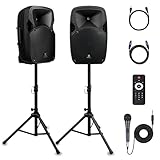 PRORECK Party 12 Powered PA System
A DJ is one of the biggest line items on any wedding budget. If someone you know can run a playlist, this is the difference between hiring one and not.
See it on Amazon →
PRORECK Party 12 Powered PA System
A DJ is one of the biggest line items on any wedding budget. If someone you know can run a playlist, this is the difference between hiring one and not.
See it on Amazon →
 Amazon Basics 46,000 BTU Patio Heater
Outdoor evening receptions live or die on this. Renting three for a night often costs more than buying two.
See it on Amazon →
Amazon Basics 46,000 BTU Patio Heater
Outdoor evening receptions live or die on this. Renting three for a night often costs more than buying two.
See it on Amazon →
 DazzlingStage Wireless Battery Uplights (6)
Battery uplights need no cable runs, so a venue that bans taped-down leads still lets you use them. The cheapest thing that changes how a room photographs.
See it on Amazon →
DazzlingStage Wireless Battery Uplights (6)
Battery uplights need no cable runs, so a venue that bans taped-down leads still lets you use them. The cheapest thing that changes how a room photographs.
See it on Amazon →
 Efavormart 8 ft Gold Hexagonal Arch
Heavy-duty metal rated to 100 lbs, and it resells afterwards, which is the part hiring one never does.
See it on Amazon →
Efavormart 8 ft Gold Hexagonal Arch
Heavy-duty metal rated to 100 lbs, and it resells afterwards, which is the part hiring one never does.
See it on Amazon →
 Wedding Planner & Organizer
 Wedding Card Box
 LED String Lights
 Photo Booth Props
