Calculate how many tables you need and the venue square footage required for your wedding reception. Plan your perfect floor plan.
By WeddingBudgetCalc Team · Last updated January 6, 2026
7 min read
The four rentals worth buying instead
Most wedding advice is about trimming the flowers. These four are the line items where buying outright costs less than one night of hire, and three of them resell afterwards.
Venue Cost Guide - Understand typical venue pricing by type and region.
Understanding Wedding Venue Space Requirements
Choosing the right venue size is one of the most important decisions in wedding planning. A space that's too small will feel cramped and uncomfortable, while an oversized venue can feel empty and disconnected. Getting your space calculations right ensures your guests are comfortable and your reception flows smoothly.
The general rule of thumb is 10-12 square feet per seated guest for dining, but this is just the starting point. Your actual space needs depend on your table configuration, whether you want a dance floor, and what other elements you're including in your reception.
Table Size and Capacity Guide
Table Type
Dimensions
Comfortable Capacity
Space Needed Per Table
60" Round
5 feet diameter
8 guests
144 sq ft (12x12)
72" Round
6 feet diameter
10 guests
196 sq ft (14x14)
6ft Rectangular
72" x 30"
6 guests
100 sq ft (10x10)
8ft Rectangular
96" x 30"
8 guests
120 sq ft (10x12)
These space allowances include room for chairs to pull out, servers to pass behind guests, and comfortable walking aisles between tables. Squeezing tables closer together is possible but makes for an uncomfortable guest experience.
Dance Floor Sizing
If dancing is important to you, allocating proper dance floor space is essential. A cramped dance floor discourages guests from dancing, while an oversized one can feel empty until late in the night.
Dance Floor Size Guidelines
50 guests: 150-200 sq ft (approximately 12x15 feet)
100 guests: 300-400 sq ft (approximately 18x20 feet)
150 guests: 450-550 sq ft (approximately 20x25 feet)
200 guests: 600-700 sq ft (approximately 24x28 feet)
These sizes assume about 50% of your guests will be dancing at peak times. If you know your crowd loves to dance, go larger. For a more sedate crowd, you can scale down.
Pro Tip: Many venues provide portable dance floors that can be sized to your needs. Ask about options during your venue tour—you don't always have to use the full existing floor space.
Additional Space Considerations
Beyond dining and dancing, your reception may need space for:
Head table or sweetheart table: 50-100 sq ft
Buffet stations: 100-150 sq ft per station
Bar area: 100-200 sq ft per bar
DJ/band setup: 100-300 sq ft depending on size
Photo booth: 80-100 sq ft
Cake table: 25-50 sq ft
Gift table: 20-40 sq ft
Round vs. Rectangular Tables
The table shape you choose affects both the feel of your reception and how efficiently you can use your space.
Round Tables
Round tables are the most popular choice for weddings, and for good reason. They promote conversation since everyone can see and talk to everyone else at the table. There's no "head" of the table, creating an egalitarian feel. Round tables also allow for easier server access and more flexible placement in irregularly shaped rooms.
The downside is that round tables are less space-efficient. The circular shape creates unused space between tables, and large centerpieces can obstruct sightlines.
Rectangular Tables
Rectangular (or "banquet") tables create a family-style dining atmosphere and are more space-efficient, fitting more guests in the same square footage. They work particularly well in long, narrow venues and create dramatic visual lines with long table arrangements.
However, guests at the ends may feel isolated, and it's harder to have group conversations. Long tables also require more coordination for service.
Mixed Layouts
Many couples mix both styles—using a long head table or sweetheart table for the wedding party, while seating guests at rounds. This creates visual interest and allows you to optimize for different areas of the room.
Venue Evaluation Checklist
When touring potential venues, bring these space considerations with you:
Get exact dimensions: Ask for a floor plan with measurements, not just total square footage
Identify unusable space: Columns, odd corners, and built-in features reduce usable space
Check ceiling height: Low ceilings can make spaces feel cramped even with adequate square footage
Locate outlets and AV hookups: These affect where DJ equipment and lighting can go
Note natural flow paths: Entrances, restrooms, and bar locations affect traffic patterns
Ask about included rentals: Some venues provide tables and chairs; others require outside rentals
Consider ceremony space: If doing ceremony and reception in the same room, you'll need a "flip" time to rearrange
Reality Check: A venue coordinator might say their space holds 200 for a wedding, but that often means cocktail-style standing. For seated dining with dancing, the capacity is usually 25-30% less than the stated maximum.
Creating Your Seating Chart
Once you know how many tables you need, the real challenge begins: deciding who sits where. A thoughtful seating chart ensures your guests have a great time by placing them with compatible tablemates.
Seating Chart Strategy
Start with must-sits: VIPs, elderly relatives, and anyone with special needs get placed first
Group by relationship: Family tables, college friends, work colleagues
Consider dynamics: Keep exes apart, seat single friends together, avoid political conflicts
Mix when appropriate: Tables that blend friend groups can create new connections
Account for plus-ones: Seat couples together, but don't isolate them if they won't know anyone else
Number tables, don't name them: Numbered tables make finding seats easier than creative names
Most couples finalize their seating chart 2-3 weeks before the wedding, after final RSVPs are in. Expect last-minute changes—always have a few extra seats available for emergencies.
Frequently Asked Questions
A standard 60-inch (5-foot) round table comfortably seats 8 guests with adequate elbow room and space for place settings. You can squeeze 10 guests, but it will feel tight and leave less room for centerpieces. For formal weddings or dinners with multiple courses, plan for 8 per table for guest comfort.
Plan for 10-12 square feet per guest for seated dining, which includes space for tables, chairs, and walking aisles between tables. Add 3-4 square feet per person for a dance floor, plus additional space for buffet stations, bars, DJ setup, and any other elements. A cocktail-style reception requires less space—about 6-8 square feet per person.
For 100 seated guests with a dance floor, you need approximately 1,500-2,000 square feet minimum. This breaks down to about 1,200 square feet for dining (12 sq ft per guest) plus a 300-400 square foot dance floor. Add more space if you have a large wedding party head table, extensive buffet setup, multiple bars, or features like a photo booth.
Round tables are most popular because they encourage conversation and create an intimate feel—everyone can see and talk to everyone else at the table. Rectangular (banquet) tables are more space-efficient, work well in narrow venues, and create a family-style dining atmosphere. Many couples mix both styles, using a long head table for the wedding party and rounds for guests.
Start by grouping guests by relationship (family, college friends, work colleagues). Place VIPs and anyone with special needs first. Then assign groups to tables, keeping relationships and potential conflicts in mind. Seat couples together but ensure they'll know others at their table. Most couples finalize seating 2-3 weeks before the wedding after final RSVPs. Keep a few extra seats available for last-minute changes.
Plan for approximately 4 square feet per guest, assuming about half will be dancing at peak times. For 100 guests, that's a 300-400 square foot dance floor (roughly 18x20 feet). For 150 guests, aim for 450-550 square feet. If your crowd loves to dance, go larger. Many venues offer portable dance floors that can be sized to your needs.
For weddings over 50 guests, assigned tables are strongly recommended—it helps guests find seats quickly, prevents awkward table-hunting, and ensures balanced tables. Full place cards (assigned seats within tables) are optional and more work but give you complete control. For very small weddings under 30 guests, open seating can work fine.
Place the head table or sweetheart table in a central, visible location—usually facing the dance floor so guests can see you during toasts. Avoid placing it too close to the DJ or band (too loud) or near kitchen doors (traffic). Consider sightlines from all guest tables. If using a sweetheart table (just the couple), place wedding party at nearby guest tables.
Seat guests with wheelchairs or mobility aids near accessible routes, exits, and restrooms. Remove one chair from their table to accommodate a wheelchair. Avoid placing them in high-traffic areas or where they'd be bumped. Consider proximity to the dance floor and head table so they don't feel isolated. Walk the venue beforehand to identify the best locations.
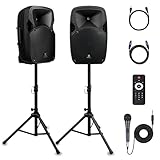 PRORECK Party 12 Powered PA System
A DJ is one of the biggest line items on any wedding budget. If someone you know can run a playlist, this is the difference between hiring one and not.
See it on Amazon →
PRORECK Party 12 Powered PA System
A DJ is one of the biggest line items on any wedding budget. If someone you know can run a playlist, this is the difference between hiring one and not.
See it on Amazon →
 Amazon Basics 46,000 BTU Patio Heater
Outdoor evening receptions live or die on this. Renting three for a night often costs more than buying two.
See it on Amazon →
Amazon Basics 46,000 BTU Patio Heater
Outdoor evening receptions live or die on this. Renting three for a night often costs more than buying two.
See it on Amazon →
 DazzlingStage Wireless Battery Uplights (6)
Battery uplights need no cable runs, so a venue that bans taped-down leads still lets you use them. The cheapest thing that changes how a room photographs.
See it on Amazon →
DazzlingStage Wireless Battery Uplights (6)
Battery uplights need no cable runs, so a venue that bans taped-down leads still lets you use them. The cheapest thing that changes how a room photographs.
See it on Amazon →
 Efavormart 8 ft Gold Hexagonal Arch
Heavy-duty metal rated to 100 lbs, and it resells afterwards, which is the part hiring one never does.
See it on Amazon →
Efavormart 8 ft Gold Hexagonal Arch
Heavy-duty metal rated to 100 lbs, and it resells afterwards, which is the part hiring one never does.
See it on Amazon →
 Wedding Planner Book
 LED String Lights
 Wedding Card Box
 Eucalyptus Garland

