Estimate your wedding food and catering costs based on guest count, meal style, and price tier. Get realistic budget expectations for your reception.
By WeddingBudgetCalc Team · Last updated January 6, 2026
8 min read
The four rentals worth buying instead
Most wedding advice is about trimming the flowers. These four are the line items where buying outright costs less than one night of hire, and three of them resell afterwards.
Tip Calculator - Calculate appropriate gratuities for catering staff.
Cake Calculator - Plan dessert service to complement your catering.
Catering Cost Guide - Detailed breakdown of catering costs by region and style.
Understanding Wedding Catering Costs
Catering is typically the largest single expense in your wedding budget, accounting for 30-40% of total costs. For most couples, this means spending $10,000 to $20,000 on food and beverage service alone. Understanding how catering costs break down helps you make informed decisions and avoid sticker shock when those quotes arrive.
The per-person cost you see from caterers isn't just for the food on the plate. It includes chef preparation, kitchen staff, service team, basic rentals, setup, and breakdown. Some caterers include items like linens and tableware in their base price, while others charge separately. Always request an itemized quote so you understand exactly what's covered.
What Affects Catering Prices
Several factors determine your final catering cost:
Location: Catering in major metropolitan areas (NYC, LA, San Francisco) costs 30-50% more than in smaller cities
Day and time: Saturday evening weddings command premium pricing; brunch or Friday weddings cost less
Menu complexity: Simple chicken dishes cost less than surf-and-turf or premium proteins like filet mignon
Dietary accommodations: Multiple special menus (vegan, kosher, gluten-free) increase costs
Service style: Plated dinners require more staff than buffets, increasing labor costs
Venue requirements: Off-premise catering (bringing everything to a venue without a kitchen) costs more than in-house catering
Your service style significantly impacts both cost and guest experience. Each option has distinct advantages and trade-offs.
Buffet Service
Buffets are typically 15-25% less expensive than plated dinners because they require fewer servers. Guests serve themselves from a central station, allowing more variety with less staff. However, buffets can create long lines if not planned properly, and food waste tends to be higher since guests often take more than they eat. Buffets work best for casual, relaxed receptions.
Plated Dinner Service
Plated dinners offer the most elegant, formal experience. Each guest receives their meal served directly to them, requiring more servers (typically 1 per 8-10 guests vs. 1 per 20 for buffets). This style offers precise portion control and a refined presentation. The higher cost comes from increased labor and the choreography required to serve everyone simultaneously.
Food Stations
Food stations combine elements of both styles. Multiple themed stations (carving, pasta, seafood, salads) are placed around the room, allowing guests to customize their meal while moving freely. Stations create a social, interactive atmosphere and work well for cocktail-style receptions. Costs fall between buffet and plated service.
Family Style
Family style places platters of food at each table for guests to share and pass. This creates a warm, communal feeling and often results in less waste since people take only what they'll eat. Family style requires fewer servers than plated but more food preparation than buffets.
Pro Tip: Many couples do a hybrid approach—plated salad course, followed by buffet or stations for the main course. This provides an elegant start while allowing more variety for the entree.
Hidden Costs to Watch For
The per-person price is just the starting point. Several additional fees can increase your final catering bill by 25-40%:
Service charge / Gratuity: Most caterers add 18-22% service charge, which may or may not go to staff
Sales tax: Depending on your state, expect 6-10% tax on food and sometimes on service charges
Cake cutting fee: $2-4 per person to cut and serve your wedding cake
Corkage fee: $15-35 per bottle if you provide your own wine
Overtime charges: $500-1,500+ per hour if your reception runs long
Setup and breakdown: Some caterers charge extra for non-standard setups
Delivery and transport: Off-premise catering may include travel fees
Rentals: Upgraded china, specialty linens, or additional equipment
Vendor meals: $25-50 per plate for photographer, DJ, and other vendors
Questions to Ask Caterers
Before signing a contract, get clear answers on:
What's included in your per-person price?
What's your service charge policy and does it go to staff?
Do you provide rentals or do we need a separate vendor?
What's your overtime policy and rate?
How do you handle dietary restrictions and allergies?
Can we do a tasting before booking?
What's your cancellation and refund policy?
When is the final headcount due?
How to Save on Wedding Catering
Catering is expensive, but there are legitimate ways to reduce costs without sacrificing quality:
Timing and Day
Brunch weddings cost significantly less than dinner—you're serving eggs, pancakes, and mimosas instead of steak and wine. Sunday weddings and weekday weddings typically receive 10-20% discounts. Even a Friday evening wedding can save 15% over Saturday.
Menu Simplification
Offering a single entree (usually with a vegetarian alternative) costs less than letting guests choose between multiple options. Caterers have to prepare extra of everything when guests choose, leading to higher prices and more waste. A thoughtfully selected single option is perfectly appropriate.
Limit Courses
Skip the soup course, choose salad OR appetizers (not both), and trust that your guests came to celebrate with you—not for a seven-course tasting menu. Most guests won't miss courses they didn't know were an option.
Seasonal and Local
Caterers can source seasonal, local ingredients more cheaply than out-of-season or imported items. A summer wedding with fresh local produce will cost less than one demanding winter tomatoes or exotic imports.
Consider In-House Catering
Venues with in-house catering often provide better value since they already have the kitchen, equipment, and staff. They're motivated to book your event and may offer package deals.
Reality Check: Don't choose a caterer based solely on price. The cheapest option often means corners cut on food quality, service, or both. Read reviews, ask for references, and always do a tasting.
Frequently Asked Questions
Wedding catering typically costs $70-85 per person for budget-friendly options, $100-150 per person for mid-range catering, and $175-300+ per person for luxury catering. These prices usually include food, basic service, and sometimes rentals, but vary significantly by location and menu choices. Always add 20-25% for tax and gratuity to get your true total.
Buffets are typically 15-25% less expensive than plated dinners because they require fewer servers (1 per 20 guests vs. 1 per 8-10 for plated). However, buffets may result in more food waste as guests can take more than they eat. Food stations fall between buffets and plated service in cost but offer more variety.
Wedding catering typically includes food preparation, service staff, basic linens, and sometimes rentals like plates and glasses. Additional costs often include bar service, cake cutting fees ($2-4 per person), specialty rentals, overtime charges, and gratuity (typically 18-22%). Setup, breakdown, and any off-premise delivery fees may also be extra. Always ask for an itemized quote.
Save on catering by choosing buffet over plated service, limiting menu options to a single entree, serving seasonal ingredients, having a brunch or lunch reception instead of dinner, reducing the guest list (each guest = $150-300 in food costs), skipping late-night snacks, and providing your own alcohol if the venue allows. Friday and Sunday weddings also typically cost less.
For 100 guests at a plated dinner, plan for 100 entrees plus 10-15 vegetarian options. For buffets, caterers typically prepare for 1.25x the guest count (125 portions) to ensure everyone gets enough food. During cocktail hour, plan for 6-8 appetizer pieces per person. Your caterer will guide exact quantities based on your menu.
Book your caterer 6-12 months before your wedding date. Popular caterers book up quickly, especially for peak wedding season (May-October). Schedule tastings 4-6 months out to finalize your menu. Your final headcount is typically due 2-3 weeks before the wedding, but the contract should be signed much earlier.
Yes, you should feed vendors working through meal service—typically the photographer, videographer, DJ, and wedding planner. Most caterers offer discounted vendor meals at $25-50 per person instead of full guest pricing. Check vendor contracts; many require a meal as part of their agreement. Vendors can eat a lighter meal than guests.
Catering typically accounts for 30-40% of your total wedding budget, making it the largest single expense. For a $30,000 wedding, expect to spend $9,000-12,000 on food and beverage. This usually doesn't include alcohol—add another 5-10% of budget for bar service if not included in your catering package.
It depends on your venue and caterer. Some allow BYOB with a corkage fee ($15-35 per bottle), which can still save money if you buy wholesale. Others require you use their bar service. If BYOB is allowed, buy from stores with return policies (like Costco) so you can return unopened bottles. Always verify liability insurance requirements.
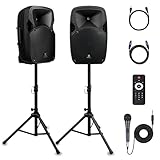 PRORECK Party 12 Powered PA System
A DJ is one of the biggest line items on any wedding budget. If someone you know can run a playlist, this is the difference between hiring one and not.
See it on Amazon →
PRORECK Party 12 Powered PA System
A DJ is one of the biggest line items on any wedding budget. If someone you know can run a playlist, this is the difference between hiring one and not.
See it on Amazon →
 Amazon Basics 46,000 BTU Patio Heater
Outdoor evening receptions live or die on this. Renting three for a night often costs more than buying two.
See it on Amazon →
Amazon Basics 46,000 BTU Patio Heater
Outdoor evening receptions live or die on this. Renting three for a night often costs more than buying two.
See it on Amazon →
 DazzlingStage Wireless Battery Uplights (6)
Battery uplights need no cable runs, so a venue that bans taped-down leads still lets you use them. The cheapest thing that changes how a room photographs.
See it on Amazon →
DazzlingStage Wireless Battery Uplights (6)
Battery uplights need no cable runs, so a venue that bans taped-down leads still lets you use them. The cheapest thing that changes how a room photographs.
See it on Amazon →
 Efavormart 8 ft Gold Hexagonal Arch
Heavy-duty metal rated to 100 lbs, and it resells afterwards, which is the part hiring one never does.
See it on Amazon →
Efavormart 8 ft Gold Hexagonal Arch
Heavy-duty metal rated to 100 lbs, and it resells afterwards, which is the part hiring one never does.
See it on Amazon →
 Champagne Flutes (Set of 12)
 Wedding Planner Book
 LED String Lights
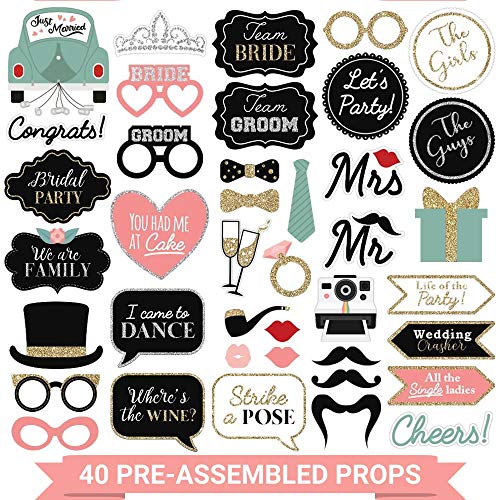 Photo Booth Props

