Written by the WeddingBudgetCalc Editorial Team · Last updated January 07, 2026
Our team combines wedding planning expertise with financial analysis. Data sourced from The Knot, Zola, and vendor surveys across 50 states.
The four rentals worth buying instead
Most wedding advice is about trimming the flowers. These four are the line items where buying outright costs less than one night of hire, and three of them resell afterwards.
As an Amazon Associate we earn from qualifying purchases. Prices and availability change; check before you buy.
Understanding Wedding Florist Costs
Wedding flowers represent one of the most variable line items in your budget. While the national average hovers around $2,600, actual costs swing dramatically based on your choices. A couple opting for simple greenery and seasonal blooms might spend $500-800, while elaborate floral installations with imported orchids and garden roses can exceed $10,000 or more. Understanding what drives these costs helps you make informed decisions that align with your vision and budget.
Floral expenses typically account for 8-10% of your total wedding budget. For a $30,000 wedding, that translates to $2,400-3,000 for flowers. However, this percentage varies significantly based on your priorities. Couples who prioritize photography or catering might allocate only 5% to florals, while those dreaming of a flower-filled celebration might dedicate 15% or more.
The florist industry operates differently than many other wedding vendors. Unlike a photographer who quotes a flat package rate, florists price each item individually. A consultation reveals exactly what goes into your quote: specific flower varieties, stem counts, arrangement sizes, and labor for each piece. This transparency is actually helpful because it allows you to adjust individual items rather than accepting or rejecting an entire package.
Geography significantly impacts pricing. Manhattan florists charge 40-60% more than those in mid-sized cities, reflecting higher rent, labor costs, and the premium wedding market. A bridal bouquet costing $175 in Nashville might run $280-350 in New York City. Before comparing quotes, ensure you're comparing florists in similar markets.
What Your Wedding Florist Quote Includes
Professional florist quotes encompass far more than flower costs. Understanding these components helps you evaluate whether a quote represents good value:
- Wholesale flower costs typically represent 25-35% of your total. Florists purchase from markets or growers, often at 50-70% below retail prices.
- Hard goods and supplies include vases, foam, wire, ribbon, and containers. These can add 10-15% to material costs.
- Design and labor consume significant hours. A full wedding order requires 15-40 hours for design, processing, arranging, and finishing.
- Delivery and setup involves transporting delicate arrangements and installing them at potentially multiple locations.
- Breakdown and rental retrieval happens post-wedding if you've rented vases or installations.
- Business overhead covers the florist's studio, refrigeration, vehicle, insurance, and administrative costs.
Item-by-Item Breakdown
Bridal Bouquet
$150 - $350
The centerpiece of your floral order. Size typically 10-12 inches across. Premium blooms like peonies, garden roses, or orchids push costs higher. Cascading styles require more stems and labor than round hand-tied bouquets.
Bridesmaid Bouquets
$75 - $150 each
Usually 70-80% the size of the bridal bouquet using complementary flowers. With 4 bridesmaids at $100 each, this line item totals $400. Consider smaller nosegays or single-variety bunches to reduce costs.
Reception Centerpieces
$75 - $250 each
Multiply by your table count for total cost. Twenty tables at $150 each equals $3,000 for centerpieces alone. Low arrangements run cheaper than elevated designs requiring additional structure and more blooms.
Ceremony Arch/Arbor
$300 - $2,000
The range reflects dramatic differences in coverage. A lightly adorned arch with asymmetrical greenery runs $300-500. Full floral coverage with premium blooms on all sides can exceed $2,000 for the florals alone.
Personal Flowers
Personal flowers include all the small pieces that accompany your wedding party and family members. While individually modest, they add up quickly:
- Boutonnieres ($15-35 each): Groom, groomsmen, fathers, grandfathers, ring bearer, officiant, and ushers. Eight boutonnieres at $25 each totals $200.
- Corsages ($25-50 each): Mothers, grandmothers, and special guests. Six corsages at $40 each runs $240.
- Flower girl petals ($25-75): Fresh petals or a decorated basket with flowers for the flower girl to carry.
- Hair flowers ($15-50): Individual blooms or small combs for the bride or bridesmaids.
A typical wedding party of 12-15 people easily generates $500-800 in personal flowers alone. Review this list carefully during your consultation and consider whether every person truly needs a floral piece.
Factors That Affect Flower Costs
Seasonality and Availability
Flower pricing follows agricultural reality. Peonies cost $8-15 per stem during their May-June peak but $25-40 per stem in December when imported from South America. Planning your wedding during your desired flowers' natural season can save 30-50% on specific varieties.
Seasonal Flower Pricing Examples
Peonies (May-June)
$8-15/stem
Peonies (December)
$25-40/stem
Dahlias (Aug-Oct)
$4-8/stem
Dahlias (March)
$12-20/stem
Roses (year-round)
$3-8/stem
Garden Roses
$8-15/stem
Flower Variety Selection
Variety choice dramatically impacts your budget. Carnations and chrysanthemums cost $1-3 per stem, while orchids and garden roses run $8-15 each. A bouquet requiring 30 stems could cost $30-90 in carnations or $240-450 in garden roses. Your florist can suggest similar-looking alternatives at different price points.
Budget-friendly options: Carnations, alstroemeria, chrysanthemums, stock, snapdragons, and greenery-forward designs using eucalyptus, Italian ruscus, and ferns.
Mid-range choices: Standard roses, lisianthus, ranunculus (in season), spray roses, and hydrangeas.
Premium varieties: Peonies, garden roses, orchids, calla lilies, lily of the valley, and anemones (especially out of season).
Local vs. Imported Flowers
Most commercial flowers sold in the US are imported from Colombia, Ecuador, or the Netherlands. This import infrastructure actually keeps prices stable year-round for many varieties. However, locally grown flowers from nearby farms can offer better quality and sometimes lower prices by eliminating shipping costs and time.
The trade-off: Local flowers follow strict seasonality. You'll have abundant options in summer and fall but limited choices in winter and early spring. If supporting local growers matters to you, discuss seasonal availability with your florist early in the planning process.
Pro Tip: The Greenery Advantage
Greenery costs significantly less than blooms while creating lush, full arrangements. Eucalyptus, Italian ruscus, and ferns run $2-5 per stem versus $5-15 for flowers. A greenery-heavy design with strategic bloom placement can look just as impressive at 40-50% lower cost.
Budget-Saving Strategies
Smart couples can achieve beautiful florals at any budget. These strategies help maximize impact while minimizing spend:
Choose Seasonal Flowers
Building your floral design around in-season blooms offers the best value. Spring weddings shine with tulips, ranunculus, and peonies. Summer offers dahlias, zinnias, and sunflowers. Fall brings chrysanthemums, marigolds, and dried elements. Winter celebrations look stunning with amaryllis, anemones, and abundant greenery.
Embrace Greenery-Forward Design
The organic, garden-inspired aesthetic popular in recent years happens to be budget-friendly. Cascading eucalyptus, abundant ferns, and masses of Italian ruscus create drama at fraction of the cost of bloom-heavy designs. Strategic placement of a few premium flowers provides focal points without busting your budget.
Repurpose Ceremony Flowers
Your ceremony flowers can do double duty at the reception. Aisle arrangements become buffet or bar decorations. Altar pieces move to the head table or cake display. Bridesmaids' bouquets line the sweetheart table. This strategy effectively cuts your total flower order by 20-30%.
- Altar/arch flowers relocate to the reception entrance or behind the head table
- Aisle markers become cocktail hour decorations or restroom accents
- Bridesmaids' bouquets in vases along the head table or cake display
- Ceremony backdrop greenery frames the band or DJ booth
Mix Floral with Non-Floral Elements
Candles, lanterns, books, fruit, and other decorative elements reduce how many flowers you need. A centerpiece combining a small floral arrangement with pillar candles costs less than an all-flower design while creating equally beautiful tablescapes.
Limit Statement Pieces
Rather than elaborate florals everywhere, invest in one or two statement pieces and keep other areas simple. A stunning ceremony arch paired with understated reception centerpieces creates memorable impact. Alternatively, dramatic centerpieces might pair with a simple ceremony setup.
DIY vs. Professional Florist
DIY flowers appeal to budget-conscious couples, but the decision involves more than just cost comparison. Understanding both options helps you make the right choice for your situation.
DIY Flower Costs
Wholesale flowers from online suppliers or local wholesale markets cost 40-60% less than florist-designed pieces. A DIY bridal bouquet runs $30-75 in flower costs versus $150-350 from a professional. For a full wedding, DIY flowers might total $400-1,000 compared to $2,000-3,500 professionally designed.
Hidden DIY Costs
The flower cost comparison doesn't tell the whole story. DIY flowers require:
- Supplies ($100-200): Floral foam, wire, tape, ribbon, clippers, buckets, and vases
- Time (15-30 hours): Processing, conditioning, and arranging flowers
- Space: Somewhere cool to store and work with flowers
- Transportation: Moving arrangements to your venue without damage
- Stress: Managing this project during an already hectic week
When DIY Makes Sense
DIY flowers work best for simple designs, small weddings, or couples with flexible schedules. Single-variety bouquets, greenery garlands, and loose arrangements forgive imperfection. If you enjoy crafts and have helping hands available, DIY can be rewarding and economical.
When to Hire a Professional
Complex designs, structured bouquets, and large-scale installations benefit from professional expertise. Florists understand flower mechanics, conditioning requirements, and timing that ensures your flowers look perfect. If your wedding week is already packed, adding DIY flowers may create unnecessary stress.
The Hybrid Approach
Many couples find a middle ground: hiring a florist for personal flowers (bouquets, boutonnieres) and statement pieces (ceremony arch) while DIYing simpler elements like bud vases for cocktail tables or greenery runners. This captures professional quality where it matters most while saving on background elements.
Getting the Most From Your Florist
Consultation Preparation
Come to your florist consultation with Pinterest boards or saved images showing styles you love. Be clear about your budget upfront so your florist can design within your means. Share your venue details, color palette, and any must-have flowers. The more information you provide, the better your florist can serve your vision.
Questions to Ask
- What seasonal flowers will be available for my wedding date?
- Can you suggest alternatives to expensive flowers I love?
- What's included in setup and breakdown?
- Do you offer rental vases or containers?
- What happens if a specific flower becomes unavailable?
- How do you handle delivery to multiple locations?
Red Flags to Watch For
Be cautious of florists who won't provide itemized quotes, pressure you toward expensive flowers without offering alternatives, or seem unfamiliar with your venue. A good florist welcomes questions, respects budgets, and offers creative solutions.
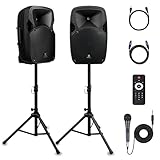 PRORECK Party 12 Powered PA System
A DJ is one of the biggest line items on any wedding budget. If someone you know can run a playlist, this is the difference between hiring one and not.
See it on Amazon →
PRORECK Party 12 Powered PA System
A DJ is one of the biggest line items on any wedding budget. If someone you know can run a playlist, this is the difference between hiring one and not.
See it on Amazon →
 Amazon Basics 46,000 BTU Patio Heater
Outdoor evening receptions live or die on this. Renting three for a night often costs more than buying two.
See it on Amazon →
Amazon Basics 46,000 BTU Patio Heater
Outdoor evening receptions live or die on this. Renting three for a night often costs more than buying two.
See it on Amazon →
 DazzlingStage Wireless Battery Uplights (6)
Battery uplights need no cable runs, so a venue that bans taped-down leads still lets you use them. The cheapest thing that changes how a room photographs.
See it on Amazon →
DazzlingStage Wireless Battery Uplights (6)
Battery uplights need no cable runs, so a venue that bans taped-down leads still lets you use them. The cheapest thing that changes how a room photographs.
See it on Amazon →
 Efavormart 8 ft Gold Hexagonal Arch
Heavy-duty metal rated to 100 lbs, and it resells afterwards, which is the part hiring one never does.
See it on Amazon →
Efavormart 8 ft Gold Hexagonal Arch
Heavy-duty metal rated to 100 lbs, and it resells afterwards, which is the part hiring one never does.
See it on Amazon →
 Eucalyptus Garland (6 Pack)
 LED Fairy String Lights
 Wedding Planner Book
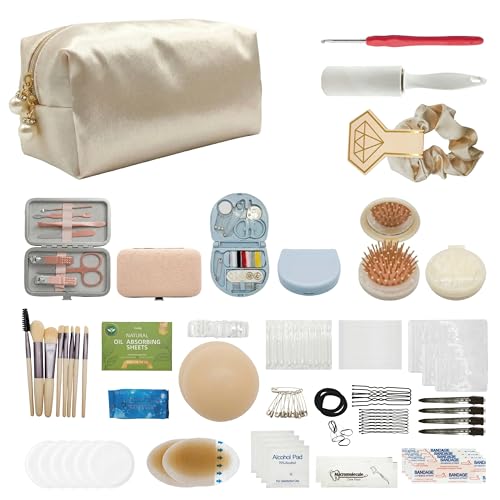 Bridal Emergency Kit