
The four rentals worth buying instead
Most wedding advice is about trimming the flowers. These four are the line items where buying outright costs less than one night of hire, and three of them resell afterwards.
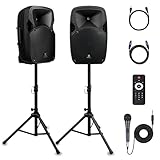 PRORECK Party 12 Powered PA System
A DJ is one of the biggest line items on any wedding budget. If someone you know can run a playlist, this is the difference between hiring one and not.
See it on Amazon →
PRORECK Party 12 Powered PA System
A DJ is one of the biggest line items on any wedding budget. If someone you know can run a playlist, this is the difference between hiring one and not.
See it on Amazon →
 Amazon Basics 46,000 BTU Patio Heater
Outdoor evening receptions live or die on this. Renting three for a night often costs more than buying two.
See it on Amazon →
Amazon Basics 46,000 BTU Patio Heater
Outdoor evening receptions live or die on this. Renting three for a night often costs more than buying two.
See it on Amazon →
 DazzlingStage Wireless Battery Uplights (6)
Battery uplights need no cable runs, so a venue that bans taped-down leads still lets you use them. The cheapest thing that changes how a room photographs.
See it on Amazon →
DazzlingStage Wireless Battery Uplights (6)
Battery uplights need no cable runs, so a venue that bans taped-down leads still lets you use them. The cheapest thing that changes how a room photographs.
See it on Amazon →
 Efavormart 8 ft Gold Hexagonal Arch
Heavy-duty metal rated to 100 lbs, and it resells afterwards, which is the part hiring one never does.
See it on Amazon →
Efavormart 8 ft Gold Hexagonal Arch
Heavy-duty metal rated to 100 lbs, and it resells afterwards, which is the part hiring one never does.
See it on Amazon →
As an Amazon Associate we earn from qualifying purchases. Prices and availability change; check before you buy.
The Short Answer
The question of who pays for the honeymoon has evolved dramatically over the decades. While tradition historically placed this responsibility on the groom or his family, the modern reality is far more flexible and practical. Today, most couples fund their own honeymoon through a combination of personal savings, wedding gifts, honeymoon funds, and family contributions.
Understanding both the traditional expectations and contemporary practices helps you navigate conversations with family members, set up appropriate registries, and make financial decisions that work for your specific situation. Whether you are planning a luxurious escape to the Maldives or a cozy weekend getaway, knowing your options for funding that dream trip is essential to your overall wedding budget planning.
Modern Honeymoon Statistics
of couples now pay for their own honeymoon, either fully or in combination with contributions from family and friends
Traditional Etiquette: The Historical View
Wedding etiquette traditions developed during times when marriage represented a significant financial and social transaction between families. The division of costs reflected broader assumptions about family roles and responsibilities that, while outdated today, still influence some families' expectations.
The Groom's Family Pays
Historically, the groom or his family was expected to cover honeymoon expenses. This balanced the bride's family paying for the wedding ceremony and reception, the dress, flowers, photography, and most other costs.
Balancing Wedding Costs
When the bride's family shouldered nearly all wedding expenses, the honeymoon was one of few costs allocated to the groom's side, along with the marriage license, officiant fee, bride's rings, and groomsmen gifts.
Cultural Differences
Some cultures maintained different traditions. In certain communities, the bride's family or even specific relatives like grandparents traditionally gifted the honeymoon as a special wedding present to the new couple.
These traditional guidelines emerged from an era when young couples rarely had independent financial resources before marriage. Extended families were expected to launch newlyweds into married life, with the honeymoon representing the final gift before the couple established their own household.
Why Traditional Rules Still Matter
Even if you do not personally follow traditional etiquette, understanding these customs helps in several practical ways. Some older family members may still hold these expectations, and knowing the historical context allows for more graceful conversations about modern financial realities. Additionally, some families actively want to follow tradition, and understanding their perspective helps you accept such generosity graciously.
Modern Reality: How Couples Actually Pay
The landscape of honeymoon financing has transformed dramatically. Today's couples typically marry later, often with established careers and financial independence. This shift, combined with changing family structures and economic realities, means honeymoon funding looks very different than it did a generation ago.
Traditional Model
- Groom's family pays entirely
- Honeymoon viewed as final gift
- Couples had limited savings
- Families expected to provide
- Destination often modest
Modern Approach
- Couples self-fund primarily
- Honeymoon funds gain acceptance
- Travel rewards strategically used
- Mini-moon plus delayed trip
- Experiences prioritized over gifts
Research from wedding industry surveys consistently shows that approximately two-thirds of couples today pay for their own honeymoon. The remaining third receives partial or full funding from family members, often as a wedding gift rather than an obligation. This represents a fundamental shift from presumed family responsibility to personal choice and generosity.
The Rise of Honeymoon Funds
Perhaps the most significant change in honeymoon financing is the widespread acceptance of honeymoon funds and cash registries. What was once considered tacky or inappropriate has become not just acceptable but expected by many guests. Over 60% of couples now include some form of experience-based or cash registry alongside traditional gift registries.
Key Insight: The average honeymoon fund raises between $1,500 and $3,500, covering roughly 25-50% of typical honeymoon costs. Success depends heavily on presentation, platform choice, and how well you communicate your honeymoon plans to guests.
This shift reflects broader generational changes in attitudes toward money, gifts, and experiences. Younger guests particularly appreciate the option to contribute to meaningful experiences rather than purchasing physical items the couple may not need. Many couples today are already established in their homes with household items, making traditional registry gifts less practical.
Average Honeymoon Costs in 2026
Understanding typical honeymoon costs helps you set realistic funding goals and make informed decisions about destinations, duration, and timing. Costs vary dramatically based on your choices, but industry data provides useful benchmarks for planning.
| Honeymoon Tier | Cost Range | Typical Destinations | Duration |
|---|---|---|---|
| Budget | $2,000 - $4,000 | Mexico, Caribbean all-inclusive, domestic road trip | 5-7 days |
| Mid-Range | $4,500 - $8,000 | Hawaii, Costa Rica, Portugal, Thailand | 7-10 days |
| Upscale | $8,000 - $12,000 | Italy, Greece, Bali, Tahiti | 10-14 days |
| Luxury | $12,000 - $20,000 | Maldives, Bora Bora, African safari | 10-14 days |
| Ultra-Luxury | $20,000+ | Multiple destinations, private villas, first-class travel | 14+ days |
The national average honeymoon cost falls between $4,500 and $6,500, though this figure is heavily influenced by destination choice and travel style. Airfare typically represents 25-35% of the total budget, with accommodations taking another 35-45%. The remainder covers activities, dining, transportation, and incidentals.
What Drives Honeymoon Costs
Several factors significantly impact your honeymoon budget beyond destination choice. Peak season travel (December through March for tropical destinations) commands premium pricing, while shoulder season trips can save 20-40%. All-inclusive resorts simplify budgeting but may cost more than independent travel for budget-conscious couples. Flight distance, visa requirements, and local cost of living all contribute to final costs.
Setting Up a Honeymoon Fund
A well-designed honeymoon fund can significantly offset your travel costs while providing guests a meaningful way to contribute to your marriage. The key to success lies in thoughtful setup and tasteful presentation that focuses on experiences rather than cash requests.
Choose Your Platform
Popular options include Honeyfund (free, established), Zola (integrated with registry), Hitchd (modern interface), and Traveler's Joy (travel-focused). Compare fees, payout times, and features before committing.
Create Specific Experience Items
Instead of generic cash requests, list specific experiences: "Sunset sailing cruise in Santorini - $150," "Couples spa day at resort - $200," "Snorkeling excursion - $75." This gives gifts meaning and helps guests visualize their contribution.
Include Photos and Context
Add destination photos, explain why you chose this location, and share your excitement. Guests contribute more generously when they connect emotionally with your plans and can picture the experiences.
Set Realistic Fund Goals
Calculate how much you realistically expect to raise based on guest count. With average contributions of $50-100 per contributing guest and roughly 50-60% participation, a 100-guest wedding might raise $2,500-$5,000.
Offer Mixed Options
Include a traditional registry alongside your honeymoon fund. Some guests strongly prefer giving physical gifts, and offering options ensures everyone can contribute comfortably in their preferred way.
Honeymoon Fund Etiquette Tips
While honeymoon funds have gained widespread acceptance, presentation still matters. Avoid language that sounds like you are asking for cash; instead, frame contributions as experiences. Never list your fund on the invitation itself - include registry information only on your wedding website or in informal communications. Send prompt, personalized thank-you notes acknowledging each contribution and sharing how you will use their gift.
Platform Fees to Consider: Most platforms charge 2.5-3% per transaction. Honeyfund offers a free option if you accept PayPal or check, while Zola and similar services charge standard processing fees. For a $3,000 fund, expect $75-90 in fees at standard rates.
When Family Wants to Contribute
Many families still wish to contribute to the honeymoon, whether from traditional expectations or simple generosity. Handling these offers gracefully while maintaining your own financial autonomy requires tact and clear communication.
Accepting Family Contributions Gracefully
When parents or other family members offer to fund your honeymoon, express genuine gratitude regardless of whether you need the help. Some families consider this contribution an important part of their parental role, and accepting graciously honors that sentiment. Be clear about what their contribution will fund - perhaps a specific excursion, upgrade, or portion of the trip - so they feel connected to the gift.
The Honeymoon as a Wedding Gift
Increasingly, family honeymoon contributions come as wedding gifts rather than obligatory payments. Parents who might have funded the honeymoon decades ago now often provide a set amount as their wedding gift, allowing the couple to allocate funds as they choose. This approach respects modern couple autonomy while still allowing generous family support.
Partial Funding Scenarios
Many families contribute partial funding - perhaps covering flights while the couple pays for accommodations, or providing a set dollar amount toward the overall trip. These arrangements work well when expectations are clear upfront. Discuss specifics before booking to avoid misunderstandings about amounts, timing of payments, or any strings attached to the gift.
Navigating Multiple Family Contributions
When both sets of parents want to contribute, coordinate carefully to ensure fairness and prevent awkwardness. Some couples allow each family to fund different aspects (one pays airfare, one pays resort), while others accept equal cash contributions from each side. The key is transparent communication so no one feels slighted or overcommitted.
Creative Honeymoon Funding Strategies
Beyond traditional savings and family contributions, savvy couples employ various strategies to fund dream honeymoons without breaking the budget. These approaches can save thousands of dollars or enable trips that would otherwise be unaffordable.
Travel Rewards and Points
Wedding expenses present a unique opportunity to accumulate travel rewards. With average wedding costs exceeding $30,000, strategic credit card use during planning can generate significant points. A card offering 2x points on travel and dining could yield $600-1,000 in rewards from wedding spending alone. Many couples open travel rewards cards specifically for wedding purchases, earning sign-up bonuses worth $500-1,000 in travel.
Points and miles can cover flights, hotels, or both. Transferable points programs like Chase Ultimate Rewards or American Express Membership Rewards offer flexibility, while airline and hotel co-branded cards provide targeted value for specific chains. Start early - most rewards require 12-18 months to accumulate and redeem effectively.
The Mini-Moon Strategy
About 40% of couples now opt for a "mini-moon" immediately after the wedding, delaying their main honeymoon by several months to a year. This approach offers multiple benefits: you avoid post-wedding exhaustion during your big trip, allow time for financial recovery from wedding expenses, take advantage of off-peak pricing, and extend the celebration feeling throughout your first year of marriage.
A mini-moon might be a long weekend at a nearby destination - a beach town, mountain cabin, or city you have wanted to explore. Keep it simple and restorative, saving adventure and intensive sightseeing for your rested, well-funded future trip.
Delayed Honeymoon Benefits
Couples who delay their honeymoon often end up taking better trips than they could have afforded immediately after the wedding. Benefits include:
- More time to save and plan the perfect itinerary
- Ability to travel during optimal weather seasons
- Access to off-peak pricing if timing is flexible
- Honeymoon fund contributions fully collected and available
- Physical and emotional recovery from wedding stress
- Something exciting to look forward to as newlyweds
Budget-Stretching Tips
Regardless of your funding sources, several strategies maximize honeymoon value. Book accommodations with free cancellation, then continue monitoring prices and rebook if rates drop. Use price tracking tools for flights. Consider alternative airports or nearby destinations that offer similar experiences at lower costs. Look for honeymoon packages that include extras like spa credits, dinners, or room upgrades for newlyweds.
Budget-Friendly Honeymoon Destinations
A memorable honeymoon does not require spending $15,000 on overwater bungalows. Many destinations offer romantic experiences, beautiful settings, and adventure at a fraction of the cost of premium honeymoon spots. These destinations deliver excellent value without sacrificing the honeymoon magic.
Mexico
Portugal
Costa Rica
Thailand
Puerto Rico
Bali
These estimates include round-trip airfare for two from major US cities, mid-range to nice accommodations, meals, and basic activities. Actual costs vary based on departure city, travel dates, and personal preferences. All offer romantic ambiance, cultural richness, and honeymoon-worthy experiences at accessible price points.
Domestic Honeymoon Options
Do not overlook domestic destinations that eliminate passport concerns and reduce airfare costs. Hawaii remains a classic choice, while options like Napa Valley wine country, the Pacific Coast Highway, national parks, or charming coastal towns offer memorable experiences. Road trip honeymoons allow flexibility and can be remarkably affordable while creating unique shared memories.
Combining Wedding Budget and Honeymoon Decisions
Smart couples consider wedding and honeymoon costs together rather than as separate budgets. The choices you make for your wedding directly impact what you can afford for your honeymoon, and vice versa. Taking a holistic view leads to better financial decisions and potentially better experiences overall.
The Trade-Off Mindset
Every wedding expense represents a potential honeymoon trade-off. The $3,000 you might spend upgrading from DJ to live band could instead fund a week in Portugal. Premium floral arrangements costing $2,500 more than standard options equal several nights at a beach resort. This is not about deprivation but about consciously choosing where your money creates the most meaningful memories.
Many couples who have completed wedding planning report wishing they had spent less on single-day wedding elements and more on extended honeymoon experiences. A wedding is one day; a honeymoon is a week or more of quality time together as newlyweds.
Setting Combined Budget Goals
Consider setting a combined wedding-plus-honeymoon budget rather than treating them separately. If your total is $35,000, you might allocate $28,000 to the wedding and $7,000 to the honeymoon, or $32,000 and $3,000 plus a delayed trip. This combined approach prevents the common pattern of overspending on the wedding and having nothing left for travel.
When to Book Your Honeymoon
Timing your honeymoon booking strategically can save money and reduce stress. Most couples book 4-8 months before the wedding once major wedding expenses are committed and they understand remaining funds. Booking earlier (6-12 months out) may secure better rates but risks needing to cancel if wedding plans change. Waiting until after the wedding provides maximum flexibility but may result in higher prices and limited availability.
Budget Rule of Thumb: Many financial planners suggest allocating 10-20% of your total wedding budget to the honeymoon. For a $30,000 wedding budget, that translates to $3,000-$6,000 for travel - aligning well with average honeymoon costs.
Regional and Cultural Considerations
Honeymoon funding traditions vary significantly based on geography, cultural background, and family customs. Understanding these regional differences helps you navigate family expectations and plan conversations about contributions.
Regional Variations in the United States
The South: Traditional family funding remains more common in Southern states, where parents often view honeymoon contributions as an expected part of wedding giving. The groom's family traditionally covering the honeymoon is still practiced in many families, particularly in more traditional communities.
The Northeast: Couples in metropolitan areas like New York, Boston, and Philadelphia tend toward self-funding, with honeymoon funds and cash registries being widely accepted. Family contributions, when offered, typically come as gifts rather than obligations.
The Midwest: A practical approach prevails, with couples often delaying honeymoons or choosing domestic destinations. Family contributions are common but not expected, and there is less emphasis on luxury honeymoon destinations.
The West Coast: Experience-focused honeymoons and alternative destinations (road trips, adventure travel) are popular. Tech-savvy couples embrace honeymoon fund platforms, and the mini-moon plus delayed trip strategy is widely adopted.
Cultural Traditions
Many cultural traditions shape honeymoon funding expectations:
- Jewish traditions: The honeymoon may be funded through wedding gifts, with some families contributing to a newlywed fund that can be used for travel or establishing a home.
- Latino cultures: Extended family often contributes collectively, with godparents (padrinos) sometimes specifically designated to fund the honeymoon as their gift.
- Asian-American traditions: Monetary gifts are common, and couples may use wedding cash gifts to fund their honeymoon. Some families view this as the couple's discretionary spending.
- Indian-American families: Elaborate honeymoons are often funded by family, viewed as an extension of wedding celebrations and family generosity.
Key Insight: When navigating cultural expectations, communicate openly with both families about their assumptions and your preferences. What matters most is that everyone feels comfortable with the arrangement, regardless of what tradition might dictate.
Related Planning Resources
Your honeymoon is just one piece of the wedding financial puzzle. These resources will help you plan comprehensively:
Who Pays for the Wedding?
Comprehensive guide to wedding payment traditions, modern cost-sharing arrangements, and navigating family contributions.
Who Pays for the Rehearsal Dinner?
Learn about rehearsal dinner hosting traditions and how this expense fits into overall wedding budgeting.
Who Pays for the Bridal Shower?
Understand bridal shower cost-sharing among bridesmaids and family, with budget-friendly celebration ideas.
Budget Planning Tools
- Wedding Budget Calculator - Build a complete budget including honeymoon allocation
- Ultimate Wedding Budget Guide 2026 - Comprehensive budgeting strategies
- Wedding Budgets by Amount - See realistic breakdowns for $10K to $50K+ weddings
- Wedding Timing Guides - How seasonal and day-of-week choices affect your budget
Frequently Asked Questions
Traditionally, the groom or groom's family was responsible for paying for the honeymoon. This custom originated when the bride's family covered most wedding expenses, so the honeymoon was one of the few costs allocated to the groom's side. However, in modern times, most couples pay for their own honeymoon or receive contributions from multiple sources including family gifts and honeymoon funds.
The average honeymoon costs between $4,500 and $12,000 in 2026, with the median around $6,000. Budget honeymoons can be achieved for $2,000-$4,000, while luxury honeymoons to destinations like the Maldives or Bora Bora can exceed $15,000-$25,000. Key factors affecting cost include destination, duration (typically 7-10 days), accommodations, and time of year.
Honeymoon funds are no longer considered tacky and have become widely accepted, with over 60% of couples including some form of cash registry in their wedding. The key is presentation: frame contributions as experiences rather than cash requests, provide context about your honeymoon plans, and always offer a mix of gift options for guests who prefer traditional presents. Major platforms like Zola, Hitchd, and Honeyfund have normalized this practice.
To set up a honeymoon fund: 1) Choose a platform like Honeyfund, Zola, Hitchd, or Traveler's Joy, 2) Create specific experience items (sunset dinner, spa day, excursion) rather than generic cash requests, 3) Include photos and descriptions of your destination, 4) Set realistic funding goals, 5) Link to your wedding website, and 6) Share the link tastefully on invitations or your wedding website. Most platforms charge 0-3% fees, though some are free if you opt for slower bank transfers.
Delaying your honeymoon (sometimes called a "mini-moon now, big trip later" approach) is a smart financial strategy many couples use. Benefits include: recovering financially from wedding expenses, taking advantage of off-peak pricing, having more time to plan your dream destination, and avoiding post-wedding exhaustion. About 40% of couples now delay their main honeymoon by 6-12 months, often taking a shorter 2-3 day mini-moon immediately after the wedding.
Budget-friendly honeymoon destinations offering great value include: Mexico (all-inclusive resorts from $150/night), Portugal (affordable European charm), Costa Rica (adventure and beaches), Thailand (luxury for less), Puerto Rico (no passport needed for US citizens), and Bali (upscale accommodations under $100/night). Consider shoulder season travel (just before or after peak season) for 20-40% savings on any destination.
A good target is 10-20% of your total wedding budget. For a $30,000 wedding, aim to save $3,000-$6,000 for the honeymoon. Start a dedicated honeymoon savings account early in your engagement, automate monthly contributions, and use any wedding cash gifts to supplement your fund. The mini-moon plus delayed trip strategy also allows more time to save for your dream destination.
Absolutely, and wedding spending creates a perfect opportunity to accumulate points. Open a travel rewards card 6-12 months before your wedding and use it for wedding expenses (paying the balance monthly). Sign-up bonuses alone can be worth $500-$1,000 in travel. Points can cover flights, hotels, or both. Popular programs include Chase Ultimate Rewards, American Express Membership Rewards, and Capital One Miles.
This is increasingly common and completely acceptable. Take a mini-moon (a 2-3 day getaway nearby) immediately after the wedding to decompress, then plan your main honeymoon for 6-12 months later when you have recovered financially and emotionally from wedding planning. Benefits include better pricing during off-peak seasons, more time to save, and something exciting to anticipate during your first year of marriage.
Most couples book 4-8 months before the wedding once major wedding expenses are committed. Booking earlier (6-12 months out) may secure better rates and availability but risks needing changes if wedding plans shift. Booking after gives maximum flexibility but may mean higher prices and limited options. If booking before, use refundable rates or travel insurance to protect your investment.
Plan Your Complete Wedding Budget
Use our free calculator to allocate funds for your wedding and honeymoon together, ensuring you celebrate in style without financial stress.


