Wedding pricing often feels arbitrary. Why does a photographer charge $4,000 for eight hours when that works out to $500 per hour? Why does catering cost $150 per person when the food itself might cost $30? Understanding how wedding vendors actually calculate their prices transforms you from a confused consumer into an informed buyer who can budget accurately and spot both bargains and overcharges.
This guide breaks down the pricing structures behind every major wedding vendor category. You'll learn what goes into each quote, why certain costs seem inflated, and how to evaluate whether you're getting fair value for your money.
Table of Contents
The four rentals worth buying instead
Most wedding advice is about trimming the flowers. These four are the line items where buying outright costs less than one night of hire, and three of them resell afterwards.
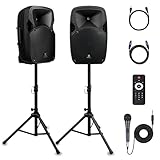 PRORECK Party 12 Powered PA System
A DJ is one of the biggest line items on any wedding budget. If someone you know can run a playlist, this is the difference between hiring one and not.
See it on Amazon →
PRORECK Party 12 Powered PA System
A DJ is one of the biggest line items on any wedding budget. If someone you know can run a playlist, this is the difference between hiring one and not.
See it on Amazon →
 Amazon Basics 46,000 BTU Patio Heater
Outdoor evening receptions live or die on this. Renting three for a night often costs more than buying two.
See it on Amazon →
Amazon Basics 46,000 BTU Patio Heater
Outdoor evening receptions live or die on this. Renting three for a night often costs more than buying two.
See it on Amazon →
 DazzlingStage Wireless Battery Uplights (6)
Battery uplights need no cable runs, so a venue that bans taped-down leads still lets you use them. The cheapest thing that changes how a room photographs.
See it on Amazon →
DazzlingStage Wireless Battery Uplights (6)
Battery uplights need no cable runs, so a venue that bans taped-down leads still lets you use them. The cheapest thing that changes how a room photographs.
See it on Amazon →
 Efavormart 8 ft Gold Hexagonal Arch
Heavy-duty metal rated to 100 lbs, and it resells afterwards, which is the part hiring one never does.
See it on Amazon →
Efavormart 8 ft Gold Hexagonal Arch
Heavy-duty metal rated to 100 lbs, and it resells afterwards, which is the part hiring one never does.
See it on Amazon →
As an Amazon Associate we earn from qualifying purchases. Prices and availability change; check before you buy.
The Foundation: Why Wedding Services Cost What They Do
Before diving into specific vendors, it helps to understand the common factors that drive wedding pricing across all categories. These fundamentals explain why wedding versions of services often cost more than their non-wedding equivalents.
One-Time Events Carry Higher Stakes
A wedding happens once. If a photographer misses a key moment, there's no reshoot. If a caterer runs out of food, there's no second chance. This zero-margin-for-error reality means wedding vendors invest more in backup equipment, assistant staff, and contingency planning than vendors working repeatable events. A wedding photographer might carry $20,000+ in backup gear that hopefully never gets used.
Peak Demand Pricing
Most weddings happen on Saturdays between May and October. A venue might have 48 Saturday nights per year but could potentially host 200+ events annually. The demand concentration for premium dates allows vendors to charge premium prices. This isn't gouging—it's basic supply and demand economics.
Hidden Time Investment
The hours you see on the wedding day are a fraction of the total work. A florist doesn't just show up with arrangements—there are design consultations, sourcing specific flowers, conditioning blooms days in advance, and early morning setup. Understanding this invisible labor helps explain why day-of service rates seem high.
The 3x Rule for Wedding Service Time
As a rough guideline, most wedding vendors spend approximately three times as many hours on your wedding as you see them working. An 8-hour photographer invests 24+ total hours. A 2-hour hair and makeup session involves 6+ hours of consultation, practice, and travel.
Venue and Catering: The Per-Person Economics
Venues and caterers together typically consume 45-55% of wedding budgets. Understanding their pricing models is essential for accurate budgeting.
Venue Rental Structures
Venues use several pricing models, often in combination:
Flat rental fee: A fixed cost for the space regardless of guest count. This favors larger weddings—$10,000 rental for 50 guests is $200/person, while 150 guests drops it to $67/person.
Per-person minimum: Many all-inclusive venues require a minimum spend based on headcount. A $150/person minimum for 100 guests means $15,000 regardless of what services you actually want.
Food and beverage minimum: Rather than charging for the space, upscale venues require a minimum spend on catering. A $25,000 F&B minimum means you're paying for the venue through your catering choices.
Percentage of costs: Some venues charge a service fee (often 20-25%) on top of all vendor costs, essentially taking a cut of every wedding expense.
Catering Cost Breakdown
When a caterer quotes $150 per person, that price covers far more than food. Here's a typical breakdown:
$150 Per-Person Catering Breakdown
This explains why catering costs don't scale linearly with menu choices. Upgrading from chicken to beef might add $10 in food cost, but everything else remains constant—so your per-person price goes up $10, not proportionally to the food cost difference.
Service Charges and Gratuities
Catering quotes often exclude mandatory service charges (typically 18-25%), which can add thousands to your final bill. A $15,000 catering estimate becomes $18,000-$18,750 after service charges. Additionally, service charges often don't go to staff—they cover administrative costs—so tips may still be expected on top.
Photography and Videography: The Day Rate Myth
Photography pricing confuses couples because an 8-hour package at $4,000 seems to equal $500/hour—an extraordinarily high rate. But this calculation fundamentally misunderstands how photography businesses work.
What a Photography Package Actually Covers
An 8-hour wedding photography package typically involves 40-60 total work hours:
- Pre-wedding: 2-4 hours of consultations, timeline planning, venue visits
- Wedding day: 8-12 hours including travel and setup
- Post-production: 30-50 hours of culling, editing, and gallery creation
- Delivery: 2-4 hours of gallery preparation, client communication
At 50 total hours, a $4,000 package works out to $80/hour worked—reasonable for a skilled professional with expensive equipment. Add business overhead (insurance, software subscriptions, equipment depreciation, marketing, taxes), and the effective hourly rate drops further.
Why Experience Commands Premium Prices
A photographer with 200 weddings under their belt can anticipate moments before they happen, navigate challenging lighting conditions, and manage family dynamics efficiently. This expertise is invisible in the photos but dramatically affects the outcome. Premium photographers charge for judgment, not just button-pressing.
Album and Print Pricing
Photography packages that include albums often build in significant markup. A $1,000 album might cost the photographer $300-400 to produce. This isn't necessarily unfair—the photographer provides design expertise and handles the production logistics—but understanding this helps if you're considering albums through external services instead.
Flowers and Decor: Labor Drives the Cost
Floral pricing mystifies many couples. How can a bridal bouquet cost $300 when the flowers themselves might retail for $60? The answer lies in the labor intensity of professional floral work.
From Wholesale to Wedding
Florists purchase flowers at wholesale, but the wholesale price is just the beginning:
$300 Bridal Bouquet Breakdown
The Seasonality Factor
Flower prices fluctuate dramatically by season and availability. Peonies in January cost 3-4x their peak-season price because they must be imported. Florists build uncertainty buffers into quotes because they can't guarantee prices on flowers ordered months in advance. This is why floral estimates often come as ranges rather than fixed prices.
Installation and Breakdown
Large floral installations—ceremony arches, reception centerpieces—require significant on-site labor. A $2,000 arch might take a team of two 3-4 hours to install on the wedding morning. This labor cost, plus the logistics of transporting arrangements without damage, adds substantially to the bottom line.
Entertainment: Event Economics
DJ and band pricing often surprises couples. How can a DJ charge $1,500 for a few hours of playing music?
DJ Pricing Logic
A wedding DJ's price covers far more than playing songs:
- Equipment: Professional sound systems ($5,000-$15,000 in gear) need to be transported, set up, and maintained
- Consultation: 2-4 hours of planning meetings, music coordination, timeline development
- Event day: 6-8 hours including setup, performance, and breakdown
- MC responsibilities: Many wedding DJs also serve as emcees, requiring preparation and performance skills
- Insurance and licensing: Professional DJs carry liability insurance and music licensing
A $1,500 wedding DJ spending 15 total hours earns $100/hour before equipment and overhead costs—a reasonable professional rate.
Band Economics
Live bands cost more because you're paying multiple musicians. A 6-piece band at $6,000 means roughly $1,000 per musician for rehearsals, travel, performance, and personal equipment. Factor in a band leader who handles coordination, and individual musician compensation is often surprisingly modest.
Hair and Makeup: Time and Expertise
Bridal beauty services appear expensive for the hours involved, but the pricing reflects specialized skills and significant preparation.
What Goes Into Bridal Beauty Pricing
A $300 bridal hair and makeup appointment involves:
- Trial session: 2-3 hours testing looks and ensuring compatibility (often billed separately at $100-200)
- Product investment: High-quality, photography-ready products cost significantly more than drugstore alternatives
- Early call times: Wedding day typically starts at 6-7 AM, requiring early morning travel
- Continuous availability: Artist remains available for touch-ups through photos
- Specialized skills: Bridal styles require techniques that hold up under emotional conditions (tears, heat, long days)
The Hidden Costs That Vendors Build In
Every vendor quote includes costs you don't see itemized. Understanding these helps explain pricing and identifies legitimate room for negotiation.
Insurance
Professional wedding vendors carry general liability insurance ($1-2 million policies are standard), equipment insurance, and sometimes additional coverage. Annual premiums of $1,000-$5,000 get distributed across the year's weddings.
Taxes and Business Overhead
Self-employed vendors pay both employer and employee portions of payroll taxes (15.3% in the US), plus income tax, plus business expenses. A vendor charging $100/hour might net $50-60 after all deductions.
Non-Billable Time
Vendors spend significant time on activities they can't charge for: marketing, responding to inquiries, bookkeeping, continuing education. A photographer might spend 20 hours on business activities for every wedding booked. This overhead gets built into package prices.
Expert Tips for Evaluating Vendor Quotes
Armed with knowledge of how costs are calculated, you can evaluate quotes more intelligently and identify genuine value.
Ask for Itemized Breakdowns
Request detailed quotes that separate labor from materials, especially for catering and florals. Itemized quotes let you compare apples-to-apples between vendors and identify where money goes. A florist charging $8,000 for "reception florals" is less helpful than one who specifies $3,000 in flowers, $2,500 in labor, $1,500 in rentals, and $1,000 in delivery and setup.
Understand What's Included—And What's Not
Every vendor defines "packages" differently. A $4,000 photography package might include 400 edited images or 800. A $150/person catering quote might include linens and rentals or charge them separately. Create a spreadsheet comparing what each vendor includes at their quoted price to make fair comparisons.
Calculate True Hourly Rates
When comparing service vendors (photographers, DJs, planners), estimate total hours involved—not just event hours. A photographer charging $4,000 for 8 hours of coverage plus 50 hours of editing works out to $69/hour. That context helps evaluate whether pricing is fair for your market.
Request Multiple Tier Options
Ask vendors for quotes at different service levels: a basic package, their recommended option, and a premium tier. This reveals what you get for incremental spending and helps identify the best value point. Sometimes the middle tier provides 80% of premium features at 60% of the price.
Red Flags in Vendor Pricing
Watch for these warning signs when evaluating quotes:
- Vague packages with unclear deliverables
- Prices significantly below market without explanation
- Hidden fees mentioned only after booking
- Resistance to providing itemized breakdowns
- Pressure to book immediately without time to compare
- Deposits exceeding 50% of total cost
Common Pricing Mistakes Couples Make
Understanding vendor pricing helps you avoid these frequent budget errors:
Mistake #1: Comparing Only Base Prices
A venue quoting $10,000 with a 25% service charge and 10% tax costs $13,500 total. Another venue at $12,000 with all-inclusive pricing is actually cheaper. Always calculate all-in costs before comparing options.
Mistake #2: Overlooking Per-Person Implications
A "small" difference of $15/person in catering costs multiplied by 150 guests equals $2,250—the cost of a videographer or live musician. Small per-person changes compound dramatically at scale.
Mistake #3: Ignoring Vendor Experience Level
A photographer charging $2,000 versus $4,000 isn't necessarily half as good—but they might be. Newer vendors price lower to build portfolios. Evaluate whether their experience level matches your comfort with risk. Your wedding isn't a practice run.
Mistake #4: Not Reading Contract Details
Overtime rates, cancellation policies, meal requirements, and parking costs often hide in contract fine print. A $1,500 DJ becomes $2,000+ when overtime kicks in at $200/hour after hour five. Read every contract completely before signing.
Mistake #5: Forgetting Vendor Meals
Photographers, videographers, DJs, planners, and other vendors working your reception need meals. Budget $30-75 per vendor meal depending on your catering setup. For a team of 8-10 vendor staff, that's $300-750 you might not have planned for.
Related Resources
Continue your wedding budget education with these comprehensive guides and tools:
Planning Tools
- Wedding Budget Calculator — Create detailed allocations based on your total budget
- Guest List Calculator — Understand per-guest cost impacts
- Tip Calculator — Plan gratuities for all vendor categories
- Alcohol Calculator — Calculate bar costs accurately
Related Guides
- Ultimate Wedding Budget Guide 2026 — Complete budget planning resource
- Why Weddings Are Expensive — Economic forces behind pricing
- Wedding Budget Breakdown — Percentage allocations explained
- Wedding Planning Timeline — When to book and pay vendors
- Destination Wedding Guide — Special cost considerations for weddings abroad
Vendor-Specific Cost Guides
- Venue Cost Guide — Understanding venue pricing structures
- Photographer Cost Guide — What drives photography pricing
- Catering Cost Guide — Breaking down per-person pricing
- All Vendor Cost Guides — Complete vendor cost resources
Frequently Asked Questions
Wedding vendors typically invest more time, carry specialized insurance, and face higher stakes than for regular events. A wedding photographer commits an entire day plus 40+ hours of editing, while a portrait session might be 2 hours total. The one-time nature of weddings also means no margin for error, requiring more backup equipment and contingency planning.
Per-person catering costs include food costs (35-40% of price), labor for preparation and service, rentals if not separately billed, and overhead. A $150 per-person price typically means $50-60 in actual food cost, with the remainder covering staff, equipment, and business expenses. This is why menu upgrades don't proportionally increase the per-person price.
A photographer's price covers far more than wedding day hours. It includes pre-wedding consultations, timeline planning, travel, 8-12 hours of wedding day work, 40-60 hours of editing, online gallery delivery, and business overhead including insurance and equipment depreciation. An 8-hour package typically requires 40-60 total work hours.
Saturdays have the highest demand, allowing vendors to charge premium rates. A venue might book 48 Saturdays per year versus 200+ potential dates. This scarcity drives prices 20-40% higher than Friday or Sunday weddings for the same services. Peak season Saturdays command the highest premiums.
Floral pricing includes wholesale flower costs (30-40% of price), labor for conditioning and arranging, design consultation, delivery and setup, and specialized refrigeration and transport. A $300 bridal bouquet might contain $90 in flowers, with the remainder covering skilled labor and business costs. Labor is the largest component of floral pricing.
A service charge (typically 18-25%) is added to venue and catering bills but often does not go directly to staff. It usually covers administrative costs, coordination, and venue overhead. Because of this, gratuity for servers and bartenders is still customary. Always ask your venue how service charges are distributed—some do pass a portion to staff, while others do not.
DJ pricing reflects equipment quality, experience level, and included services. A $800 DJ might use basic speakers and a laptop; a $2,500 DJ brings professional sound systems, intelligent lighting, wireless microphones, and backup equipment. Experience also matters—seasoned wedding DJs know how to read crowds and manage reception flow, skills worth paying for.
Get three quotes for each vendor category to understand local market rates. Calculate the true cost per hour or per deliverable. Check what's included versus extra. Research the vendor's experience and reviews. A quote is fair if it aligns with market rates, clearly itemizes what you're paying for, and comes from a vendor whose experience matches their pricing tier.
Many vendors have some flexibility, especially for off-peak dates or package customization. Focus on value rather than discounts—ask about added services rather than price cuts. Negotiate before signing, not after. Respect that vendors have set prices for reasons. Never try to negotiate by mentioning competitors' lower prices, which can damage the relationship.
Common exclusions include: service charges and taxes (15-35% on catering/venue), gratuities, overtime fees, travel beyond a certain distance, vendor meals, delivery and setup fees for florals and rentals, album and print costs for photography, and late-night or additional event coverage. Always ask vendors to provide all-inclusive pricing that accounts for these extras.
Budget With Confidence
Now that you understand how wedding costs are calculated, plan your budget with clarity.


