
The four rentals worth buying instead
Most wedding advice is about trimming the flowers. These four are the line items where buying outright costs less than one night of hire, and three of them resell afterwards.
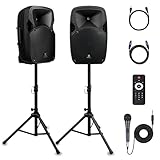 PRORECK Party 12 Powered PA System
A DJ is one of the biggest line items on any wedding budget. If someone you know can run a playlist, this is the difference between hiring one and not.
See it on Amazon →
PRORECK Party 12 Powered PA System
A DJ is one of the biggest line items on any wedding budget. If someone you know can run a playlist, this is the difference between hiring one and not.
See it on Amazon →
 Amazon Basics 46,000 BTU Patio Heater
Outdoor evening receptions live or die on this. Renting three for a night often costs more than buying two.
See it on Amazon →
Amazon Basics 46,000 BTU Patio Heater
Outdoor evening receptions live or die on this. Renting three for a night often costs more than buying two.
See it on Amazon →
 DazzlingStage Wireless Battery Uplights (6)
Battery uplights need no cable runs, so a venue that bans taped-down leads still lets you use them. The cheapest thing that changes how a room photographs.
See it on Amazon →
DazzlingStage Wireless Battery Uplights (6)
Battery uplights need no cable runs, so a venue that bans taped-down leads still lets you use them. The cheapest thing that changes how a room photographs.
See it on Amazon →
 Efavormart 8 ft Gold Hexagonal Arch
Heavy-duty metal rated to 100 lbs, and it resells afterwards, which is the part hiring one never does.
See it on Amazon →
Efavormart 8 ft Gold Hexagonal Arch
Heavy-duty metal rated to 100 lbs, and it resells afterwards, which is the part hiring one never does.
See it on Amazon →
As an Amazon Associate we earn from qualifying purchases. Prices and availability change; check before you buy.
The Hidden Fee Problem
Wedding vendors quote base prices—then add fees, charges, and required extras that can increase your final bill by 20-40%. These aren't scams or surprises; they're standard industry practices that couples don't know to ask about until the invoice arrives.
The problem isn't bad vendors. The problem is an industry where "competitive" base pricing drives quotes down while fees make up the difference. A $12,000 venue quote becomes $15,500 after service charges, taxes, and required minimums. A $3,000 photographer becomes $4,500 with albums and travel.
This guide catalogs every common hidden fee by vendor category so you can ask the right questions before signing contracts—and budget the true cost of your wedding, not the quoted one.
The Simple Question That Saves Thousands: For every vendor quote, ask: "What costs are NOT included in this price?" Then get the answer in writing. The vendors who become uncomfortable with this question are the ones with the most hidden fees.
Venue Hidden Fees
Venues have the most hidden fees of any wedding category. A quoted rental price is rarely the final price—sometimes it's not even half of it.
Venue Fee Breakdown
- Service Charge (18-25%): Applied to food, beverage, and sometimes rental fees. On $20,000 in catering, that's $3,600-$5,000
- Sales Tax (0-10%): Varies by state, applies to services and goods. Often quoted separately from pricing
- Administrative Fee (3-5%): Some venues add this for "processing" on top of other charges
- Ceremony Fee ($500-$2,000): Using the same venue for ceremony often costs extra
- Overtime ($500-$2,000/hour): Every minute past contracted time bills at premium rates
- Cake Cutting ($1-$4/person): Charging to slice and serve cake you provide
- Corkage Fee ($15-$35/bottle): Fee for serving alcohol you provide
- Setup/Breakdown ($200-$1,000): Preparing and clearing the space
- Coat Check ($100-$300): Often "required" for winter weddings
- Valet Parking ($500-$1,500): Sometimes mandatory, rarely included
- Security ($200-$500): Required by some venues for events over certain sizes
- Cleaning Fee ($200-$500): Beyond standard cleanup
- Damage Deposit ($500-$2,000): Refundable, but ties up cash
The Service Charge Trap
Service charges are the most misunderstood fee in wedding planning. Couples assume service charges are tips that go to servers—they're usually not. A 22% service charge on $20,000 in catering adds $4,400 to your bill, and the venue typically keeps 50-100% of it.
Always ask: "Does the service charge go to staff, or should we tip servers separately?" If staff don't receive the service charge, budget an additional 15-20% gratuity for bartenders and servers.
Catering Hidden Fees
Catering quotes per-person rarely include everything needed to actually feed guests. The gap between quoted price and true cost averages 25-35%.
The Per-Person Math Problem
A "$150/person" quote with 22% service charge and 8% tax becomes $196/person—a 31% increase. For 100 guests, that's $4,600 more than expected. Always ask for "all-in" pricing and do the math yourself to verify.
Photography Hidden Fees
Photography packages are structured to seem complete while excluding items most couples assume are included. The gap between package price and what you actually want averages $1,000-$3,000.
Photography Fee Breakdown
- Travel Fee ($50-$500): For venues beyond 25-50 miles from photographer's base
- Second Shooter ($400-$800): Often recommended but not included in base packages
- Engagement Session ($300-$800): Sometimes included, often extra
- Extra Hours ($200-$500/hour): If your timeline exceeds package limits
- Album ($500-$2,000+): Design, printing, and physical albums are almost always extra
- Parent Albums ($200-$500 each): Smaller duplicates for families
- Prints ($50-$500): Physical prints beyond digital delivery
- Rush Delivery ($200-$500): Getting photos faster than standard timeline
- Print Rights (varies): Some photographers retain exclusivity on printing
- Raw Files ($500-$2,000): Unedited photos, if offered at all
Questions to Ask Photographers
- What's included in the package versus à la carte?
- Do you charge for travel? What's your radius?
- How many photos will we receive? Are they all edited?
- Do we receive full print rights, or are you the exclusive printer?
- What does an album cost? Is design included?
- What's the overtime rate if the day runs long?
Floral Hidden Fees
Floral quotes often cover arrangements but not the infrastructure to display them—or the labor to set them up and break them down.
The Rental Trap: Many florists use rental vases and containers that look included but add $200-$500 to quotes. Ask specifically: "Are vases and containers included or rented?" and "What happens if one breaks?" (damage fees range from $25-$100 per item).
Music and Entertainment Hidden Fees
DJ and band quotes cover performance time but often exclude equipment, travel, and the extras that make a dance floor work.
DJ/Band Fee Breakdown
- Travel/Mileage ($50-$200): For venues beyond local radius
- Overtime ($150-$400/hour): When the party goes late
- Uplighting ($300-$800): Colored room lighting often quoted separately
- Dance Floor Lighting ($200-$500): Beyond basic DJ lights
- Ceremony Music ($200-$400): If DJ provides processional music
- Cocktail Hour Coverage ($100-$300): Music between ceremony and reception
- Wireless Microphones ($50-$150): For ceremony or speeches
- Photo Booth ($500-$1,500): Often upsold by DJs
- MC Services ($100-$300): If not automatically included
- Setup/Breakdown Time: Some charge if setup exceeds 1 hour
Band-Specific Fees
Bands have additional costs DJs don't: meals for band members ($25-$50 × 4-8 people = $100-$400), sound engineer ($200-$500), breaks during sets (affects continuous music), learning fee for special songs ($50-$150), and larger power requirements (venue may charge).
Attire Hidden Fees
The dress price tag and suit cost are just the beginning. Attire-related fees add 30-60% to base garment costs.
The Alterations Surprise
Nearly every wedding dress requires alterations—they're ordered in standard sizes, not custom-fitted. Complex alterations on heavily beaded or layered gowns can exceed $800. Budget 20-40% of your dress purchase price for alterations, and ask the bridal shop for estimates before you buy.
Miscellaneous Hidden Fees
These fees don't fit neatly into vendor categories but consistently surprise couples.
Often Forgotten Costs
- Marriage License ($30-$100): Required for legal marriage, varies by state
- Officiant Fee ($50-$500): If using a professional or religious leader
- Ceremony Musician ($150-$400): If separate from reception music
- Day-of Transportation ($300-$1,000): Getting to ceremony, photos, reception
- Vendor Tips ($1,000-$3,000): Expected for coordinator, DJ, photographer, hair/makeup, servers
- Rehearsal Dinner ($2,000-$8,000): Often forgotten in "wedding" budget
- Welcome Bags ($15-$40/room): For out-of-town guests
- Day-After Brunch ($300-$1,000): Increasingly expected
- Thank You Cards ($100-$200): Plus postage
- Name Change Fees ($100-$300): New license, passport, etc.
- Wedding Insurance ($150-$500): Recommended but often skipped
Hidden Fee Negotiation Strategies
Some hidden fees are negotiable, others are non-negotiable, and a few can be avoided entirely with the right approach.
Fees You Can Often Negotiate
- Cake cutting fee: Ask to waive it or bring a dessert that doesn't require cutting
- Corkage fee: Sometimes reduced if you purchase some alcohol through the venue
- Ceremony fee: Bundle with reception for a discount
- Setup/breakdown: Offer to handle portions yourself to reduce costs
- Overtime rates: Negotiate lower rates in exchange for guaranteed end time
Fees That Are Rarely Negotiable
- Service charges: Built into venue business models
- Sales tax: Legally required
- Minimums: Food and beverage minimums are firm
- Insurance requirements: Venue liability needs
How to Avoid Fees Entirely
- Choose venues without cake cutting fees (they exist—ask)
- Select all-inclusive venues where fees are bundled into pricing
- Book vendors whose base pricing includes what others charge extra for
- Stay within time limits to avoid overtime
- Skip upsells you don't actually need
Hidden Fee Checklist
Use this checklist when reviewing any vendor contract to ensure you understand total costs.
Questions for Every Vendor
Frequently Asked Questions
Common venue hidden fees include: service charges (18-25% on top of catering), sales tax (varies by state), cake cutting fees ($1-4/slice), corkage fees for outside alcohol ($15-35/bottle), setup/breakdown fees ($200-500), overtime charges ($500-2,000/hour), valet parking ($500-1,500), coat check ($100-300), and administrative fees (3-5%). These can add $2,000-$8,000 to quoted venue prices.
A service charge (18-25%) is a fee charged by the venue or caterer that may not go to staff—it often covers administrative costs, equipment, and venue profit. Gratuity is a tip that goes directly to service staff. Many venues charge service fees AND expect additional gratuity for servers. Always ask: "Does the service charge go to staff, or should we tip separately?" The answer can add $500-$1,500 to your bill.
Overtime fees are charged when events run past the contracted end time. Venues charge $500-$2,000+ per hour beyond package limits. DJs, bands, and photographers typically charge $150-$500/hour overtime. Some vendors include grace periods (15-30 minutes); others start charging immediately. Overtime adds up fast when multiple vendors bill simultaneously. Build buffer time into contracts or accept a firm end time.
Photography hidden fees include: travel charges for locations over 30-50 miles ($0.50-$1/mile or flat fees), second shooter costs ($400-$800), album design and printing ($500-$2,000), print rights (some retain exclusivity), edited image delivery timeline rushes ($200-$500), and extra hours beyond package ($200-$500/hour). A $4,000 photography package can easily reach $6,000-$7,000 with add-ons.
Many venues charge $1-4 per person for "cake cutting"—supposedly covering plates, forks, and staff labor to slice and serve. For 150 guests at $3/person, that's $450 for a service that takes 20 minutes. You can negotiate this fee during contract signing (easier than after signing), bring your own dessert that doesn't require cutting, or choose a venue without cutting fees. Some couples consider it non-negotiable; others find it outrageous.
Wedding dress alterations range from $200-$800+ depending on complexity: hemming ($100-$200), taking in/letting out ($150-$300), bustle addition ($50-$150), strap adjustments ($50-$100), and structural changes ($200-$400). Designer gowns with intricate details cost more to alter. Suits typically need $75-$200 in alterations. These costs are rarely included in purchase prices and often surprise brides who assume "the dress fits."
Budget for the True Cost
Use our calculator to build a realistic wedding budget that accounts for hidden fees, or explore more budget protection strategies.


