
The four rentals worth buying instead
Most wedding advice is about trimming the flowers. These four are the line items where buying outright costs less than one night of hire, and three of them resell afterwards.
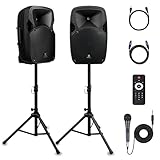 PRORECK Party 12 Powered PA System
A DJ is one of the biggest line items on any wedding budget. If someone you know can run a playlist, this is the difference between hiring one and not.
See it on Amazon →
PRORECK Party 12 Powered PA System
A DJ is one of the biggest line items on any wedding budget. If someone you know can run a playlist, this is the difference between hiring one and not.
See it on Amazon →
 Amazon Basics 46,000 BTU Patio Heater
Outdoor evening receptions live or die on this. Renting three for a night often costs more than buying two.
See it on Amazon →
Amazon Basics 46,000 BTU Patio Heater
Outdoor evening receptions live or die on this. Renting three for a night often costs more than buying two.
See it on Amazon →
 DazzlingStage Wireless Battery Uplights (6)
Battery uplights need no cable runs, so a venue that bans taped-down leads still lets you use them. The cheapest thing that changes how a room photographs.
See it on Amazon →
DazzlingStage Wireless Battery Uplights (6)
Battery uplights need no cable runs, so a venue that bans taped-down leads still lets you use them. The cheapest thing that changes how a room photographs.
See it on Amazon →
 Efavormart 8 ft Gold Hexagonal Arch
Heavy-duty metal rated to 100 lbs, and it resells afterwards, which is the part hiring one never does.
See it on Amazon →
Efavormart 8 ft Gold Hexagonal Arch
Heavy-duty metal rated to 100 lbs, and it resells afterwards, which is the part hiring one never does.
See it on Amazon →
As an Amazon Associate we earn from qualifying purchases. Prices and availability change; check before you buy.
The Overrun Problem: By the Numbers
Wedding budget overruns aren't random misfortune—they're predictable outcomes of specific planning behaviors. Understanding the data behind overspending reveals patterns that couples can interrupt before they drain bank accounts.
Research from wedding industry surveys and financial studies paints a consistent picture: nearly half of all couples exceed their wedding budget, typically by significant amounts. But the data also shows that couples who implement certain practices stay within budget at much higher rates.
The single biggest predictor of staying on budget isn't the budget amount, wedding size, or even discipline—it's whether couples track expenses in real-time. The difference between 65% overrun rate (no tracking) and 28% overrun rate (with tracking) is dramatic. Information enables control.
Category-by-Category Overrun Rates
Not all wedding categories are equally likely to exceed budget. Understanding which categories pose the highest risk allows couples to apply extra scrutiny where it matters most.
Likelihood of Exceeding Category Budget
Why High-Risk Categories Overrun
Catering
Per-person pricing multiplies small increases dramatically. Adding 10 guests at $150/person = $1,500 surprise.
Common causes: Guest count increases, menu upgrades, service charge surprises, bar tab overages, late-night snack additions
Venue
Base prices exclude numerous required and optional fees that accumulate quickly.
Common causes: Service charges, overtime, ceremony fees, valet, required rentals, insurance, minimum increases
Flowers
Pinterest inspiration typically shows arrangements that cost 2-3x what couples budget.
Common causes: Premium flower varieties, larger arrangements than planned, additional installations, delivery/setup fees
The Anatomy of an Overrun
Budget overruns rarely happen through a single decision. They accumulate through patterns of small decisions that individually seem reasonable but collectively destroy budgets.
Pattern 1: The Venue Cascade
You exceed your venue budget by $2,000 because you "fell in love." This doesn't just cost $2,000—it triggers cascading effects. The nicer venue has stricter vendor requirements, leading to higher catering minimums. The upgraded space "deserves" upgraded decor. Your floral budget increases to match the venue's elegance. Photography packages go up because you want images worthy of the setting. That $2,000 venue overage becomes $6,000-$10,000 in total overrun.
Pattern 2: Scope Creep Accumulation
Scope creep is the gradual expansion of wedding plans through small additions. Each addition is $100-$500 and seems trivial in isolation. But weddings involve dozens of decision points, and saying "yes" to additions at even half of them accumulates thousands in unplanned spending.
Scope Creep in Action: "Upgrading napkins is only $2/each" ($200) + "Uplighting would be nice" ($400) + "Everyone does sparklers now" ($150) + "One more appetizer station" ($600) + "Late night snacks are expected" ($800) + "Upgraded bar package" ($500) + "Chair covers look better" ($400) + "Ceremony musicians" ($350) = $3,400 in "small" additions
Pattern 3: Guest List Drift
Your budget assumes 100 guests. Then you add work friends (5 people), distant cousins your parents insist on (8 people), college roommates you reconnected with (4 people), and plus-ones for guests who've since started dating (6 people). Now you have 123 guests—23% more than planned—without having adjusted any other budget.
At $250/guest (catering, drinks, favors, chairs, etc.), those 23 guests add $5,750 you didn't plan for.
Pattern 4: The Emotional Override
Wedding decisions are emotional. Vendors and the industry understand this and use phrases designed to bypass budget logic: "It's your special day," "You only do this once," "You deserve the best," "Don't you want your wedding to be perfect?"
These emotional appeals work because they're partially true—weddings ARE special, and you DO deserve celebration. But they're weaponized to justify overspending on items that don't actually contribute to meaningful memories.
The Overrun Prevention System
Preventing budget overruns requires systems, not just willpower. Couples who stay on budget implement specific practices that create natural guardrails around spending.
Prevention Strategy 1: Real-Time Expense Tracking
Track every committed expense immediately—not weekly, not monthly, immediately. Use a shared spreadsheet both partners can access. Record deposits when paid, not when due. Include tax and fees in recorded amounts.
Prevention Strategy 2: The 48-Hour Rule
For any purchase or addition over $100, wait 48 hours before committing. This interrupts emotional decision-making and creates space for budget review. If the addition still seems worth it after 48 hours, proceed. If not, you've saved money without deprivation.
Prevention Strategy 3: Category Hard Caps
Set maximum spending caps for each category before vendor shopping. These caps aren't goals—they're limits. When you hit the cap, you stop adding to that category regardless of how many nice additions remain possible.
Prevention Strategy 4: Spending Authority Rules
Establish rules about who can approve what spending level. This prevents one partner from making unilateral decisions that affect joint finances and creates built-in accountability for larger purchases.
Prevention Strategy 5: Regular Budget Meetings
Schedule weekly 20-minute budget reviews throughout planning. Review total spent vs. budget, spending by category, upcoming commitments, and any additions being considered. Catching overruns early allows course correction; discovering them late offers no options.
Prevention Strategy 6: Built-In Contingency
Reserve 10-15% of your total budget for unexpected costs before allocating to any category. This isn't extra money—it's protection against inevitable surprises. If you don't use it, you have honeymoon funding.
When You're Already Over Budget
If you're reading this mid-planning with overruns already underway, you need a different strategy. Preventing future overruns is important, but addressing existing ones is urgent.
Step 1: Get the Full Picture
Before making any decisions, understand exactly where you stand. Total all committed spending (deposits paid plus amounts owed), compare to your original budget, and identify the gap. You cannot solve a problem you haven't quantified.
Step 2: Identify the Causes
Where did the overruns come from? Categories that exceeded budget? Additions that weren't originally planned? Higher costs than expected? Understanding the cause determines the solution.
Step 3: Evaluate Your Options
- Reduce remaining spending: What categories haven't been locked in? Where can you scale back?
- Renegotiate existing contracts: Can you downgrade packages? Reduce guest count? Change dates for better pricing?
- Cut non-essential items: What's nice-to-have versus must-have? What would guests not even notice?
- Increase budget: If you have additional funds, is this the right use of them?
- Finance carefully: Taking on debt is risky, but if unavoidable, have a clear payoff plan.
Step 4: Make Trade-Off Decisions Together
Overrun recovery requires prioritization. You and your partner should agree on what matters most and what can be reduced. This is harder emotionally than it sounds—wedding decisions are personal, and cutting things feels like loss. But making these decisions together strengthens your partnership.
Avoid These Overrun "Solutions"
Don't: Put wedding costs on credit cards you can't pay off immediately. The average credit card interest rate (20%+) means a $10,000 overrun becomes $15,000+ if paid over 3-5 years. Starting your marriage with this debt creates financial stress that many couples cite as a major relationship strain.
The Budget Timeline: When Overruns Typically Happen
Overruns don't happen randomly throughout planning—they cluster at specific points. Knowing when you're most vulnerable allows you to be extra vigilant during high-risk periods.
High Risk: Venue Selection
This is when the largest single decision is made, often before couples have calibrated their budget sense. Emotional reactions to spaces override budget logic. Venue overruns cascade to other categories.
Medium Risk: Major Vendor Booking
Photography, catering, and entertainment decisions happen here. Package upgrades and add-ons start accumulating. Each "just a little more" adds up across multiple vendors.
High Risk: Attire and Floral Decisions
Dress shopping triggers alterations, accessories, and shoes. Floral consultations reveal that Pinterest inspiration costs 3x budget. These categories have high emotional weight and frequent overruns.
Medium Risk: Details and Additions
Final vendor meetings involve upsells. "Details" like signage, favors, and late additions pile up. Guest count increases happen as RSVPs reveal forgotten invites.
High Risk: Final Bills and Surprises
Final invoices arrive with fees not clearly understood during booking. Last-minute additions for forgot items. Overtime charges. Tips not previously budgeted. This is when couples discover their true total.
Frequently Asked Questions
Studies consistently show 40-56% of couples exceed their wedding budget, with most research centering around 45%. The average overage is $5,000-$10,000, or roughly 15-25% above the original budget. Couples who don't track spending in real-time have significantly higher overrun rates (65%+) compared to those who track every expense (25-30%).
The categories most likely to exceed budget: 1) Catering/food (65% overrun rate) due to per-person pricing that escalates with guest count changes and upgrades, 2) Venue (55% overrun rate) from hidden fees, overtime, and "required" add-ons, 3) Flowers (50% overrun rate) as Pinterest inspiration exceeds budget reality, 4) Photography (45% overrun rate) from albums and extras not in base packages, 5) Attire (40% overrun rate) from alterations and accessories.
Key prevention strategies: 1) Set a realistic budget before any vendor contact, 2) Add 10-15% contingency to your budget, 3) Track every expense in real-time, 4) Get all-in pricing quotes including fees and taxes, 5) Lock in guest count early, 6) Use the 48-hour rule for any addition over $100, 7) Have weekly budget check-ins with your partner, 8) Create spending authority rules (both partners approve purchases over $500).
Scope creep is the gradual expansion of wedding plans through small, seemingly reasonable additions that accumulate into major budget overruns. Examples: adding uplighting "since we have a DJ anyway," upgrading linens "for only $10/table," including late-night snacks "everyone does it now." Each addition is $200-$500, but twenty such decisions add $4,000-$10,000. Preventing scope creep requires explicit rules about additions and regular budget reviews.
This depends on your financial situation and the overage cause. If you underestimated realistic costs for your vision, increasing the budget may be appropriate. If you're over because of scope creep and additions, increasing the budget often enables more additions—the problem persists. Before increasing, ask: "What would we cut instead?" If nothing seems cuttable, your priorities are clear. If cuts are possible, make them rather than expanding budget.
Approach budget conversations as teammates, not adversaries. Focus on facts ("We're $3,000 over budget") not blame ("You spent too much on flowers"). Use specific numbers from your tracking spreadsheet. Discuss trade-offs together ("We can keep the upgraded menu if we reduce flowers"). Schedule regular budget check-ins so problems surface early, not as crises. Agree on spending authority rules (both partners approve purchases above a threshold). Remember you're planning a marriage, not just a wedding.
Build a Budget That Works
Use our free calculator to create a realistic wedding budget, then explore our guides on common mistakes and hidden fees.


