The Foundation: Portions Per Person
Professional caterers use standardized portion sizes refined over thousands of events. These portions ensure guests are satisfied without excessive waste—the sweet spot that balances hospitality with budget. Understanding these fundamentals helps you evaluate caterer proposals, plan DIY elements accurately, and avoid the dreaded scenario of running out of food.
The Core Formula
This includes appetizers, salad, bread, main course, sides, and dessert for a complete wedding meal
That 1-1.5 pound figure breaks down across multiple courses. Heavier portions (closer to 1.5 lbs) apply when guests are predominantly male, events are later in the evening, or fewer courses are served. Lighter portions work for brunch, afternoon events, or multi-course meals where each course is smaller.
The 1-1.5 pound range accounts for considerable variation in individual appetites. Some guests eat conservatively while others enjoy seconds. The range ensures you have enough food for everyone without massive waste. Experienced caterers know that ordering exactly to the minimum leaves no margin for error, while ordering to the maximum creates excessive leftovers.
Adjusting the Formula for Your Wedding
Several factors influence whether you should plan toward the lower or higher end of the portion range:
Time of Day: Evening weddings typically require 15-20% more food than daytime events. Guests arrive hungry for dinner, expecting a full meal. Brunch and lunch weddings can work with lighter portions—guests don't expect the same volume they would at an evening dinner.
Guest Demographics: Events with predominantly younger, male guests require more food. Weddings with many children allow for smaller portions (kids generally receive half-portions). Older crowds and health-conscious communities typically eat less.
Event Duration: A 3-hour cocktail reception needs less food than a 5-hour dinner and dancing celebration. Longer events may need late-night snacks in addition to dinner to keep guests satisfied through extended dancing.
Number of Courses: Multi-course meals (salad, soup, entree, dessert) can use smaller portions per course since variety creates satisfaction. Single-course meals need larger portions to satisfy.
Alcohol Service: Open bars with heavy drinking typically correlate with increased eating as guests pace their consumption. Wine-only or dry weddings may see slightly less food consumption.
| Course/Item | Standard Portion | Notes |
|---|---|---|
| Protein (chicken, beef, fish) | 6-8 oz cooked | 8 oz for beef, 6 oz for fish/chicken |
| Starch (rice, potato, pasta) | 4-6 oz | About 1/2 cup per person |
| Vegetables | 4-6 oz | About 1/2 cup per person |
| Salad | 1.5-2 oz greens | Plus dressing, about 1 cup composed |
| Bread/Rolls | 2 pieces | One with salad, one with dinner |
| Butter | 1.5 oz | 2-3 pats per person |
| Wedding Cake | 4" × 2" slice | 1-1.25" per tier layer |
As an Amazon Associate, we earn from qualifying purchases.
Reception Food & Dining
 Champagne Flutes Set
 Wedding Planner Book
 LED String Lights
 Eucalyptus Table Garland
The four rentals worth buying instead
Most wedding advice is about trimming the flowers. These four are the line items where buying outright costs less than one night of hire, and three of them resell afterwards.
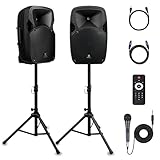 PRORECK Party 12 Powered PA System
A DJ is one of the biggest line items on any wedding budget. If someone you know can run a playlist, this is the difference between hiring one and not.
See it on Amazon →
PRORECK Party 12 Powered PA System
A DJ is one of the biggest line items on any wedding budget. If someone you know can run a playlist, this is the difference between hiring one and not.
See it on Amazon →
 Amazon Basics 46,000 BTU Patio Heater
Outdoor evening receptions live or die on this. Renting three for a night often costs more than buying two.
See it on Amazon →
Amazon Basics 46,000 BTU Patio Heater
Outdoor evening receptions live or die on this. Renting three for a night often costs more than buying two.
See it on Amazon →
 DazzlingStage Wireless Battery Uplights (6)
Battery uplights need no cable runs, so a venue that bans taped-down leads still lets you use them. The cheapest thing that changes how a room photographs.
See it on Amazon →
DazzlingStage Wireless Battery Uplights (6)
Battery uplights need no cable runs, so a venue that bans taped-down leads still lets you use them. The cheapest thing that changes how a room photographs.
See it on Amazon →
 Efavormart 8 ft Gold Hexagonal Arch
Heavy-duty metal rated to 100 lbs, and it resells afterwards, which is the part hiring one never does.
See it on Amazon →
Efavormart 8 ft Gold Hexagonal Arch
Heavy-duty metal rated to 100 lbs, and it resells afterwards, which is the part hiring one never does.
See it on Amazon →
As an Amazon Associate we earn from qualifying purchases. Prices and availability change; check before you buy.
Cocktail Hour Appetizers
Cocktail hour appetizers require different math than dinner portions. Here, variety and frequency matter more than total volume—guests should encounter a new tray every few minutes without filling up before dinner. The goal is to provide enough food to enjoy with drinks while preserving appetite for the main meal.
| Scenario | Pieces Per Person | Total for 100 Guests |
|---|---|---|
| 30-minute cocktail hour before dinner | 3-4 pieces | 300-400 pieces |
| 1-hour cocktail hour before dinner | 5-6 pieces | 500-600 pieces |
| Heavy appetizers (replacing dinner) | 12-15 pieces | 1,200-1,500 pieces |
| Late-night snack station | 2-3 pieces | 200-300 pieces |
Appetizer Variety Guidelines
Variety keeps guests engaged and accommodates different tastes and dietary restrictions. For a 1-hour cocktail hour with 5-6 pieces per person:
- Number of varieties: 5-8 different appetizers
- Hot vs. cold: 60% hot, 40% cold
- Protein-based: 50-60% of selections
- Vegetarian options: 25-30% of selections
- Dietary accommodations: 1-2 gluten-free, dairy-free options
Caterer Tip: Always have at least one "substantial" appetizer—mini sliders, satay skewers, or filled pastries. Light-only options leave guests hungry. But avoid multiple heavy items, which spoil dinner appetites.
Calculating Appetizers by Type
When planning appetizer quantities, distribute your total count across your chosen varieties. For 100 guests with 6 pieces per person (600 total appetizers) and 6 varieties:
- Per variety: 600 ÷ 6 = 100 pieces of each
- But adjust for popularity: Order 120-150 of crowd favorites, 80-100 of niche items
- Account for consumption timing: Heavier items early when guests are hungry, lighter items later
Passed vs. Stationary Appetizers
Passed Appetizers create an elegant feel with servers circulating trays among guests. They ensure even distribution and add service drama. However, passed service requires more staff (1 server per 25-30 guests) and some items don't travel well on trays.
Stationary Displays allow guests to serve themselves from beautiful arranged displays—cheese boards, crudité, antipasto, seafood displays. They require less staff but create congregation points that may cause crowding. Some guests hover near displays and consume more than their share.
The Ideal Mix: Combine both approaches. Stationary displays provide constant availability and visual appeal, while passed items add elegance and ensure wallflowers and those in conversation still get food. A typical split is 60% passed, 40% stationary, or 3-4 passed varieties with 2-3 stationary displays.
Heavy Appetizers Instead of Dinner
Some couples choose a cocktail-style reception with substantial appetizers replacing a seated dinner. This approach works well for non-traditional weddings, rooftop celebrations, art gallery venues, or couples who prefer mingling over formal dining. To execute successfully:
- Plan 12-15 pieces per person for a 2-hour reception, 15-18 for longer events
- Include substantial items: Carving stations, sliders, pasta bowls, taco bars—not just light bites
- Provide variety in weight: Mix light items (bruschetta, crudité) with substantial items (beef satay, mac and cheese cups)
- Consider seating: Some guests, especially elderly, appreciate a place to sit while eating
- Communicate the format: Make clear on invitations this is a cocktail reception, not seated dinner
Complete Example: 100 Guests
Here's exactly how much food you need for 100 guests with standard cocktail hour and plated dinner service.
100-Guest Wedding: Full Breakdown
Protein Breakdown (if offering choices)
For 100 guests with chicken/beef/fish options:
- Chicken: 50 portions (50%) = 25 lbs cooked
- Beef: 30 portions (30%) = 18 lbs cooked
- Fish: 15 portions (15%) = 7 lbs cooked
- Vegetarian: 5 portions (5%) = as needed
Note: Add 5-10% buffer for changes and vendor meals
Service Style Impacts Portions
How food is served affects how much you need. Buffets require more food than plated service due to self-serving psychology and less portion control. Understanding these dynamics helps you budget accurately and avoid running short.
Plated Service
- Controlled portions = less waste
- Higher service costs offset food savings
- Requires meal choice collection
- Most formal presentation
Buffet Service
- Guests serve themselves larger portions
- Multiple trips common
- Food must look abundant throughout service
- Requires more initial quantity
Family Style
- Platters create sharing atmosphere
- Less food than buffet, more than plated
- Refills needed for later tables
- Casual-elegant feel
Food Stations
- Interactive experience
- Guests graze throughout event
- Stations need to look full constantly
- Most food-intensive style
Why Buffets Require More Food
The psychology of self-service drives buffet overconsumption. When guests control their portions, they tend to take more than a chef would plate. They also return for seconds of favorites. Additionally, buffet displays must appear abundant throughout service—a nearly empty tray looks unappetizing even if sufficient food remains. Caterers must account for both actual consumption and visual presentation needs.
The math: If a plated chicken breast weighs 6 oz, a buffet guest typically serves themselves 8-10 oz of the same item. Multiply that 30-50% increase across all proteins and starches, and buffet food costs rise significantly despite the lower service labor costs.
Detailed Portion Adjustments by Service Style
| Item | Plated | Buffet | Family Style | Stations |
|---|---|---|---|---|
| Protein | 6-8 oz | 8-10 oz | 7-8 oz | Variable by station |
| Starch | 4-6 oz | 6-8 oz | 5-6 oz | Variable by station |
| Vegetables | 4-6 oz | 5-7 oz | 4-6 oz | Variable by station |
| Salad | 1.5-2 oz greens | 2-3 oz greens | 1.5-2 oz | 2-3 oz (salad station) |
| Total per guest | 1-1.25 lbs | 1.3-1.6 lbs | 1.1-1.4 lbs | 1.4-1.7 lbs |
Station-Specific Considerations
Carving Stations: Plan 4-5 oz per person even though not everyone will visit. Some guests take 6-8 oz while others skip the station. A 12-lb prime rib yields approximately 48 four-ounce portions—enough for 50 guests at a station among other options.
Pasta Stations: Made-to-order pasta stations are popular but create lines. Plan 6 oz cooked pasta per person who visits. If pasta is one of four stations, assume 30-40% of guests will have it (3-4 oz average across all guests).
Seafood Stations: Raw bars and seafood displays are premium options. Plan 4-6 pieces per person for shrimp, 2-3 oysters if included. Seafood stations often see uneven consumption—some guests consume heavily while others avoid seafood entirely.
Taco/Build-Your-Own Stations: Extremely popular and interactive. Plan 3-4 tacos per person, with abundant toppings. These stations require extra prep but offer good value—guests perceive abundance while actual food cost remains moderate.
Quick Reference Charts
Use these pre-calculated amounts for common wedding sizes with plated service.
| Guests | Appetizers (pcs) | Protein (lbs) | Starch (lbs) | Vegetables (lbs) | Cake Servings |
|---|---|---|---|---|---|
| 50 | 275 | 27 | 17 | 17 | 55 |
| 75 | 415 | 40 | 25 | 25 | 82 |
| 100 | 550 | 53 | 33 | 33 | 110 |
| 125 | 690 | 66 | 42 | 42 | 138 |
| 150 | 825 | 80 | 50 | 50 | 165 |
| 200 | 1,100 | 106 | 67 | 67 | 220 |
Note: These amounts include 5-10% buffer. Reduce by 5% for exclusively adult guests; increase by 10% for buffet service.
Budget-Friendly Food Strategies
Food typically represents 25-35% of wedding budgets. Strategic choices can significantly reduce costs without sacrificing quality or guest satisfaction. The key is making smart trade-offs rather than simply cutting quantities, which leaves guests hungry and disappointed.
Cost-Saving Approaches
- Serve brunch or lunch: Breakfast foods cost 30-40% less than dinner proteins; guests expect simpler fare
- Choose chicken over beef: Chicken costs roughly $3-5/portion less than beef
- Skip the plated salad course: Include greens in buffet or as garnish instead
- Reduce appetizer variety: 4-5 excellent options beats 8 mediocre ones
- Heavy appetizers instead of dinner: Can save 20-30% vs. plated dinner
- Food trucks: $15-25/person vs. $50-100+ for traditional catering
- Restaurant private rooms: Often include food at better per-person rates
Where Not to Cut
- Total portion size: Hungry guests remember and not fondly
- Protein quality: Main course is the meal's centerpiece
- Dietary accommodations: Guests with restrictions shouldn't feel forgotten
- Late-night snacks: If your reception runs 4+ hours with dancing, guests will need refueling
Strategic Menu Planning for Budget Weddings
Thoughtful menu design can deliver perceived abundance at controlled cost. Consider these approaches:
Seasonal and Local: In-season ingredients cost less and taste better. A September wedding featuring butternut squash, apples, and root vegetables costs less than importing asparagus and berries. Local sourcing reduces transportation costs and supports regional cuisine authenticity.
Comfort Food Done Well: Elevated comfort food—gourmet mac and cheese, premium fried chicken, artisan pizza—costs less than traditional "wedding food" but delights guests. Done well, these options feel intentional and creative rather than cheap.
Protein Alternatives: Consider menus where protein isn't the centerpiece. Pasta-based menus, grain bowls, and vegetarian-forward options cost 30-50% less while offering variety and accommodating dietary restrictions naturally.
Smaller Portions, More Courses: A four-course meal with smaller portions creates an elegant dining experience while using less food than a massive three-course meal. The variety and pacing of multiple courses enhance perceived value.
Common Mistakes That Waste Food Budget
- Over-ordering desserts: Between wedding cake and other sweets, couples often order 2x what guests consume
- Too many appetizer varieties: Eight appetizer options means preparing full quantities of each; guests can't eat that volume
- Ignoring dietary restrictions until the end: Last-minute special meals cost more than planning accommodations into the menu
- Forgetting vendor meals: Your photographer, DJ, planner, and other vendors need food too—budget for them
- Not asking about package inclusions: Some caterers include items (bread, butter, coffee) that others charge extra for
Vendor Negotiation Tips for Food
- Ask about off-peak pricing: Some caterers offer discounts for Sundays, Fridays, or off-season dates
- Request menu substitutions: If the package includes filet mignon but you prefer chicken, ask if the price adjusts
- Inquire about minimums: Understand guest count minimums and whether you're charged for guarantees vs. actuals
- Bundle services: Caterers who also provide bar service may offer package deals
- Ask about leftovers: Some caterers pack leftovers for you; others have policies against it. Knowing in advance helps planning
Frequently Asked Questions
Plan for 1-1.5 pounds of food per person total for a full wedding meal. This breaks down to: 6-8 oz protein, 4-6 oz starch, 4-6 oz vegetables, plus appetizers, salad, bread, and dessert. For cocktail hour only (heavy appetizers instead of dinner), plan 8-10 pieces per person for 1 hour, 12-15 pieces for 2 hours.
For a 1-hour cocktail hour before a full dinner, plan 4-6 appetizer pieces per person. For a 1-hour cocktail hour as the only food (heavy appetizers reception), plan 10-12 pieces per person. For a 2-hour cocktail-style reception with no dinner, plan 12-15 pieces per person. Variety matters: offer 5-8 different types of appetizers.
Wedding catering ranges from $40-200+ per person depending on service style and menu quality. Budget ranges: $40-70 for basic buffet or stations, $70-100 for mid-range plated or buffet, $100-150 for premium plated service, $150-200+ for luxury cuisine. These prices typically exclude service charges (18-22%), tax, and gratuity. Full-service catering adds 30-40% to food costs alone.
The most budget-friendly wedding food options are: brunch/breakfast (30% cheaper than dinner), food trucks ($15-25/person), BBQ buffet ($25-40/person), taco bars ($20-35/person), heavy appetizers instead of dinner ($35-50/person), or family-style platters ($40-60/person). DIY or potluck options work for very small weddings but create logistics challenges for 50+ guests.
For 100 guests with plated dinner: 50-55 lbs protein (adjusting for bone-in options), 25-35 lbs starch, 30-40 lbs vegetables, plus appetizers (400-600 pieces for cocktail hour), salad (100 portions), bread (200 rolls), and cake (100-110 servings). Always order 5-10% extra to account for server portions, accidents, and guest appetite variations.
Collecting meal choices (chicken/beef/fish/vegetarian) on RSVPs is standard for plated service and helps caterers plan precisely. Expect roughly 50% chicken, 30% beef, 15% fish, 5% vegetarian for typical crowds. For buffets and stations, choices aren't necessary but still order based on similar ratios. Always accommodate dietary restrictions regardless of service style.
Calculate Your Full Wedding Budget
Use our free calculator to plan your catering budget alongside all other wedding costs.