The four rentals worth buying instead
Most wedding advice is about trimming the flowers. These four are the line items where buying outright costs less than one night of hire, and three of them resell afterwards.
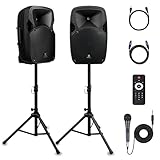 PRORECK Party 12 Powered PA System
A DJ is one of the biggest line items on any wedding budget. If someone you know can run a playlist, this is the difference between hiring one and not.
See it on Amazon →
PRORECK Party 12 Powered PA System
A DJ is one of the biggest line items on any wedding budget. If someone you know can run a playlist, this is the difference between hiring one and not.
See it on Amazon →
 Amazon Basics 46,000 BTU Patio Heater
Outdoor evening receptions live or die on this. Renting three for a night often costs more than buying two.
See it on Amazon →
Amazon Basics 46,000 BTU Patio Heater
Outdoor evening receptions live or die on this. Renting three for a night often costs more than buying two.
See it on Amazon →
 DazzlingStage Wireless Battery Uplights (6)
Battery uplights need no cable runs, so a venue that bans taped-down leads still lets you use them. The cheapest thing that changes how a room photographs.
See it on Amazon →
DazzlingStage Wireless Battery Uplights (6)
Battery uplights need no cable runs, so a venue that bans taped-down leads still lets you use them. The cheapest thing that changes how a room photographs.
See it on Amazon →
 Efavormart 8 ft Gold Hexagonal Arch
Heavy-duty metal rated to 100 lbs, and it resells afterwards, which is the part hiring one never does.
See it on Amazon →
Efavormart 8 ft Gold Hexagonal Arch
Heavy-duty metal rated to 100 lbs, and it resells afterwards, which is the part hiring one never does.
See it on Amazon →
As an Amazon Associate we earn from qualifying purchases. Prices and availability change; check before you buy.
The Core Formula
Wedding alcohol calculation isn't guesswork—it's straightforward math once you understand the variables. The industry-standard formula has been refined over decades of event planning and consistently produces accurate results. Using this formula helps you avoid the twin disasters of running out of drinks or wasting money on massive excess.
The Wedding Alcohol Formula
Then divide by servings per container to get bottles/cases needed
The baseline assumption is 1 drink per person per hour for average consumption. This accounts for the reality that some guests drink nothing, some nurse one drink all night, and some enthusiastically enjoy your open bar. It all averages out to approximately one drink per person per hour of drinking time.
This formula has been tested across thousands of events and holds remarkably consistent. While individual consumption varies wildly, the law of large numbers means group averages are predictable. A wedding with 100+ guests will almost certainly follow the formula closely.
Step-by-Step Calculation Process
- Determine drinking guest count: Total guests minus children and non-drinkers (typically 15-20% of adults don't drink)
- Calculate drinking hours: Time from when bar opens through bar close (usually cocktail hour through dancing)
- Apply consumption rate: 1 drink/hour for average, adjust for your crowd
- Split by drink type: Wine, beer, and liquor percentages based on your bar type
- Convert to bottles/cases: Divide by servings per container
- Add buffer: 10-15% extra for safety
Adjusting for Your Crowd
Not every wedding crowd drinks the same. Adjust the drinks-per-hour factor based on your guest demographics:
- Light drinking (0.5-0.75/hour): Daytime/brunch weddings, family-heavy guest lists, religious communities, health-conscious crowds
- Moderate drinking (1/hour): Standard evening receptions, mixed age groups, typical friend-and-family blend
- Heavy drinking (1.25-1.5/hour): College-friend heavy guest lists, party-oriented crowds, open bar with top-shelf options
Key Insight: The first hour (usually cocktail hour) sees higher consumption—guests have just arrived and the bar is fresh. Budget 1.25 drinks/person for hour one, then standard rate for remaining hours. For a 5-hour event, that's 5.25 drinks per person, not 5.
Understanding Consumption Patterns
Alcohol consumption at weddings follows predictable patterns throughout the event. Understanding these patterns helps you plan more accurately:
Cocktail Hour (Highest Consumption): Guests arrive thirsty and eager to celebrate. Expect 1.5 drinks per person during the first hour. This is the busiest bar period, requiring adequate bartender staffing. The combination of excitement, socializing, and waiting for the reception creates peak demand.
Dinner Service (Moderate Consumption): Consumption slows during dinner as guests focus on food. Wine service at tables maintains steady but lower consumption. Expect 0.5-0.75 drinks per person per hour during seated dinner.
Dancing and Late Reception (Variable): Returns to roughly 1 drink per person per hour for those still drinking. Some guests shift to water or stop drinking entirely, while others continue through the night. Late reception hours often see reduced consumption as the evening winds down.
Last Hour Drop-off: The final hour typically sees 30-40% lower consumption as guests prepare to leave, switch to water for driving, or simply wind down. Don't oversupply for late hours based on early-event consumption rates.
As an Amazon Associate, we earn from qualifying purchases.
Bar Service Essentials
 Champagne Flutes (Set of 12)
 LED String Lights
 Wedding Planner Book
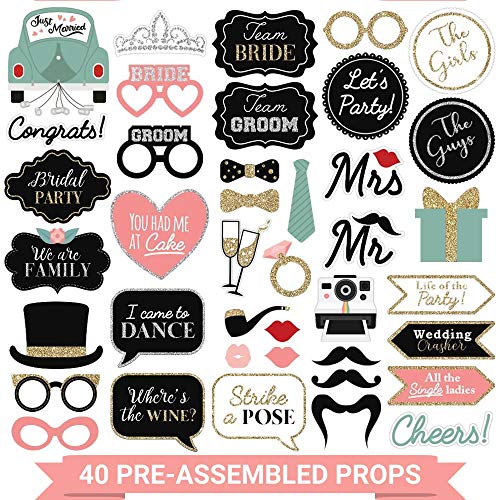 Photo Booth Props
Breaking Down by Drink Type
Total drinks needed is only half the equation. You need to know how to split that total across beer, wine, and liquor. Standard wedding splits vary based on your bar type and guest preferences.
| Bar Type | Wine % | Beer % | Liquor % | Notes |
|---|---|---|---|---|
| Full Bar | 35-40% | 25-30% | 30-35% | Most versatile option |
| Beer & Wine Only | 55-60% | 40-45% | 0% | Budget-friendly, simpler |
| Beer & Wine + Signature | 45-50% | 35-40% | 10-15% | Good compromise |
| Champagne/Wine Focus | 70-80% | 10-15% | 5-10% | Elegant, afternoon events |
Servings Per Container
Wine (750ml bottle)
Standard 5oz pour. A case (12 bottles) serves 60 glasses.
Champagne (750ml bottle)
Smaller 4oz flutes. Toast-only needs 1 glass per guest.
Liquor (750ml bottle)
Standard 1.5oz pour. Handle (1.75L) yields 39 drinks.
Beer (keg)
Quarter-barrel: 82 servings. Sixtel: 55 servings.
Complete Example: 100 Guests, 5 Hours, Full Bar
Let's walk through a complete calculation for a typical wedding scenario.
The Scenario
Wedding Details: 100 guests, 5-hour reception (including cocktail hour), full bar with beer/wine/liquor, moderate drinking crowd
Step 1: Calculate Total Drinks
100 guests × 5 hours × 1 drink/hour = 500 total drinks
Adding 10% buffer: 550 drinks to purchase
Step 2: Split by Type (using standard full bar split)
- Wine (40%): 550 × 0.40 = 220 glasses
- Beer (30%): 550 × 0.30 = 165 beers
- Liquor (30%): 550 × 0.30 = 165 cocktails
Step 3: Convert to Bottles/Units
Wine Breakdown
44 bottles total: 26 white wine (60%) + 18 red wine (40%)
Liquor Breakdown
10 bottles total: 3 vodka, 2 whiskey/bourbon, 2 rum, 1 gin, 1 tequila, 1 specialty
Example Scenarios by Wedding Size
Small Wedding (50 guests, 4 hours, beer and wine only):
- Total drinks: 50 × 4 × 1 = 200 drinks + 10% buffer = 220 drinks
- Wine (55%): 121 glasses = 25 bottles (15 white, 10 red)
- Beer (45%): 99 beers = 4-5 cases or 1 keg
- Champagne toast: 8 bottles
- Estimated cost: $400-600 (BYOB) or $1,500-2,000 (venue package)
Medium Wedding (100 guests, 5 hours, full bar):
- Total drinks: 100 × 5 × 1 = 500 drinks + 10% buffer = 550 drinks
- Wine (40%): 220 glasses = 44 bottles
- Beer (30%): 165 beers = 7 cases or 1 keg
- Liquor (30%): 165 drinks = 10 bottles
- Champagne toast: 15 bottles
- Estimated cost: $1,500-2,500 (BYOB) or $4,000-6,000 (venue package)
Large Wedding (200 guests, 5 hours, full bar):
- Total drinks: 200 × 5 × 1 = 1,000 drinks + 10% buffer = 1,100 drinks
- Wine (40%): 440 glasses = 88 bottles
- Beer (30%): 330 beers = 14 cases or 2 kegs
- Liquor (30%): 330 drinks = 20 bottles
- Champagne toast: 30 bottles
- Estimated cost: $3,000-4,500 (BYOB) or $8,000-12,000 (venue package)
Quick Reference Charts
Use these pre-calculated amounts for common wedding sizes. All assume 5-hour reception, moderate drinking, full bar.
| Guests | Wine (bottles) | Beer (cases) | Liquor (bottles) | Champagne (for toast) |
|---|---|---|---|---|
| 50 | 22 | 7 | 5 | 8 bottles |
| 75 | 33 | 10 | 8 | 12 bottles |
| 100 | 44 | 14 | 10 | 15 bottles |
| 125 | 55 | 17 | 13 | 19 bottles |
| 150 | 66 | 21 | 15 | 23 bottles |
| 200 | 88 | 28 | 20 | 30 bottles |
Beer & Wine Only Quick Reference
| Guests | Wine (bottles) | Beer (cases/kegs) | Champagne (for toast) |
|---|---|---|---|
| 50 | 30 | 8 cases or 1 keg | 8 bottles |
| 100 | 60 | 16 cases or 2 kegs | 15 bottles |
| 150 | 90 | 24 cases or 3 kegs | 23 bottles |
Budget Comparison: BYOB vs. Venue Package
Deciding whether to buy your own alcohol or use venue-provided packages depends on your specific situation, venue policies, and guest count.
Cost Per Guest Comparison (100 guests, 5 hours)
When BYOB Makes Sense
- Your venue allows it (many don't)
- Corkage fees are under $15-20/bottle
- You have heavy drinkers (saves on unlimited packages)
- You want specific wines/beers not offered by venue
- You have time to comparison shop and transport
When Venue Packages Make Sense
- Package includes bartenders, glassware, ice, and garnishes
- Your crowd drinks lightly (consumption-based wins)
- You don't want logistics of purchasing, transporting, returning
- Corkage fees are high ($25+/bottle)
- You want liability coverage through the venue
Don't Forget the Extras
Alcohol is only part of the bar equation. Budget for these essential accompaniments:
- Ice: 1-1.5 pounds per guest. For 100 guests: 100-150 lbs of ice.
- Mixers: Club soda, tonic, cola, ginger ale, juices—plan 2-3 oz per drink made
- Garnishes: Lemons, limes, olives, cherries, cocktail onions
- Non-alcoholic options: Sparkling water, sodas, mocktail ingredients
- Bartenders: 1 bartender per 50-75 guests for efficient service
- Glassware: 1.5 glasses per guest per type (people set drinks down and get new ones)
Cost-Saving Tip: Most liquor stores allow returns of unopened bottles. Over-order by 10-15% for safety, then return what you don't open. This eliminates the risk of running out without wasting money.
Common Alcohol Planning Mistakes
Learning from others' errors helps you plan more effectively. These are the most frequent mistakes couples make:
Mistake #1: Using Total Guest Count Without Adjustment
Your total guest count includes children, pregnant guests, designated drivers, and non-drinkers. Calculate based on drinking guests, typically 80-85% of adults. A 100-guest wedding might only have 70-75 drinking guests.
Mistake #2: Forgetting About Consumption Patterns
Not all hours are equal. The first hour sees 50% higher consumption than later hours. Planning for uniform consumption across all hours leads to either shortages early or excess late.
Mistake #3: Ignoring Your Crowd's Preferences
Generic splits (40% wine, 30% beer, 30% liquor) don't work for every crowd. A craft-beer-enthusiast wedding needs more beer. A sophisticated wine-country wedding needs more wine. Know your guests.
Mistake #4: Over-Ordering Champagne
Champagne for toasting requires just one glass per person—about 7 glasses per bottle. Couples often over-order champagne by 2-3x, thinking guests will drink it throughout the reception. Most won't.
Mistake #5: Not Planning for Signature Cocktails
Signature cocktails shift consumption patterns. If you have a popular signature drink, plan extra of those specific ingredients. A hit signature cocktail can consume 40% of your liquor budget alone.
Mistake #6: Forgetting Service Logistics
Having enough alcohol is only half the equation. You also need adequate ice (1-1.5 lbs per guest), mixers, garnishes, glassware, and bartenders. Running out of ice or cups is as problematic as running out of drinks.
Money-Saving Strategies
Bar costs can consume 10-15% of your wedding budget. These strategies help reduce costs without sacrificing guest experience:
Beer and Wine Only
Eliminating liquor reduces costs by 20-30% and simplifies bar service. Most guests are satisfied with good wine and beer options. Consider adding signature cocktails as a compromise—you control the liquor types and quantities.
Limited Bar Hours
Open bar during cocktail hour and dinner, then switch to beer and wine only for dancing. Or close the bar during dinner when consumption is naturally lower and alcohol might sit unused.
Quality Over Quantity in Liquor
Stock premium vodka and whiskey (the most-requested spirits) and standard options for less-requested spirits like gin and tequila. Most guests won't notice mid-range rum if they're mixing it with cola.
Buy Smart
- Warehouse clubs: Costco, Sam's Club, and BJ's offer significant savings on wine, beer, and spirits
- Case discounts: Most liquor stores offer 10-15% off full-case purchases
- Return policies: Confirm you can return unopened bottles; over-order without worry
- Timing: Watch for sales around holidays; buy ahead if storage allows
Keg vs. Bottles
For beer-heavy crowds, kegs save money. A half-barrel keg costs $150-250 and yields 165 beers ($0.90-1.50 each). Equivalent bottles cost $1.50-3.00 each. Kegs require tap equipment but most rentals include this.
Vendor Negotiation Tips
- Ask about consumption-based pricing: You pay only for what guests actually drink, ideal for light-drinking crowds
- Negotiate corkage fees: If BYOB, negotiate per-bottle fees down from $25-35 to $15-20
- Bundle bar with catering: Package deals often beat separate bar service
- Off-peak discounts: Sunday weddings or off-season dates may get reduced bar minimums
Frequently Asked Questions
Plan for 1 drink per person per hour as a baseline. For a 5-hour reception with 100 guests, that's 500 drinks total. Adjust based on your crowd: light drinkers (0.5-0.75 drinks/hour), moderate drinkers (1 drink/hour), heavy drinkers (1.25-1.5 drinks/hour). The first hour typically sees higher consumption, so budget slightly more for cocktail hour.
For a 5-hour reception with 100 guests and a beer/wine/liquor bar, assume 40% drink wine. That's 40 wine drinkers × 5 hours = 200 glasses of wine. With 5 glasses per bottle, you need 40 bottles of wine. Split roughly 60/40 between white and red: 24 bottles white wine and 16 bottles red wine. Add 10-15% buffer for a final count of 45-50 bottles total.
Assuming 30% of guests prefer beer at a mixed bar: 30 beer drinkers × 5 hours = 150 beers. For bottles/cans, that's 150 units. For kegs, a standard half-barrel yields about 165 12-oz servings, so one keg handles this need. Add 10-15% buffer: plan for 165-175 bottles/cans or one full keg plus a case of bottled variety.
For 100 guests over 5 hours with 30% drinking liquor: 30 liquor drinkers × 5 drinks = 150 cocktails. A standard 750ml bottle yields about 17 drinks (1.5oz pours). You'll need approximately 9 bottles total, split across vodka (3), whiskey/bourbon (2), rum (2), gin (1), and tequila (1). Adjust ratios based on your crowd's preferences and signature cocktail choices.
Approximately 80-85% of adult wedding guests drink alcohol, though consumption levels vary. Of drinking guests, typical preference splits are: 35-40% wine, 25-30% beer, 25-30% liquor/cocktails, 5-10% champagne only. These percentages shift based on demographics, time of day (evening events skew toward liquor), and regional preferences.
Compare total costs carefully. Buying your own alcohol costs $15-25 per drinking guest for a 5-hour event but requires a venue that allows BYOB (plus corkage fees of $15-35/bottle). Venue/caterer packages run $35-75 per person but include bartenders, glassware, and ice. Consumption-based venue bars often end up cheapest for light-drinking crowds, while BYOB saves money for heavy-drinking groups.
Calculate Your Exact Alcohol Needs
Use our free alcohol calculator to get precise quantities for your specific wedding.