The four rentals worth buying instead
Most wedding advice is about trimming the flowers. These four are the line items where buying outright costs less than one night of hire, and three of them resell afterwards.
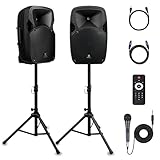 PRORECK Party 12 Powered PA System
A DJ is one of the biggest line items on any wedding budget. If someone you know can run a playlist, this is the difference between hiring one and not.
See it on Amazon →
PRORECK Party 12 Powered PA System
A DJ is one of the biggest line items on any wedding budget. If someone you know can run a playlist, this is the difference between hiring one and not.
See it on Amazon →
 Amazon Basics 46,000 BTU Patio Heater
Outdoor evening receptions live or die on this. Renting three for a night often costs more than buying two.
See it on Amazon →
Amazon Basics 46,000 BTU Patio Heater
Outdoor evening receptions live or die on this. Renting three for a night often costs more than buying two.
See it on Amazon →
 DazzlingStage Wireless Battery Uplights (6)
Battery uplights need no cable runs, so a venue that bans taped-down leads still lets you use them. The cheapest thing that changes how a room photographs.
See it on Amazon →
DazzlingStage Wireless Battery Uplights (6)
Battery uplights need no cable runs, so a venue that bans taped-down leads still lets you use them. The cheapest thing that changes how a room photographs.
See it on Amazon →
 Efavormart 8 ft Gold Hexagonal Arch
Heavy-duty metal rated to 100 lbs, and it resells afterwards, which is the part hiring one never does.
See it on Amazon →
Efavormart 8 ft Gold Hexagonal Arch
Heavy-duty metal rated to 100 lbs, and it resells afterwards, which is the part hiring one never does.
See it on Amazon →
As an Amazon Associate we earn from qualifying purchases. Prices and availability change; check before you buy.
The Quick Formula
Calculating wedding tables is straightforward once you know your guest count and table size. The industry-standard approach gets you to an accurate number in seconds. Understanding this calculation helps you evaluate venues, plan seating charts, and budget for rentals.
Wedding Table Formula
Then add 1-2 extra tables for vendors, last-minute additions, and uneven groups
The key variable is seats per table, which depends on table size. Here's a breakdown of common wedding table dimensions and their capacities.
Always round up in table calculations—you can't seat partial tables, and unfilled chairs are far less noticeable than guests without seats. The buffer tables accommodate scenarios like last-minute additions, guest RSVPs that change, or uneven table groupings where you'd rather not squeeze eight people at a table meant for six.
48" Round
Intimate tables, tight spacing. Good for small venues or cocktail-style seating.
60" Round
Industry standard. 8 for comfort, 10 max. Most common wedding table size.
72" Round
Larger gatherings. Requires more venue space but hosts bigger groups comfortably.
6' Banquet
Rectangular seating. 3-4 per side, none at ends. Good for family-style service.
8' Banquet
Longer rectangular option. 4-5 per side. Creates dramatic linear look.
King's Table
Single long table. Intimate, communal dining. Best for smaller weddings.
Understanding Table Capacity
Table capacity numbers represent comfortable seating, not maximum physical capacity. Yes, you can squeeze 10 people around a 60-inch round, but they'll bump elbows, struggle to navigate their plates, and feel cramped throughout dinner. The "comfortable" numbers account for place settings, centerpieces, and guest movement.
Per-person space at the table: Industry standard is 24-30 inches of table edge per guest. A 60-inch round table has approximately 188 inches of circumference. At 24 inches per guest, that accommodates 7.8 people—round to 8 for comfortable seating. At 30 inches per guest (generous spacing), only 6.3 people fit. Most weddings split the difference at 8 per 60-inch round.
Centerpiece consideration: Large, dramatic centerpieces take space and obstruct sightlines. If you plan elaborate florals, lean toward the lower capacity number. Minimal centerpieces allow slightly higher capacities.
Chair style matters: Chiavari chairs (typical wedding chairs) are narrower than padded banquet chairs. Cross-back or armless chairs also save space. If using wider chairs, reduce capacity by one person per table.
As an Amazon Associate, we earn from qualifying purchases.
Table & Seating Decor
 Eucalyptus Table Garland
 LED Fairy String Lights
 Wedding Planner Book
 Wedding Card Box
Quick Reference: Tables by Guest Count
Use this chart to quickly determine how many tables you need. Based on 60-inch rounds (8 guests per table, the most common setup).
| Guests | 60" Rounds (8/table) | 72" Rounds (10/table) | 6' Banquet (6/table) |
|---|---|---|---|
| 50 | 7 tables | 5 tables | 9 tables |
| 75 | 10 tables | 8 tables | 13 tables |
| 100 | 13 tables | 10 tables | 17 tables |
| 125 | 16 tables | 13 tables | 21 tables |
| 150 | 19 tables | 15 tables | 25 tables |
| 200 | 25 tables | 20 tables | 34 tables |
Pro Tip: These counts include 1 extra table for buffer. Also consider your sweetheart table (if using) as separate—it replaces 2 seats from the guest calculation, not 8.
Head Table vs. Sweetheart Table Considerations
Sweetheart Table: A small table for just the couple, typically a 36-48 inch round or small rectangular table. This removes 2 guests from your table calculation (the couple) and requires one additional small table. Popular because it gives the couple their own space and allows flexible wedding party seating.
Traditional Head Table: A long rectangular table where the wedding party sits facing guests. Typically an 8-foot banquet table per 4-5 people. A 10-person wedding party plus couple needs 24-30 feet of head table. This removes the entire wedding party from regular guest table calculations but requires significant space and limits conversation (everyone faces the same direction).
Mixed Approach: Sweetheart table for the couple with the wedding party seated at guest tables with their dates/families. This creates a more relaxed atmosphere while honoring the couple with prominent seating.
Complete Example: 100-Guest Wedding
Here's a full breakdown of tables and space requirements for a typical 100-guest wedding reception.
100 Guests - Complete Table Breakdown
Calculation: 100 guests ÷ 8 per table = 12.5 → Round up to 13 tables
Buffer: Add 1 table for vendors/uneven groups = 14 total tables
Additional Tables Often Needed
- Gift table: 1 rectangular table near entrance
- Card/place card table: 1 small table at entrance
- Cake table: 1 round or rectangular table
- DJ/band table: Often provided by vendor
- Buffet tables: 2-3 banquet tables if buffet service
Space Requirements Per Guest
Tables are only part of the equation—you need adequate floor space to fit them comfortably with room for movement, service, and additional reception elements.
| Element | Space Required | Notes |
|---|---|---|
| Seated dining (per guest) | 10-12 sq ft | Includes table, chair, and aisle space |
| Cocktail-style (per guest) | 6-8 sq ft | Standing/perching, more movement |
| Dance floor | 4-5 sq ft per dancer | Assume 30-40% of guests dance at once |
| Band/DJ setup | 100-200 sq ft | Varies by ensemble size |
| Bar station | 50-100 sq ft each | Plan 1 bar per 75-100 guests |
| Buffet (per station) | 100-200 sq ft | Includes queue space |
| Ceremony seating | 6-8 sq ft per guest | If ceremony at same location |
Total Space Calculation Example
For 100 guests with seated dinner, dance floor, and bar:
- Dining area: 100 guests × 11 sq ft = 1,100 sq ft
- Dance floor: 35 dancers × 4.5 sq ft = 160 sq ft
- DJ setup: 150 sq ft
- Bar: 100 sq ft
- Cake/gift tables: 50 sq ft
- Total: ~1,560 sq ft minimum
Venue Tip: Always ask for a floor plan. Columns, alcoves, awkward shapes, and required pathways reduce usable space significantly. A 2,000 sq ft room might only have 1,400 sq ft of usable reception space.
Space Planning by Wedding Size
| Guest Count | Dining Space | Dance Floor | Bar/Other | Total Minimum |
|---|---|---|---|---|
| 50 | 550 sq ft | 100 sq ft | 150 sq ft | 800 sq ft |
| 75 | 825 sq ft | 144 sq ft | 200 sq ft | 1,170 sq ft |
| 100 | 1,100 sq ft | 225 sq ft | 250 sq ft | 1,575 sq ft |
| 150 | 1,650 sq ft | 256 sq ft | 350 sq ft | 2,256 sq ft |
| 200 | 2,200 sq ft | 324 sq ft | 450 sq ft | 2,974 sq ft |
Add 15-20% to these figures for comfortable spacing and aisle movement. These are absolute minimums.
Layout Considerations for Different Venue Types
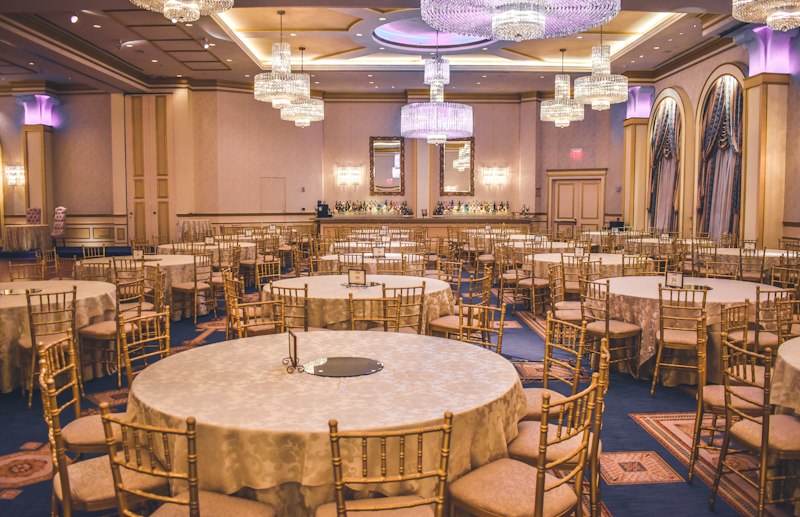
Ballrooms: Typically open spaces well-suited to round table layouts. Consider sight lines to the head table and DJ. Avoid placing tables in corners where speakers or columns block views.
Barns and Rustic Venues: Often favor long rectangular tables that fit the architecture. Factor in posts, beams, and uneven floors when planning table placement. These venues may have less flexible layouts than ballrooms.
Outdoor Tents: Tent poles impact table placement—poles typically occupy spots where tables would otherwise go. Ask for pole locations when planning. Consider edge spacing for tent stability.
Restaurant Private Rooms: Fixed furniture may limit options. Confirm exact capacity and whether standard tables can be reconfigured for your guest count and desired layout.
Historic Venues: Preservation requirements may restrict table placement, equipment, and even guest movement. Understand limitations before finalizing your venue.
Dance Floor Sizing
An undersized dance floor creates crowding; an oversized one looks empty. Get the balance right with these guidelines.
| Total Guests | Assumed Dancers | Floor Size | Dimensions |
|---|---|---|---|
| 50 | 15-20 | 100 sq ft | 10' × 10' |
| 75 | 25-30 | 144 sq ft | 12' × 12' |
| 100 | 30-40 | 225 sq ft | 15' × 15' |
| 150 | 50-60 | 256 sq ft | 16' × 16' |
| 200 | 65-80 | 324 sq ft | 18' × 18' |
When to go larger: Young, party-focused crowds; late reception times; prominent DJ/band; specific dance traditions (hora, line dancing).
When smaller works: Older guests; daytime/brunch weddings; minimal dancing expected; space constraints.
Dance Floor Placement Strategy
Dance floor location affects the entire reception atmosphere. Consider these placement principles:
Central placement creates the most energy, with tables surrounding the action. Guests feel part of the party even while seated. However, it requires careful aisle planning so servers and guests can navigate around the floor.
End-of-room placement near the DJ creates clear zones—dining area separate from dance area. This works well for couples who want distinct phases (dinner, then dancing) and venues where central placement isn't practical.
Avoid placing the dance floor where guests must cross it to access restrooms, bars, or exits. Constant traffic disrupts dancing and creates awkward moments.
Consider sightlines from all tables. Every guest should have a reasonably clear view of the dance floor for key moments like first dances. Avoid placing large centerpieces or tall elements that block views.
Round vs. Rectangular Tables
Table shape affects both aesthetics and logistics. Here's how to choose.
Round Tables
- Pros: Everyone can see each other; promotes conversation; traditional/formal look; efficient use of space; standard linens available
- Cons: Center decoration can block sightlines; harder for family-style service; can feel generic
- Best for: Traditional weddings, formal events, venues with standard rental inventory
Rectangular/Banquet Tables
- Pros: Dramatic linear aesthetic; excellent for family-style service; rustic/modern feel; easier for long centerpieces/runners
- Cons: Conversation limited to immediate neighbors; requires more aisle space; custom linens may cost more
- Best for: Rustic venues, farm/barn weddings, family-style meals, modern minimalist design
Mixing Table Shapes
Some couples mix rounds for guests with a long head table or king's table for the wedding party. This works well but requires careful layout planning to avoid visual chaos. If mixing, be intentional—don't randomly scatter different shapes.
Table Selection by Wedding Style
Traditional/Formal: 60-inch or 72-inch rounds with consistent setup throughout. Uniform appearance, classic elegance.
Rustic/Farm: Long farm tables (rectangular) create the authentic farmhouse aesthetic. Mix with a few rounds for variety if space allows.
Modern/Minimalist: Clean rectangular lines or square tables can create a contemporary feel. Ghost chairs and minimal centerpieces enhance the modern aesthetic.
Garden/Outdoor: Round tables work well on lawns and gardens. Consider bistro-style smaller tables for cocktail areas. Factor in uneven ground when planning table placement.
Intimate/Small: Consider a single king's table for micro-weddings under 30 guests. Everyone sits together, creating a dinner-party atmosphere rather than a traditional wedding layout.
Table Rental Costs and Budgeting
Understanding table costs helps you budget accurately and make cost-effective decisions. Most rental companies charge per table, with prices varying by table type and your location.
Typical Table Rental Prices (2026)
| Table Type | Price Range | Notes |
|---|---|---|
| 60" Round (standard) | $8-15 | Most common, widely available |
| 72" Round | $12-20 | Less common, may need specialty rental |
| 6' Banquet | $8-12 | Standard folding rectangular |
| 8' Banquet | $10-15 | Standard folding rectangular |
| Farm Table (8') | $50-150 | Premium rustic wood |
| Cocktail/Highboy | $8-15 | Standing height for cocktail hour |
Complete Table Budget Example: 100 Guests
- 13 guest tables (60" rounds) @ $12 each: $156
- 1 sweetheart table (36" round) @ $10: $10
- 3 cocktail tables @ $12 each: $36
- 2 buffet tables (8' banquet) @ $12 each: $24
- 1 cake table @ $10: $10
- 1 gift/card table @ $8: $8
- Total Tables: $244
Add linens ($15-50 per table), chairs ($3-8 each), and delivery/setup fees ($50-150) for complete rental costs. Total rental for 100-guest wedding: typically $800-2,000 depending on linen quality and chair style.
Money-Saving Tips for Table Rentals
- Check venue inclusions: Many venues include basic tables and chairs in rental fees. Confirm what's included before renting separately.
- Rent standard sizes: 60" rounds and standard banquet tables cost less than specialty sizes.
- Consolidate vendors: Rent tables, chairs, and linens from the same company for package discounts.
- Weekday pickup/return: Some rental companies offer discounts for non-weekend pickup.
- Skip tablecloths where appropriate: Farm tables look beautiful uncovered with simple runners.
Common Table Planning Mistakes
Avoid these frequent errors in wedding table planning:
Mistake #1: Overestimating Venue Capacity
Venues often advertise maximum capacity for standing cocktail events or minimal spacing. Comfortable seated dining requires more space per person. Always verify capacity specifically for your service style and table configuration.
Mistake #2: Forgetting Service Aisles
Tables need minimum 5-6 feet between them for servers to navigate with trays. Tight spacing creates service bottlenecks and guest discomfort when seated near aisles.
Mistake #3: Poor Dance Floor Placement
Placing the dance floor where it blocks traffic, or too far from the DJ, creates problems. Plan the dance floor first, then arrange tables around it.
Mistake #4: Ignoring Sightlines
Guests seated behind columns or in alcoves miss key moments. Walk through your layout from every table location to verify views.
Mistake #5: Not Testing the Layout
If possible, visit your venue with a tape measure and test your planned layout. What works on paper may not work in practice due to doors, outlets, speaker placement, or other factors.
Mistake #6: Inflexible Seating Charts
RSVP counts change. Plan for flexibility—it's easier to remove place settings than to add tables last minute. Your buffer table provides this flexibility.
Frequently Asked Questions
A 60-inch (5-foot) round table comfortably seats 8 guests with generous elbow room, or can squeeze 10 for tighter seating. For wedding comfort, plan 8 per table. This is the most common wedding table size, offering good conversation distance while fitting standard venue spacing.
Divide your guest count by seats per table, then round up. For 100 guests at 60-inch rounds (8 per table): 100 ÷ 8 = 12.5, round up to 13 tables. Always add 1 extra table for vendor meals, last-minute additions, or uneven groups. Consider your sweetheart or head table separately from guest calculations.
Plan 10-12 square feet per guest for seated dinner service. This includes table space, chair space, and aisle room. For 100 guests, you need 1,000-1,200 square feet for dining alone. Add space for dance floor (200-300 sq ft), DJ/band (100-200 sq ft), bar (50-100 sq ft), and buffet if applicable (100-200 sq ft).
60-inch rounds are the wedding industry standard—they seat 8-10, fit standard linens, and work in most venues. 72-inch rounds are better for large weddings with ample space (seat 10-12). Rectangular/banquet tables create a different aesthetic and work well for rustic/family-style service. Mix table shapes strategically, not randomly.
Calculate 4-5 square feet per dancing guest, assuming 30-40% of guests dance at once. For 100 guests: 35 dancers × 4.5 sq ft = 157 sq ft minimum. A 15×15 foot floor (225 sq ft) works well for 100 guests. 12×12 for 50-75 guests, 18×18 for 150+ guests. Larger is better for active dancing crowds.
Round tables promote intimate conversation (everyone can see each other) and are traditional for formal weddings. Rectangular/banquet tables create linear sightlines, work better for family-style service, and suit rustic or modern aesthetics. Rounds are more space-efficient; rectangles require more aisle space. Most venues default to rounds.
Plan Your Complete Wedding
Use our free calculators to plan every aspect of your wedding budget and logistics.