
The four rentals worth buying instead
Most wedding advice is about trimming the flowers. These four are the line items where buying outright costs less than one night of hire, and three of them resell afterwards.
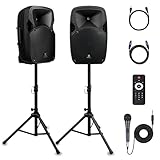 PRORECK Party 12 Powered PA System
A DJ is one of the biggest line items on any wedding budget. If someone you know can run a playlist, this is the difference between hiring one and not.
See it on Amazon →
PRORECK Party 12 Powered PA System
A DJ is one of the biggest line items on any wedding budget. If someone you know can run a playlist, this is the difference between hiring one and not.
See it on Amazon →
 Amazon Basics 46,000 BTU Patio Heater
Outdoor evening receptions live or die on this. Renting three for a night often costs more than buying two.
See it on Amazon →
Amazon Basics 46,000 BTU Patio Heater
Outdoor evening receptions live or die on this. Renting three for a night often costs more than buying two.
See it on Amazon →
 DazzlingStage Wireless Battery Uplights (6)
Battery uplights need no cable runs, so a venue that bans taped-down leads still lets you use them. The cheapest thing that changes how a room photographs.
See it on Amazon →
DazzlingStage Wireless Battery Uplights (6)
Battery uplights need no cable runs, so a venue that bans taped-down leads still lets you use them. The cheapest thing that changes how a room photographs.
See it on Amazon →
 Efavormart 8 ft Gold Hexagonal Arch
Heavy-duty metal rated to 100 lbs, and it resells afterwards, which is the part hiring one never does.
See it on Amazon →
Efavormart 8 ft Gold Hexagonal Arch
Heavy-duty metal rated to 100 lbs, and it resells afterwards, which is the part hiring one never does.
See it on Amazon →
As an Amazon Associate we earn from qualifying purchases. Prices and availability change; check before you buy.
Key Staff Ratios
Wedding staffing follows industry-standard ratios that caterers and venues use to ensure quality service. These ratios vary by service style—plated meals require more staff than buffets. Understanding these ratios helps you evaluate caterer proposals and ensure your guests receive attentive service throughout your celebration.
The ratios below represent guidelines refined over thousands of events by professional caterers. They account for typical service pace, guest expectations, and the physical demands of wedding service. While some flexibility exists, deviating significantly from these standards usually results in noticeable service quality issues.
Plated Service Servers
One server per 10-12 guests for seated, plated meals
Buffet Servers
One server per 20-25 guests for buffet service
Bartenders
One bartender per 50-75 guests for standard bar
Bussers
One busser per 30-40 guests for plate clearing
Quality Indicator: If your caterer proposes significantly fewer staff than these ratios, service may suffer. Understaffing is a common cost-cutting measure that leads to slow service, dirty tables, and long bar lines.
Why These Ratios Matter
Wedding service operates under unique pressures that differ from regular restaurant dining. Everyone arrives at the same time, expects to eat at the same time, and key moments like toasts and first dances require precise coordination. Servers must deliver plates simultaneously across multiple tables, maintain beverage service, and respond to guest requests—all while the wedding timeline progresses.
When staffing falls short, the impacts are immediately visible. Guests wait too long for drinks during cocktail hour. Plates arrive cold or at staggered times to the same table. Dirty dishes pile up, creating an untidy atmosphere. These service failures become the lasting memory rather than your beautiful celebration.
Staff by Service Style
Your service style is the primary driver of staffing needs. Here's how different meal formats affect staff requirements. The choice between plated, buffet, family style, or stations impacts not just cost but the overall dining experience and pace of your reception.
| Service Style | Server Ratio | 100 Guests | 150 Guests |
|---|---|---|---|
| Plated (formal) | 1:10 | 10 servers | 15 servers |
| Plated (standard) | 1:12 | 8-9 servers | 12-13 servers |
| Family Style | 1:15-18 | 6-7 servers | 9-10 servers |
| Buffet | 1:20-25 | 4-5 servers | 6-8 servers |
| Stations | 1:25-30 | 4 servers | 5-6 servers |
| Heavy Appetizers | 1:25-30 | 4 servers | 5-6 servers |
Why Plated Service Needs More Staff
Plated service requires simultaneous delivery of all plates at each table—8-10 guests receiving their food within moments of each other. This "synchronized service" demands more hands than buffet, where guests serve themselves and staff mainly clear plates and monitor stations.
Consider the logistics: for a 100-guest wedding with 13 tables of 8, a proper plated service means all 8 plates at each table arrive within about 30 seconds of each other. The kitchen plates all dishes for a table simultaneously, and a team of servers carries them out together. This requires careful choreography and enough hands to execute it smoothly.
Understanding Each Service Style
Formal Plated Service (1:10 ratio) represents the highest level of wedding dining. White-glove service includes courses being placed and removed in synchronization, wine service throughout the meal, and servers anticipating guest needs. Each server manages only 10 guests, allowing for meticulous attention. This style suits luxury venues, formal evening weddings, and couples who want an elegant fine-dining experience.
Standard Plated Service (1:12 ratio) provides the synchronized plate delivery of formal service with slightly less intensive tableside attention. Servers manage 12 guests each, still delivering excellent service but with less hovering. Most couples choose this option for its balance of elegance and value. It works well for any wedding style from modern minimalist to garden romantic.
Family Style Service (1:15-18 ratio) creates a warm, communal atmosphere where large platters are placed on tables for guests to share. Servers bring platters, refill serving dishes, and clear plates but don't serve individual portions. This style encourages conversation and creates a relaxed dining experience. It works particularly well for rustic venues, farm weddings, and couples who want a sense of togetherness at each table.
Buffet Service (1:20-25 ratio) requires fewer front-of-house servers since guests serve themselves. However, you still need staff to maintain stations, monitor food levels, refresh dishes, and clear tables throughout service. Buffets work well for casual weddings, brunch celebrations, and couples who want variety without the formality of plated meals. The trade-off is that service feels less personalized.
Food Stations (1:25-30 ratio) create an interactive dining experience where guests visit themed stations around the room—perhaps a carving station, pasta station, and raw bar. Each station needs an attendant, but you need fewer traditional servers. This style encourages mingling and works beautifully for cocktail-style receptions or couples who want a non-traditional format.
Heavy Appetizers/Cocktail Reception (1:25-30 ratio) replaces a seated dinner with passed hors d'oeuvres and stationary displays. Servers circulate constantly with trays, requiring fewer staff than plated service but more than typical cocktail hour. This format works for evening weddings with dancing emphasis, rooftop celebrations, or couples who prefer mingling over formal dining.
Hybrid Approaches: Many couples combine styles—plated salad and entree with family-style sides, or buffet dinner with passed appetizers during cocktail hour. Hybrid approaches require staffing for both elements, so discuss with your caterer to ensure adequate coverage for each phase.
Complete Staffing Example: 100 Guests
Here's a full staffing breakdown for a standard 100-guest wedding with plated dinner service. This example illustrates how different staff roles work together to create seamless service throughout your reception.
100-Guest Wedding - Plated Service
Staff Roles Explained
- Servers: Deliver plates, pour wine, handle guest requests during service
- Bartenders: Mix drinks, serve beer/wine, manage bar supplies
- Bussers: Clear plates between courses, remove glassware, maintain cleanliness
- Captain/Lead: Coordinates timing, directs staff, handles issues
- Kitchen Staff: Plate food, maintain temperature, prepare dishes for service
Detailed Staff Role Breakdown
Servers are the primary guest-facing staff throughout your reception. Their responsibilities extend far beyond simply delivering plates. During cocktail hour, servers circulate with trays of passed appetizers, ensuring every guest has access to food without crowding stationary displays. They observe guest drink levels and offer refills. During dinner service, servers coordinate to deliver plates simultaneously, describe menu items when asked, accommodate dietary modifications, and maintain water and wine service. After dinner, they assist with cake service, late-night snacks, and maintaining the overall room appearance.
Bartenders manage all beverage service from behind the bar. Beyond mixing drinks, they track inventory to ensure you don't run out of popular items, maintain a clean and organized bar area, and monitor guest behavior for signs of overconsumption. Experienced wedding bartenders know how to pace service during rush periods (cocktail hour opening, immediately after ceremony) and keep lines moving efficiently. They also handle wine service at the bar when guests prefer to order there rather than having wine poured at their table.
Bussers work behind the scenes to maintain the reception environment. They clear plates between courses, remove used glassware from tables and cocktail areas, and ensure the dining space remains presentable throughout the event. Good bussers anticipate needs—clearing a plate as soon as a guest finishes rather than waiting for a table to accumulate dirty dishes. They also assist servers during high-volume moments and help reset areas between event phases.
The Captain or Lead Server orchestrates the entire service operation. This person serves as your caterer's on-site representative, coordinating with your DJ or band for timing cues, directing staff during service, troubleshooting problems before they affect guests, and ensuring the timeline stays on track. The captain communicates with the kitchen about pacing, manages any guest requests or complaints, and makes real-time decisions about staffing deployment. For complex weddings, this role is essential to smooth execution.
Kitchen Staff remain largely invisible to guests but are crucial to service success. They plate food according to the caterer's presentation standards, maintain proper food temperatures, handle last-minute dietary accommodation requests, and coordinate with the front-of-house team on timing. For on-site cooking or carving stations, additional kitchen staff may work in guest-visible areas.
Small Wedding Staffing: 50 Guests
Intimate weddings require proportionally fewer staff, but you still need adequate coverage for smooth service. For a 50-guest plated dinner:
- Servers: 4-5 (maintaining 1:10-12 ratio)
- Bartender: 1 (sufficient for 50 guests)
- Busser: 1-2
- Captain: 1 (often doubles as a server)
- Kitchen: 1
- Total: 8-10 staff
Small weddings benefit from the more intimate feel, but don't cut staffing too thin. Even with 50 guests, you need enough hands to serve everyone promptly and maintain the venue throughout the event.
Large Wedding Staffing: 200 Guests
Large weddings introduce complexity beyond simple ratio multiplication. With 200 guests, coordination becomes more challenging, service distances increase in larger venues, and more simultaneous tasks occur. For a 200-guest plated dinner:
- Servers: 16-20 (may need closer to 1:10 for such a large group)
- Bartenders: 3-4 (consider multiple bar stations)
- Bussers: 5-6
- Captains: 2 (one for each half of the room or separate areas)
- Kitchen: 3-4
- Total: 30-36 staff
Large weddings often require additional considerations: multiple bar locations to prevent lines, additional captains to coordinate different service areas, and more kitchen staff to plate food quickly enough for simultaneous service across many tables.
Quick Reference: Staff by Guest Count
Use this chart to estimate total service staff needed. Assumes plated service with standard bar.
| Guests | Servers | Bartenders | Bussers | Total Staff |
|---|---|---|---|---|
| 50 | 4-5 | 1 | 1-2 | 7-9 |
| 75 | 6-7 | 1-2 | 2 | 10-12 |
| 100 | 8-9 | 2 | 2-3 | 13-15 |
| 125 | 10-11 | 2 | 3 | 16-18 |
| 150 | 12-13 | 2-3 | 3-4 | 18-21 |
| 200 | 16-18 | 3-4 | 4-5 | 25-28 |
For buffet service, reduce server count by approximately 40%. Bartender and busser counts remain similar.
Bartender Deep Dive
Bar service creates bottlenecks when understaffed. Nothing ruins a cocktail hour like 10-minute drink lines. Understanding bar staffing in detail helps you ensure guests enjoy efficient service throughout your reception.
Bartender Ratios by Bar Type
- Beer and wine only: 1 bartender per 75-100 guests (simpler pours)
- Standard full bar: 1 bartender per 50-75 guests
- Craft cocktails/specialty drinks: 1 bartender per 40-50 guests
- Signature cocktail only: Can pre-batch, stretch to 1 per 75
Peak Demand Timing
Cocktail hour creates the highest bar demand—everyone arrives and wants a drink simultaneously. If your guest count is borderline (say, 75 guests), add a second bartender for cocktail hour even if you reduce to one for dinner.
Understanding demand patterns helps you plan bar staffing strategically. The first 20 minutes of cocktail hour see the heaviest traffic as all guests arrive wanting their first drink. Demand then moderates but spikes again right after dinner when guests return to the bar before dancing. Late in the reception, demand typically decreases as some guests depart and others slow their consumption.
The Math Behind Bartender Ratios
A skilled bartender can make approximately 100-120 drinks per hour under ideal conditions. However, wedding conditions are rarely ideal—bartenders also answer questions, handle special requests, maintain their station, and manage cash or track consumption for hosts. Realistically, expect 60-80 drinks per hour per bartender during busy periods.
For a 100-guest wedding where 80% of guests drink and each wants a drink during the first 20 minutes of cocktail hour, that's 80 drinks in 20 minutes—240 drinks per hour pace. One bartender cannot keep up, creating lines. Two bartenders split the load to 120 drinks per hour each, manageable but busy. Adding a third bartender provides comfortable service with minimal wait times.
Bar Setup Considerations
Single Bar Location works for weddings under 100 guests in compact spaces. It simplifies inventory management and staffing but creates a single point of potential congestion.
Multiple Bar Stations should be considered for weddings over 100 guests or venues with multiple rooms. Placing bars strategically—one near the cocktail area, one near the reception space—distributes demand and reduces walking distances for guests. Each bar needs at least one bartender, so this increases total staffing.
Specialty Bar Add-ons like champagne towers, wine bars, or craft cocktail stations may need dedicated attendants separate from main bar staff. Factor these into your staffing plan.
Pro Tip: For very high-end events or guests who drink heavily, consider a barback (bar assistant) per 2 bartenders. Barbacks restock ice, bottles, and glassware, keeping bartenders focused on making drinks.
Common Bar Staffing Mistakes
Underestimating cocktail hour demand: Many couples staff adequately for average consumption but forget the initial rush. Even if your overall ratio is fine, the opening 20 minutes can overwhelm an insufficient bar team.
Complex signature cocktails without extra staff: That gorgeous 7-ingredient signature cocktail takes 90 seconds to make versus 15 seconds for a beer. If you want craft cocktails, you need more bartenders or pre-batched drinks.
Forgetting bar support needs: Bartenders need someone to run ice, restock glasses, and handle trash. Without support, they leave the bar to manage these tasks, creating service gaps.
Single bar for large or spread-out venues: A 200-guest wedding in a sprawling estate with one bar location guarantees long lines and unhappy guests walking long distances for drinks.
Staff Costs
Understanding staff costs helps you evaluate catering quotes and understand where your money goes. While most caterers bundle staffing into their per-person pricing or service charges, knowing the underlying costs helps you assess whether proposals are reasonable and understand what drives price differences between vendors.
| Position | Hourly Rate | Typical Hours | Per Event |
|---|---|---|---|
| Server | $25-40 | 5-6 hours | $125-240 |
| Bartender | $35-50 | 5-6 hours | $175-300 |
| Busser | $20-30 | 5-6 hours | $100-180 |
| Captain/Lead | $40-60 | 6-7 hours | $240-420 |
| Kitchen Staff | $25-40 | 6-8 hours | $150-320 |
Sample Labor Cost: 100 Guests
For 100 guests with plated service (14 staff total × 5 hours average):
- Servers (9 × $30 × 5): $1,350
- Bartenders (2 × $40 × 5): $400
- Bussers (2 × $25 × 5): $250
- Captain (1 × $50 × 6): $300
- Total Labor: ~$2,300
This is usually bundled into per-person catering costs or covered by service charges.
Understanding Service Charges
Most catering contracts include a service charge of 18-24% added to food and beverage costs. This charge typically covers staffing costs, but the details vary significantly between vendors. Some key questions to ask:
- Does the service charge go to staff? Some venues use "service charge" as additional revenue rather than staff compensation. If it doesn't go to staff, you may want to tip separately.
- Is gratuity separate from service charge? Some contracts have both a service charge (company revenue) and suggested gratuity (staff tips). Understand what each covers.
- What staff positions are included? Confirm whether the service charge covers all positions or just servers. Bartenders, bussers, and kitchen staff might be additional.
- Are there overtime charges? Events running long may incur overtime fees for staff working beyond contracted hours.
Regional Cost Variations
Staff costs vary significantly by location. Major metropolitan areas like New York, San Francisco, and Los Angeles command premium rates—sometimes 50-100% higher than national averages. Rural areas and smaller markets typically fall at or below the ranges shown above. Consider these geographic factors when evaluating catering proposals:
- High-cost markets: NYC, SF Bay Area, LA, Boston, DC, Seattle—add 30-50% to typical rates
- Mid-cost markets: Chicago, Dallas, Atlanta, Denver, Miami—roughly national average
- Lower-cost markets: Most smaller cities and rural areas—10-20% below national average
How Staffing Affects Your Per-Person Catering Cost
Catering quotes typically express pricing per person, but that per-person cost includes staff labor. Understanding this helps explain price differences between proposals. A caterer quoting $150/person includes more comprehensive staffing than one quoting $95/person.
For a 100-guest wedding, the $2,300 labor example above translates to $23/person just for service staff. Add kitchen labor, management, and overhead, and staffing might represent $35-50 of each per-person catering cost. The remainder covers food, beverages, equipment, transportation, and profit.
This explains why smaller weddings often have higher per-person costs—you still need a baseline level of staff even for 50 guests, so fixed costs distribute across fewer people.
Questions to Ask Your Caterer
Staffing is often buried in catering contracts. Ask these specific questions to understand what you're getting. Getting clear answers before signing helps avoid surprises and ensures you're comparing proposals fairly.
- "How many total service staff will be at my wedding?" — Get a specific number, not vague promises
- "What is your server-to-guest ratio?" — Should match or exceed industry standards
- "Are bartenders included or additional?" — Some caterers exclude bar staff
- "Does the service charge include gratuity for staff?" — Determines whether additional tips are expected
- "Will there be an on-site captain or coordinator?" — Someone should manage the service team
- "What happens if my guest count changes?" — Staff adjustments for final numbers
Additional Questions for Detailed Planning
- "What time do staff arrive and when do they leave?" — Understand total hours covered and whether overtime applies if events run long
- "How are staff allocated during different phases?" — Confirm adequate coverage during cocktail hour, dinner service, and dancing
- "Do you provide bussers and kitchen staff, or only servers?" — Some quotes only include servers, with other positions as add-ons
- "What's your policy if a staff member doesn't show?" — Understand backup plans for no-shows
- "Will the same team work my entire event?" — Confirm whether staff rotate out mid-event
- "How do you handle dietary restrictions during service?" — Ensure staff know which plates go to guests with allergies or dietary needs
Red Flags in Staffing Proposals
Watch for these warning signs when reviewing catering proposals:
- Vague staffing language: "Adequate staffing" or "appropriate number of servers" without specific numbers suggests the caterer plans to staff minimally
- Ratios significantly below industry standard: 1:15 for plated service or 1:30 for buffet indicates potential service quality issues
- No captain or lead mentioned: Every wedding needs someone directing the service team
- Service charge much lower than 18%: May indicate staffing costs are hidden elsewhere or staff is inadequate
- Reluctance to provide specific numbers: Caterers who won't commit to staffing details may be planning to understaff
Vendor Negotiation Tips for Staffing
Staffing is one area where negotiation can improve your wedding experience:
- Request specific staffing guarantees in writing: Add exact numbers to your contract rather than relying on verbal promises
- Ask for an extra server during cocktail hour: Even one additional person during the busiest period can significantly improve service
- Negotiate included bartender hours: If the quote includes bartenders for 4 hours but your reception is 5 hours, negotiate coverage for the full event
- Request a pre-event site visit with the captain: Having the lead server see your venue beforehand improves day-of execution
- Ask about staff experience with weddings: Experienced wedding servers anticipate needs better than general catering staff
Common Staffing Mistakes to Avoid
Learning from others' mistakes helps you plan more effectively. These are the most frequent staffing errors couples make:
Mistake #1: Cutting Staff to Save Money
Reducing server count is tempting when facing budget pressure, but understaffing creates visible, memorable problems. Guests notice when plates arrive cold or at different times around the table, when they wait 15 minutes for a drink, or when dirty dishes accumulate. These service failures overshadow the beautiful details you invested in. Better alternatives exist for saving money without sacrificing service quality.
Mistake #2: Ignoring Cocktail Hour Staffing
Many couples focus on dinner service staffing while neglecting cocktail hour—the busiest bar period of your entire reception. The first 20 minutes see everyone arriving simultaneously, each wanting a drink immediately. If you staff only for average consumption, those opening minutes become a frustrating queue. Budget extra bartenders or passed wine/champagne service to handle the initial rush.
Mistake #3: Not Accounting for Venue Layout
Staff ratios assume reasonable service distances. A 150-guest wedding in a compact ballroom needs different staffing than the same wedding spread across multiple outdoor areas, a barn with separate cocktail and dinner spaces, or a venue with kitchen far from the dining area. Discuss your venue's specific layout with your caterer and adjust staffing accordingly.
Mistake #4: Forgetting Support Positions
Focusing only on servers and bartenders ignores the support staff who keep them effective. Without bussers, servers spend time clearing instead of serving. Without barbacks, bartenders leave to get ice. Without a captain, no one coordinates timing. Ensure your staffing plan includes all necessary positions, not just guest-facing roles.
Mistake #5: Assuming Venue Staff Is Included
Some couples assume venue rental includes service staff—a costly misunderstanding. Venues and caterers often operate separately. Confirm exactly what your venue provides versus what your caterer provides, and ensure no gaps exist in coverage.
Mistake #6: Not Planning for Late-Night Service
If your reception extends into late-night hours with snacks, late-night bites, or continued bar service, you need staff coverage for those periods. Some caterers include limited hours, with overtime charges applying after. Confirm coverage duration and costs before your wedding day.
Money-Saving Alternatives
If your budget doesn't accommodate optimal staffing levels, these alternatives maintain quality while reducing costs:
Choose a Lower-Staff Service Style
Buffet service requires approximately 40% fewer servers than plated meals. Stations require even fewer. If you love the idea of plated service but can't afford the staffing, consider family-style service—it feels elegant while requiring fewer servers than individually plated courses.
Simplify Your Bar
Beer and wine only bars require fewer bartenders than full bars with complex cocktails. Pre-batched signature cocktails reduce pour time. Eliminating the bar entirely in favor of wine service at tables requires no dedicated bartenders. Consider whether your guests will truly miss full bar options or whether simplification serves your budget better.
Reduce Event Duration
A 4-hour reception costs less to staff than a 6-hour reception. If budget is tight, consider a brunch wedding (naturally shorter), afternoon tea reception, or cocktail-style celebration that doesn't require extended dinner service staffing.
Off-Peak Timing
Some caterers offer lower rates for Sunday weddings or off-season dates. Staff costs remain similar, but overall catering prices (including staffing) may be negotiable during slower periods.
Consolidate Service Areas
Having ceremony and reception in the same space eliminates the need for separate setup teams. A single bar location (for smaller weddings) requires fewer bartenders than multiple stations. Compact venue layouts reduce staff needed to cover service distances.
Trade Tray Service for Stationary Displays
Passed appetizers require servers circulating constantly. Stationary displays need only periodic monitoring and refreshing. For cocktail hour, beautiful stationary food displays can replace labor-intensive passed hors d'oeuvres while still providing abundance.
Important: These alternatives reduce costs by genuinely reducing staffing needs—not by understaffing a service style that requires more people. A buffet with proper staffing will always deliver better service than an understaffed plated dinner.
Frequently Asked Questions
For 100 guests: plated dinner requires 8-10 servers (1:10-12 ratio), buffet service requires 4-5 servers (1:20-25 ratio), plus 2 bartenders (1:50 ratio). Total staff for 100-guest plated dinner: approximately 10-12 service staff including servers, bartenders, and 1-2 bussers. Caterers typically determine exact staffing based on menu complexity and timeline.
Standard ratios vary by service style: Plated/seated service needs 1 server per 10-12 guests for smooth plate delivery. Buffet service needs 1 server per 20-25 guests for station monitoring and clearing. Cocktail/passed appetizers need 1 server per 25-30 guests for tray service. Higher-end events with multiple courses or white-glove service may use 1:8 ratios.
Plan 1 bartender per 50-75 guests for standard bar service. For 100 guests, 2 bartenders ensure reasonable wait times. Heavy-drinking crowds or elaborate cocktail menus may need 1 per 40-50 guests. If serving beer and wine only (simpler drinks), you can stretch to 1 per 75-100. Having enough bartenders matters most during cocktail hour when everyone orders at once.
Wedding servers typically cost $25-$40/hour each, with 4-6 hours being standard. Bartenders run $35-$50/hour. A 100-guest wedding with 10 service staff for 5 hours costs roughly $1,500-$2,500 in labor alone—often bundled into per-person catering costs. Service charges (18-22%) on catering contracts usually cover staff, but confirm whether that includes gratuity.
Yes, bussers are essential for maintaining a clean, pleasant reception. Plan 1 busser per 30-40 guests for plated service, or 1 per 50 guests for buffet. For 100 guests, 2-3 dedicated bussers keep tables clear between courses, remove cocktail hour debris, and maintain cleanliness throughout the event. Bussers are often included in catering staff counts.
Check your contract first—many catering contracts include a "service charge" (18-22%) that may or may not go to staff. If the service charge IS gratuity, no additional tip is needed. If it's a venue fee (not going to staff), tip servers 15-20% of food/beverage costs or $20-$50 cash each. Always ask: "Does the service charge go directly to the service staff?"
Plan Your Complete Wedding Budget
Use our free calculators to plan every aspect of your wedding, from catering to tips.


