The four rentals worth buying instead
Most wedding advice is about trimming the flowers. These four are the line items where buying outright costs less than one night of hire, and three of them resell afterwards.
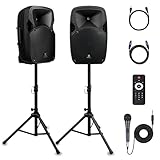 PRORECK Party 12 Powered PA System
A DJ is one of the biggest line items on any wedding budget. If someone you know can run a playlist, this is the difference between hiring one and not.
See it on Amazon →
PRORECK Party 12 Powered PA System
A DJ is one of the biggest line items on any wedding budget. If someone you know can run a playlist, this is the difference between hiring one and not.
See it on Amazon →
 Amazon Basics 46,000 BTU Patio Heater
Outdoor evening receptions live or die on this. Renting three for a night often costs more than buying two.
See it on Amazon →
Amazon Basics 46,000 BTU Patio Heater
Outdoor evening receptions live or die on this. Renting three for a night often costs more than buying two.
See it on Amazon →
 DazzlingStage Wireless Battery Uplights (6)
Battery uplights need no cable runs, so a venue that bans taped-down leads still lets you use them. The cheapest thing that changes how a room photographs.
See it on Amazon →
DazzlingStage Wireless Battery Uplights (6)
Battery uplights need no cable runs, so a venue that bans taped-down leads still lets you use them. The cheapest thing that changes how a room photographs.
See it on Amazon →
 Efavormart 8 ft Gold Hexagonal Arch
Heavy-duty metal rated to 100 lbs, and it resells afterwards, which is the part hiring one never does.
See it on Amazon →
Efavormart 8 ft Gold Hexagonal Arch
Heavy-duty metal rated to 100 lbs, and it resells afterwards, which is the part hiring one never does.
See it on Amazon →
As an Amazon Associate we earn from qualifying purchases. Prices and availability change; check before you buy.
The Great Cost Myth
Every couple has had this thought: "We could save thousands by having the wedding in our backyard." It sounds logical. Venue fees represent some of the largest wedding expenses—$3,000 to $15,000+ for a few hours of space. Why not use the backyard and pocket that money?
The reality is more complicated. Venues don't just rent you space; they provide infrastructure. Tables, chairs, bathrooms, lighting, power, parking, weather backup, staffing, cleanup. When you remove the venue, you become responsible for everything they provided. Those costs add up quickly.
This isn't to say backyard weddings are never cheaper—they can be, sometimes significantly. But the savings are rarely what couples expect, and the hidden costs often surprise people mid-planning when budgets are already set.
Understanding the true economics of this decision requires looking beyond the obvious venue rental fee. You need to account for every service, amenity, and convenience that a traditional venue provides—and calculate what it costs to recreate those elements in a residential setting. Only then can you make an informed comparison that reflects your actual spending.
The Hidden Cost Reality
The average backyard wedding requiring tent, rentals, and proper setup costs $5,000-12,000 in infrastructure alone—before any vendors. A mid-range venue at $6,000-10,000 often includes most of that infrastructure. Net savings of backyard weddings: typically $0-5,000, with dramatically more planning work.
Where couples actually cut the cost
Decor is the line item with the widest gap between hiring it and doing it yourself. These four move the budget most, and all of them resell afterwards.
Efavormart 8 ft Gold Hexagonal Arch
Heavy-duty metal rated to 100 lbs, and resellable after the day, which is why it beats hiring one.
See it on Amazon → LUNSY LED Par Uplights (6 Pack)
Uplighting is the single biggest visual upgrade per dollar at any venue.
See it on Amazon → 3D White Rose Flower Wall Panels (12 Pack)
Covers a full backdrop for a fraction of a florist's install fee.
See it on Amazon → White Chiffon Arch Draping, 20 ft
The fabric that makes a bare rented arch look finished.
See it on Amazon →As an Amazon Associate we earn from qualifying purchases. Prices and availability change; check before you buy.
Complete Cost Comparison
Let's break down a 75-guest wedding both ways, assuming you need everything a venue would provide:
| Cost Category | Backyard Wedding | Venue Wedding |
|---|---|---|
| Space/Venue Rental | $0 | $5,000-8,000 |
| Tent (required for weather) | $2,500-4,500 | $0 (included) |
| Tables & Chairs | $800-1,500 | $0 (included) |
| Linens | $400-800 | $0-500 |
| Place Settings | $300-600 | $0 (included) |
| Portable Restrooms | $400-1,200 | $0 (included) |
| Power/Generator | $300-800 | $0 (included) |
| Lighting | $500-1,500 | $0-500 |
| Dance Floor (if tenting) | $400-1,000 | $0 (included) |
| Yard Prep/Landscaping | $200-800 | $0 |
| Parking/Shuttles | $0-1,500 | $0 (usually) |
| Cleanup/Waste Removal | $200-500 | $0 (included) |
| Insurance Rider | $200-400 | $0 (venue carries) |
| Infrastructure Total | $6,200-14,600 | $5,000-9,000 |
Notice something? For 75 guests, a well-equipped backyard wedding often costs more than a mid-range venue in infrastructure alone. The "free" backyard isn't free—it's unbundled.
Detailed Cost Breakdown by Category
Understanding where your money goes in each scenario helps you make smarter decisions about which option truly fits your budget and priorities.
Tent and Shelter Costs
For backyard weddings, the tent is typically your single largest infrastructure expense. A basic frame tent for 75 guests runs $2,000-3,500. Add sidewalls for weather protection ($300-600), a tent liner for aesthetics ($400-800), and flooring if the ground is uneven ($600-1,200). Suddenly your "tent" costs $3,300-6,100.
Pole tents are slightly cheaper but require more space and have center poles that affect layout. Sailcloth tents look stunning but cost 40-60% more than standard options. Clear-top tents for stargazing atmospheres add another premium of 30-50%.
Venues eliminate this entirely. Their buildings, patios, or permanent structures provide shelter without additional rental costs. Even outdoor venue spaces typically include backup indoor options or permanent covering structures.
Furniture and Rentals
Tables, chairs, and linens represent the next major category. For 75 guests, you need approximately 10 round tables or 8 rectangular tables, plus a head table, gift table, and serving stations. Chair costs run $4-8 per chair for basic options, $8-15 for nicer versions like chiavari or cross-back styles.
Linens add $15-35 per table for quality tablecloths, plus napkins at $1-3 each. Place settings—plates, glassware, silverware—run $3-8 per person for basic options, $10-20 for upgraded china and stemware. These costs multiply quickly with guest count.
Most venues include basic tables, chairs, and often linens in their rental fee. Some provide place settings as part of catering packages. This bundling represents significant hidden value in venue pricing.
Power and Electrical
Backyard electrical systems rarely support wedding-level demands. Caterers need power for warming equipment. DJs require reliable circuits. Lighting, especially string lights and uplighting, draws significant power. Air conditioning or heating units (if needed) demand even more.
Solutions range from running extension cords from the house ($0-200 for heavy-duty cords) to renting generators ($300-800 per day depending on capacity). Professional electricians may need to assess and upgrade systems ($200-500 for consultation and minor work).
Venues have commercial electrical systems designed for events. Power is simply available where you need it, with appropriate capacity for any vendor requirement.
Restroom Facilities
Home bathrooms cannot handle 75 guests, especially if alcohol is served. Lines form, privacy disappears, and your home's plumbing faces serious stress. Portable restroom rentals solve this problem.
Basic porta-potties cost $150-250 each, but these feel inappropriate for weddings. Restroom trailers with flushing toilets, running water, mirrors, and climate control cost $400-1,200 depending on size and features. For weddings, the trailer option is strongly recommended—guests notice and appreciate the upgrade.
Venues provide permanent, well-maintained restroom facilities as a basic amenity. This alone can justify hundreds of dollars of the venue fee.
When Backyard Actually Saves Money
Despite the infrastructure costs, backyard weddings can genuinely be cheaper in specific scenarios:
- Small guest count (under 50): Smaller tents, fewer rentals, possibly no tent needed
- Guaranteed weather: Desert climates, covered outdoor spaces, indoor backup available
- Existing infrastructure: Family with event equipment, restaurant-grade kitchen access
- DIY capacity: Skilled family/friends handling setup, service, cleanup
- Extended timeline: Multi-day access for setup without rental time pressure
The typical savings in these optimal conditions: $3,000-8,000 compared to a similar-quality venue wedding. Substantial, but not the $10,000+ many expect.
The Non-Financial Costs
Money isn't the only consideration. Backyard weddings create costs that don't appear on spreadsheets:
Planning Burden
- You coordinate every vendor without a venue point person
- Delivery logistics fall on you
- Setup/breakdown requires your presence and management
- Rain plans require you to have backup solutions ready
Family Dynamics
- Whose backyard? Whose house is disrupted?
- Family expectations about helping—welcome or obligatory?
- Property damage concerns
- Hosting stress on homeowners during what should be celebration
Day-Of Experience
- You (or your parents) can't simply enjoy the event
- Problems are your problems—no venue staff to handle them
- Cleanup happens where people just celebrated; the transition is jarring
Backyard vs Venue: The Trade-offs
Backyard Advantages
- Personal significance and memories
- Complete creative control
- Unlimited hours—no venue curfews
- Ability to customize everything
- Potential for real savings (in right conditions)
- Privacy and exclusivity
Backyard Challenges
- Infrastructure responsibility falls on you
- Weather contingency is your problem
- Significantly more planning work
- Family stress on property owners
- No venue coordinator/point person
- Cleanup is your responsibility
Venue Advantages
- Infrastructure included in price
- Professional coordination support
- Clear vendor relationships
- Weather backup (usually)
- Cleanup handled
- Less family stress
Venue Challenges
- Rental fee can be substantial
- Time restrictions and curfews
- Less creative flexibility
- May feel less personal
- Required vendor lists (sometimes)
- Availability constraints
Real Couple Scenarios
These examples illustrate how different situations lead to different outcomes:
Scenario 1: Sarah and Mike - The Successful Backyard Wedding
Sarah's parents have a large property in Arizona with mountain views. The couple wanted 60 guests for a November wedding. Arizona's dry climate meant minimal weather risk, and the family already owned folding tables and chairs from hosting events over the years.
Their costs: Small tent for shade ($1,800), upgraded restroom trailer ($650), generator rental ($350), string lights ($400 purchased), catering prep supplies ($200), yard cleanup and prep ($300). Total infrastructure: $3,700.
Comparable venue in their area: $6,500-9,000 for similar mountain views.
Actual savings: $2,800-5,300, plus unlimited setup time and no curfew restrictions.
Why it worked: Ideal weather conditions, existing equipment, smaller guest count, and parents who genuinely wanted to host. Sarah's mom described it as "the wedding she always dreamed of having for her daughter."
Scenario 2: Jennifer and David - The Expensive "Savings"
Jennifer's family offered their suburban backyard in Ohio for a 90-guest June wedding. The couple initially estimated $4,000 in backyard costs versus $8,000 for venues they'd toured.
Actual costs: Large tent with flooring ($4,200), tables/chairs/linens ($1,800), two restroom trailers ($1,100), generator and electrical work ($700), dance floor ($600), parking coordination and shuttle ($800), insurance rider ($350), yard landscaping ($600), cleanup crew ($400). Total infrastructure: $10,550.
The venue they declined: $8,000 including all of the above plus coordination support.
Actual overspend: $2,550 more than the venue, plus 60+ hours of personal coordination time.
Why it failed financially: Larger guest count, unpredictable Midwest weather requiring full tent setup, no existing equipment, and underestimating the true costs of replicating venue amenities.
Scenario 3: Rachel and Tom - The Hybrid Approach
Rachel and Tom found a unique solution: a small ceremony at his grandmother's garden (25 people, immediate family only) followed by a reception at a local restaurant's private room (75 guests). This hybrid captured the personal meaning of a family property wedding while avoiding infrastructure costs.
Their costs: Garden ceremony setup ($400 for chairs, arch, minimal decor), restaurant reception ($5,200 for space and food minimum). Total: $5,600.
What they avoided: $8,000+ in tent and rental costs for a full backyard reception.
Why it worked: They separated the "personal meaning" element (ceremony) from the "party infrastructure" element (reception), optimizing each for its strengths.
Hidden Costs to Consider
Beyond the obvious expenses, backyard weddings often incur costs that surprise couples:
Permit and Legal Requirements
Many municipalities require permits for events over a certain size. Costs range from $50-500 depending on location. Some HOAs prohibit events of this scale entirely or require association approval with potential fees.
Neighbor Relations
Noise, parking, and general disruption can strain neighborhood relationships. Some couples budget for "neighbor gifts" ($200-500) or even invite neighbors to avoid complaints. Others face police visits that dampen the celebration.
Property Preparation
Getting a yard "wedding ready" often requires more work than anticipated. Lawn treatments ($100-300), tree trimming ($200-600), pressure washing patios ($150-400), and general landscaping ($200-800) add up. Some couples repaint fences or add temporary landscaping that represents additional investment.
Post-Wedding Restoration
Tents leave marks. Heavy foot traffic damages grass. Caterers may stress plumbing. Budgeting $200-800 for lawn restoration, plumbing assessment, and general cleanup beyond the day-after basics is realistic.
Vendor Delivery Challenges
Vendors may charge extra for residential deliveries, especially if driveways are long, access is limited, or multiple trips are required. These fees typically run $50-200 per vendor but multiply across your vendor team.
Expert Recommendations
Based on analysis of hundreds of weddings at both venue and backyard locations, here are the patterns that predict success:
Choose Backyard When:
- Guest count stays under 60 (ideally 40-50)
- You have a genuine indoor backup option at the same location
- The property owner is enthusiastic, not just willing
- You have at least 4 months to plan infrastructure logistics
- Your budget includes $6,000-10,000 specifically for infrastructure
- You or someone close has event coordination experience
- The property has genuine meaning beyond "it's free"
Choose Venue When:
- Guest count exceeds 75
- Weather is unpredictable for your date/location
- You lack time for extensive logistics coordination
- Budget analysis shows less than $3,000 savings from backyard
- Family dynamics around property use are complicated
- You want to be a guest at your own wedding
- You prefer having a professional point person for problems
Consider Hybrid Approaches When:
- You want personal meaning without infrastructure burden
- Different elements of your wedding have different scale needs
- You can split ceremony and reception locations logistically
- Budget allows for transportation between locations
Who Should Choose Which
Choose Backyard If:
• Guest count is under 60—ideally under 50
• The property has genuine personal meaning
• Weather risk is low (or you have indoor backup)
• Willing family offers property enthusiastically, not reluctantly
• You have 3+ months lead time for planning infrastructure
• Your budget for infrastructure is realistic (budget $8,000+)
• DIY setup and coordination excites rather than stresses you
Choose Venue If:
• Guest count exceeds 75
• Weather is unpredictable in your area/season
• You want to enjoy the day rather than manage it
• Family dynamics make property sharing complicated
• Budget analysis shows minimal savings from backyard
• Planning time is limited
• You want clear professional support
If You Choose Backyard: Planning Checklist
Committed to the backyard route? Here's what you must plan for:
- 3-6 months out: Book tent, rentals, portable restrooms, generator if needed
- 2-3 months out: Confirm electrical capacity; hire electrician if needed
- 1-2 months out: Landscaping, yard prep, parking plan
- 2 weeks out: Confirm all delivery times and vendor access
- 1 week out: Rain plan finalized and communicated
- 2-3 days before: Tent and floor installation
- Day before: Rentals delivered, setup begins
- Day after: Breakdown and rentals picked up
If You Choose Venue: What to Look For
Not all venues provide the same value. When comparing options, verify what's actually included:
- Tables and chairs: Quantity, style, and condition
- Linens: Included or additional fee?
- Place settings: Part of catering or separate rental?
- Setup and breakdown: Who handles it and when?
- Coordination: Point person available day-of?
- Parking: Capacity and any valet requirements
- Weather backup: What happens if outdoor space is rained out?
- Time restrictions: When must the event end? When can you access for setup?
- Vendor restrictions: Required caterers or open vendor policy?
A venue that includes more may cost more upfront but represent better value when you calculate what you'd pay to add those elements separately.
Frequently Asked Questions
Often less than you'd expect. While you save the venue rental fee ($3,000-15,000), backyard weddings add costs venues include: tent ($2,000-6,000), all rentals ($2,000-5,000), restrooms ($400-1,500), power/lighting ($500-1,500), and significantly more setup labor. Net savings: $0-5,000 typically.
Tent rental, tables/chairs/linens, power generators, lighting, portable restrooms, yard preparation, waste management, cleanup, and insurance. These commonly add $5,000-12,000 that venues include in their fee. The "free venue" can cost nearly as much as renting one.
Almost always yes, unless you have a guaranteed dry climate and covered backup space. Tent costs: small (40-60 guests) $1,200-2,500, medium (80-100 guests) $2,500-4,500, large (120+ guests) $4,000-8,000+. Add flooring, sidewalls, and lighting for more.
Backyard: Personal meaning, complete creative control, unlimited hours. Venue: Infrastructure included, professional coordination, less family stress, weather backup, and clear vendor coordination. Choose based on what matters more to your experience.
Create a detailed spreadsheet listing every amenity a venue would provide: tent/shelter, tables, chairs, linens, place settings, restrooms, power, lighting, parking, coordination, cleanup, and insurance. Get quotes for each element. Add 15-20% contingency for unexpected costs. Compare this total to venue quotes that include these items.
If you have a tent with sidewalls, light rain is manageable. Heavy rain creates mud, parking issues, and uncomfortable conditions. Your options: tent with waterproof flooring (expensive), indoor backup space at the same location (ideal), or a "rain date" clause with vendors (rarely practical). Most couples with backyard weddings have no true rain contingency—they hope for the best.
Only in very specific circumstances: guaranteed dry weather (Southwest desert climates), existing covered structures (permanent pavilion, covered patio), or a genuine indoor backup space at the same location. For most regions and seasons, going tentless is a significant gamble with your wedding day.
Calculate Your Wedding Budget
Whether backyard or venue, see how your budget should allocate across all categories.
Open Budget Calculator See $15K Budget