
The four rentals worth buying instead
Most wedding advice is about trimming the flowers. These four are the line items where buying outright costs less than one night of hire, and three of them resell afterwards.
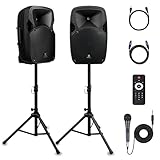 PRORECK Party 12 Powered PA System
A DJ is one of the biggest line items on any wedding budget. If someone you know can run a playlist, this is the difference between hiring one and not.
See it on Amazon →
PRORECK Party 12 Powered PA System
A DJ is one of the biggest line items on any wedding budget. If someone you know can run a playlist, this is the difference between hiring one and not.
See it on Amazon →
 Amazon Basics 46,000 BTU Patio Heater
Outdoor evening receptions live or die on this. Renting three for a night often costs more than buying two.
See it on Amazon →
Amazon Basics 46,000 BTU Patio Heater
Outdoor evening receptions live or die on this. Renting three for a night often costs more than buying two.
See it on Amazon →
 DazzlingStage Wireless Battery Uplights (6)
Battery uplights need no cable runs, so a venue that bans taped-down leads still lets you use them. The cheapest thing that changes how a room photographs.
See it on Amazon →
DazzlingStage Wireless Battery Uplights (6)
Battery uplights need no cable runs, so a venue that bans taped-down leads still lets you use them. The cheapest thing that changes how a room photographs.
See it on Amazon →
 Efavormart 8 ft Gold Hexagonal Arch
Heavy-duty metal rated to 100 lbs, and it resells afterwards, which is the part hiring one never does.
See it on Amazon →
Efavormart 8 ft Gold Hexagonal Arch
Heavy-duty metal rated to 100 lbs, and it resells afterwards, which is the part hiring one never does.
See it on Amazon →
As an Amazon Associate we earn from qualifying purchases. Prices and availability change; check before you buy.
Why Courthouse Weddings Make Sense
Courthouse weddings have shed their reputation as hasty or unromantic. For couples who prioritize the marriage over the wedding, who object to the wedding industry's inflated costs, or who simply prefer intimate simplicity, a civil ceremony at a courthouse or city hall offers a meaningful alternative that costs a tiny fraction of a traditional celebration.
The appeal extends beyond budget. Courthouse weddings eliminate months of stressful planning, vendor coordination, and family politics. You walk in unmarried and walk out married—often in under 30 minutes. There's elegance in that simplicity.
Many couples use courthouse ceremonies strategically: getting legally married quickly for insurance, immigration, or personal reasons, then planning a larger celebration later. Others find the courthouse ceremony is the complete experience they wanted—no reception, no party, just commitment witnessed by a few loved ones.
Courthouse Wedding Cost Reality
- Absolute minimum: $50-$150 (license + ceremony fee only)
- Typical courthouse wedding: $300-$800 (adds photography, nice attire, dinner)
- Enhanced courthouse experience: $1,200-$3,000 (professional everything, designer attire)
- Time investment: 1-3 hours on wedding day, minimal prior planning
As an Amazon Associate, we earn from qualifying purchases.
Courthouse Wedding Essentials
 Champagne Flutes (Set of 2)
Elegant toasting glasses for your celebration
$29.95 on Amazon →
Champagne Flutes (Set of 2)
Elegant toasting glasses for your celebration
$29.95 on Amazon →
 Wedding Memory Book
Document your intimate ceremony
$23.99 on Amazon →
Wedding Memory Book
Document your intimate ceremony
$23.99 on Amazon →
 Bridal Touch-Up Kit
Look perfect for courthouse photos
$22.99 on Amazon →
Bridal Touch-Up Kit
Look perfect for courthouse photos
$22.99 on Amazon →
 Simple Bridal Bouquet
Artificial flowers for timeless photos
$14.99 on Amazon →
Simple Bridal Bouquet
Artificial flowers for timeless photos
$14.99 on Amazon →
Courthouse Wedding Budget Tiers
Courthouse weddings scale remarkably well. You can spend as little as necessary for legal marriage or invest enough to create a genuinely special day—while still spending a fraction of traditional wedding costs.
Bare Essentials
- Marriage license ($30-$100)
- Ceremony fee ($20-$75)
- Existing attire
- Phone photos
- No extras
- Ideal for: couples who just want to be married
Thoughtful Simple
- License + ceremony
- New outfit ($100-$250)
- Friend with good camera
- Small bouquet ($30-$50)
- Nice dinner for 2-4 ($150-$250)
- Ideal for: couples wanting to feel special
Polished Experience
- License + ceremony
- Designer or wedding attire ($300-$800)
- Professional photography ($300-$600)
- Professional hair/makeup ($150-$300)
- Quality florals ($100-$200)
- Upscale dinner for 4-10 ($400-$800)
- Ideal for: couples wanting special without wedding
Complete Courthouse Wedding Budget Breakdown
This sample budget represents a "thoughtful" courthouse wedding: intentional enough to feel special, modest enough to preserve the simplicity that attracted you to this option.
| Item | Low | Mid | High |
|---|---|---|---|
| Marriage License | $30 | $65 | $100 |
| Ceremony Fee | $20 | $50 | $75 |
| Bride Attire | $50 | $150 | $400 |
| Groom Attire | $0 | $100 | $250 |
| Photography | $0 | $250 | $600 |
| Flowers | $0 | $40 | $150 |
| Hair & Makeup | $0 | $100 | $300 |
| Rings | $50 | $200 | $500 |
| Celebration Meal | $50 | $200 | $500 |
| Transportation | $0 | $30 | $150 |
| Total | $200 | $1,185 | $3,025 |
Marriage License Costs by State
Marriage license fees vary significantly by state. Some states offer discounts for completing premarital counseling. Most licenses are valid for 30-90 days after issuance.
California
$35-$100
Varies by county. No waiting period. Valid 90 days.
New York
$35-$40
24-hour waiting period. NYC is $35. Valid 60 days.
Texas
$81
72-hour waiting period. $60 discount with course. Valid 90 days.
Florida
$86-$93.50
3-day wait for FL residents. Reduced with course. Valid 60 days.
Nevada
$102
No waiting period. Same-day marriage possible. Valid 1 year.
Colorado
$30
No waiting. Self-solemnization legal. Valid 35 days.
Illinois
$60-$75
No waiting for residents. 1-day wait for non-residents. Valid 60 days.
Georgia
$56-$76
No waiting period. Varies by county. Valid indefinitely.
Pro Tip: Call your county clerk's office directly for current fees and requirements. Prices change, and some counties within the same state charge different amounts. Many now offer online applications to save time at the office.
How to Plan a Courthouse Wedding
Courthouse weddings require less planning than traditional weddings, but they still benefit from thoughtful preparation. Follow this timeline to ensure a smooth experience.
2-4 Weeks Before: Research Requirements
Contact your county clerk's office to confirm: license fees, required documents, waiting periods, witness requirements, and ceremony availability. Some courthouses require appointments for ceremonies; others accept walk-ins during specific hours. Confirm the officiant who will marry you (judge, clerk, or magistrate).
1-2 Weeks Before: Obtain Marriage License
Visit the county clerk with both parties present, valid photo ID, and payment. If your state has a waiting period, schedule your ceremony for after that period expires. Some states allow online applications that speed up the in-person visit.
1 Week Before: Confirm Details
Confirm your ceremony time if an appointment was made. Arrange witnesses if required by your state. Plan your attire, flowers, and any photography. Make dinner reservations for after the ceremony.
Wedding Day
Arrive 15-30 minutes early with your marriage license, ID, witnesses, and ceremony fee. Ceremonies typically last 5-15 minutes. After signing documents, take photos on the courthouse steps or nearby. Celebrate with your dinner reservation.
After the Wedding
The courthouse files your marriage certificate with the county. Request certified copies (usually $10-$25 each) for name changes, insurance updates, and legal purposes. Most counties mail certificates within 1-4 weeks; some offer expedited options.
What to Bring Checklist
Arrive prepared to avoid delays or rescheduling your ceremony.
Required Documents
Optional but Recommended
Iconic City Halls Worth Considering
Some courthouses and city halls are destinations in themselves—architecturally stunning buildings that elevate a civil ceremony into something genuinely special.
San Francisco City Hall
Perhaps America's most beautiful city hall, with a grand rotunda, sweeping staircase, and abundant natural light. Civil ceremonies ($215) happen in the rotunda; private ceremonies in dedicated rooms cost more ($1,000+).
Why it's special: Beaux-Arts architecture, Instagram-famous staircase, romantic atmosphere
New York City Clerk's Office
Manhattan's Marriage Bureau sees thousands of weddings yearly. The building is modern and efficient rather than ornate, but the energy of NYC weddings is unmatched. License + ceremony same-day possible.
Why it's special: NYC energy, quick process, diverse couples, celebratory atmosphere
Philadelphia City Hall
The largest municipal building in the US, with stunning Second Empire architecture. Ceremonies happen in the Marriage License Office. Less famous than SF or NYC, meaning shorter lines and more personal attention.
Why it's special: Architectural grandeur, less crowded, historic significance
Los Angeles County Clerk
Multiple locations throughout LA County with varying charm. The Beverly Hills Courthouse offers a more elegant experience than the downtown office. Appointments required post-pandemic.
Why it's special: Beverly Hills location option, celebrity history, California sunshine
Making Your Courthouse Wedding Special
Courthouse weddings don't require elaborate planning, but small touches transform a bureaucratic process into a meaningful ceremony.
Personal Ceremony Touches
- Write personal vows — Most officiants allow couples to add their own words before or after the standard script
- Choose meaningful readings — A short poem or passage read by a witness adds emotional depth
- Bring something symbolic — Grandmother's ring, a meaningful photo, or an item representing your relationship
- Play music before — Some courthouses allow music; even humming your song together counts
Elevating the Experience
- Hire a photographer — Even 1-2 hours of professional photography ($200-$400) creates lasting memories beyond phone snapshots
- Dress intentionally — You don't need a wedding gown, but wearing something that makes you feel beautiful matters
- Plan a celebration after — Champagne, a special meal, or an activity you love together
- Invite your people — Even 4-6 close family members or friends transforms the experience
Photo-Worthy Moments
- Courthouse steps (classic couple portrait location)
- Walking out as newlyweds
- First kiss after "I do"
- Signing the marriage license
- Ring exchange close-up
- Reactions of witnesses
- Street scenes in your wedding attire
Common Courthouse Wedding Concerns
Couples considering courthouse weddings often share similar worries. Here's realistic perspective on the most common concerns.
"Will it feel special enough?"
That depends entirely on your mindset and preparation. Couples who approach courthouse weddings with intentionality—thoughtful attire, meaningful witnesses, a celebration after—report feeling just as married as those who spent $40,000. Couples who treat it as purely administrative often feel let down. The ceremony is brief, so what you do before and after matters more than what happens in the courthouse.
"What will family think?"
Some families embrace courthouse weddings; others feel excluded. Consider: Do key family members expect a traditional wedding? Can you include them as witnesses? Would a post-courthouse party satisfy their desire to celebrate? Many couples navigate this by having an intimate courthouse ceremony followed by a larger celebration weeks or months later—getting both simplicity and family togetherness.
"Will I regret not having a 'real' wedding?"
Research suggests wedding regrets correlate more with debt and stress than with ceremony type. Couples who overspent on weddings often regret the financial burden; couples who chose simplicity rarely regret avoiding that stress. However, if you've always dreamed of a specific wedding experience, a courthouse ceremony might leave you wanting. Know yourself before deciding.
"Is it actually legal and legitimate?"
Absolutely. A marriage performed by an authorized official (judge, magistrate, clerk) with proper documentation is 100% legally binding. There is no legal distinction between a courthouse wedding and a cathedral wedding—both result in the same marriage certificate and legal status.
Common Courthouse Wedding Mistakes to Avoid
Not Checking Ceremony Hours
Many courthouses only perform ceremonies during specific hours (often 10am-2pm on weekdays only). Assuming you can walk in anytime leads to disappointment. Call ahead to confirm ceremony availability and whether appointments are required.
Forgetting Required Documents
Arriving without proper ID, your marriage license, or required proof of divorce/death certificate means rescheduling your wedding. Create a checklist and double-check everything before leaving home.
Not Arranging Witnesses
Most states require 1-2 witnesses who are at least 18 years old. Some courthouses can provide courthouse employees as witnesses, but don't assume this - verify in advance or bring your own.
Ignoring the Waiting Period
Many states require 24-72 hours between obtaining your license and having the ceremony. Couples planning same-day weddings in states with waiting periods discover this too late. Research your state's requirements early.
Not Asking About Photography Rules
Some courthouses restrict photography during ceremonies or prohibit professional equipment. Ask about policies before your wedding day to avoid disappointed photographers or missing your ceremony photos.
Treating It as "Just Paperwork"
Couples who approach courthouse weddings with zero intentionality often feel let down. Even a simple bouquet, nice outfit, and dinner reservation transforms the experience. Put in some effort to make it feel like your wedding day.
Frequently Asked Questions
A basic courthouse wedding costs $50-$150 total: marriage license ($30-$100 depending on state) plus ceremony fee ($20-$75 if performed by a judge or clerk). Adding photography ($200-$500), nicer attire ($100-$400), flowers ($30-$100), and a celebration dinner ($100-$300) brings most courthouse weddings to $300-$1,200. Elaborate courthouse weddings with professional photography, designer attire, and formal dinners reach $2,000-$3,000.
Required: Valid government-issued photo ID for both parties, marriage license (obtained from county clerk's office), ceremony fee payment, and any required witnesses (varies by state, typically 1-2). Some states require additional documents for previously married individuals (divorce decree or death certificate). Most courthouses don't require appointments for ceremonies, but check your specific location—some require scheduling, especially post-pandemic.
Depends on your state. Some states (Nevada, Montana) allow same-day marriage licenses with immediate ceremonies. Most states have waiting periods of 1-5 days between obtaining your license and having the ceremony performed. California, Texas, and New York allow same-day ceremonies if you obtain the license first thing in the morning. Check your specific county's requirements and business hours—many courthouses only perform ceremonies during limited windows.
Most courthouse ceremonies accommodate 2-10 guests in addition to the couple and required witnesses. Some popular city halls (San Francisco, New York) have larger ceremonial spaces allowing 20-30 guests. Small courthouses may limit attendance to witnesses only. Contact your specific courthouse to confirm capacity—space limitations exist for fire safety and operational reasons. Overflow guests can wait in the lobby and join for post-ceremony photos.
Yes, absolutely. A courthouse wedding performed by a judge, magistrate, or authorized clerk is 100% legally binding—identical in legal status to any religious or venue ceremony. The signed marriage license is filed with the county and becomes your official marriage record. Many couples choose courthouse ceremonies specifically because they want the legal marriage without the wedding production, then hold celebrations separately.
There's no dress code—couples wear everything from jeans to wedding gowns. For a special feeling without formality: a white midi dress, a tailored suit, or dressy separates photograph beautifully and feel intentional without being over-the-top for a municipal building. Avoid extremely casual wear if you want to feel "wedding-like." Consider your after-ceremony plans: if you're heading to a nice restaurant, dress accordingly.
Yes, most courthouses allow personal photographers. Some have restrictions: no flash photography during ceremonies, no tripods in small spaces, no blocking doorways or disrupting other proceedings. Professional photographers familiar with courthouse weddings know how to work within these constraints. Popular city halls like San Francisco and NYC have dedicated photographers who know the best locations and lighting. Budget $200-$600 for 1-2 hours of coverage.
To some extent, yes. Most officiants allow couples to add brief personal vows before or after the standard legal script. You can bring your own rings, have a witness read a short poem, and choose meaningful attire. However, the core ceremony is typically brief and standardized. For highly personalized ceremonies, consider having the legal ceremony at the courthouse and a separate celebration ceremony elsewhere.
The actual ceremony typically takes 5-15 minutes, including the legal statements, exchange of rings, and signing of the marriage certificate. However, budget 45-90 minutes total for arrival, check-in, waiting for your turn (if multiple ceremonies are scheduled), the ceremony itself, paperwork completion, and any photos you want to take afterward.
Usually you can get married in any county, though you typically must obtain your marriage license in the same county where you'll marry (or in some states, the county where one partner resides). Some couples choose scenic city halls like San Francisco even if they live elsewhere. Check the specific courthouse's residency requirements and whether they perform ceremonies for non-residents.
Plan Your Courthouse Wedding
Explore our other budget guides or use our calculator to see how a courthouse ceremony fits your overall wedding budget.