Written by the WeddingBudgetCalc Editorial Team · Last updated January 07, 2026
Our team combines wedding planning expertise with financial analysis. Data sourced from The Knot, Zola, and vendor surveys across 50 states.
The four rentals worth buying instead
Most wedding advice is about trimming the flowers. These four are the line items where buying outright costs less than one night of hire, and three of them resell afterwards.
As an Amazon Associate we earn from qualifying purchases. Prices and availability change; check before you buy.
Understanding Wedding Videography Costs
Wedding videography has evolved from simple camcorder recordings to cinematic productions that rival Hollywood quality. In 2026, couples have more options than ever—from budget-friendly single-shooter packages to multi-camera documentary teams. The challenge is understanding what you're paying for and whether the investment makes sense for your celebration.
The national average for wedding videography sits at $2,800, but that number masks enormous variation. A basic package with one videographer, 6-8 hours of coverage, and a highlight reel typically runs $1,500-$2,500. Mid-range packages offering two videographers, drone footage, and both highlight and documentary films cost $2,500-$4,500. Premium cinematic coverage with same-day edits, multiple cameras, and extended post-production easily exceeds $6,000-$10,000.
Geography plays a significant role in pricing. Videographers in New York City, Los Angeles, and other major metropolitan areas charge 40-60% more than their counterparts in mid-sized cities. A $4,000 package in Manhattan might cost $2,500 in Nashville or $2,000 in the Midwest. Destination weddings add travel fees, typically $500-$2,000 depending on location.
Unlike photography where you receive hundreds of individual images, videography pricing revolves around deliverables—specific video products that require different levels of post-production work. Understanding these deliverables helps you evaluate whether a package offers good value or includes unnecessary extras you won't use.
Why Videography Costs What It Does
Wedding videography pricing often surprises couples who compare it to photography. While photographers deliver their work relatively quickly, videographers face extensive post-production timelines. A typical wedding generates 6-12 hours of raw footage that must be reviewed, organized, color-corrected, audio-synced, and edited into polished final products.
Professional-grade equipment represents another significant investment. Modern wedding videographers use cinema cameras ($3,000-$10,000 each), stabilization systems ($500-$2,000), drone equipment ($1,500-$5,000), audio recorders and wireless microphones ($1,000-$3,000), lighting gear, and editing workstations with specialized software. This equipment requires regular maintenance, insurance, and eventual replacement.
The editing process alone justifies much of the cost. Creating a 5-minute highlight film from 8 hours of footage typically requires 20-40 hours of post-production work—reviewing footage, selecting moments, building narrative structure, color grading, audio mixing, and adding music. Full-length documentaries require even more time, often 60-100+ hours per wedding.
Price Tiers Explained
Wedding videography packages generally fall into four distinct tiers, each serving different needs and budgets. Understanding what's included at each level helps you allocate your budget effectively.
Best for Elopements
Single videographer, 4-6 hours, highlight reel only (3-5 minutes). Often newer professionals building portfolios. Limited equipment, no backup shooter.
Most Popular
One videographer with assistant, 6-8 hours, highlight reel plus ceremony edit. Professional equipment, wireless audio, basic color grading.
Full Coverage
Two videographers, 8-10 hours, highlight film, full documentary, drone footage. Multiple camera angles, advanced audio capture, cinematic color grading.
Cinematic Experience
Full production team (2-3+ videographers), 10-12+ hours, same-day edit, teaser trailer, multiple documentary cuts, raw footage. Film-quality production.
What's Included: Deliverables Breakdown
Wedding videography packages center around specific deliverables—the actual video products you receive. Each requires different amounts of shooting and editing time, which directly impacts cost. Here's what you need to know about each deliverable type.
Highlight Reel / Film
Included in most packages | 3-8 minutes
A cinematic summary of your day set to music. Captures emotional moments, beautiful details, and the overall atmosphere. The video you'll share on social media and watch most often. Quality varies enormously—ask to see samples.
Full Ceremony Edit
Often included or +$300-$500 | 20-40 minutes
Complete ceremony from processional to recessional with professional audio. Multiple angles if two videographers present. Important for preserving vows and officiant's words. Parents and grandparents often appreciate this most.
Documentary / Feature Film
+$500-$1,500 | 45-90+ minutes
Extended edit including getting ready, ceremony, speeches, toasts, first dance, and reception highlights. More comprehensive but less cinematic than highlight reel. Perfect for reliving the entire day chronologically.
Raw Footage
+$300-$800 | 6-12+ hours
All unedited footage from the day. Useful if you want to create additional edits later or preserve everything. Large file sizes require substantial storage. Most couples never watch raw footage.
Drone / Aerial Footage
+$400-$800 | Integrated into edits
Stunning overhead shots of venue, ceremony site, and couple. Requires FAA-licensed pilot and specific insurance. Weather-dependent—may not be possible on windy or rainy days. Some venues prohibit drones.
Same-Day Edit
+$1,000-$2,500 | 3-5 minutes
A mini highlight reel edited during the reception and premiered that evening. Requires additional editor on-site with editing equipment. Impressive but expensive—consider whether guests would rather dance than watch a video.
Speeches / Toasts Edit
Often included or +$200-$400 | 15-30 minutes
Complete compilation of all speeches and toasts with clean audio. Meaningful for preserving heartfelt words from family and friends. Audio quality is crucial—ensure videographer uses wireless microphones for speakers.
Social Media Teaser
+$200-$400 | 60-90 seconds
Quick vertical or square edit optimized for Instagram, TikTok, or other social platforms. Usually delivered within 1-2 weeks while full edits are in progress. Great for immediate sharing while memories are fresh.
Smart Shopping Tip
Focus on highlight reel quality over quantity of deliverables. A stunning 5-minute highlight film you'll watch repeatedly is more valuable than a mediocre 90-minute documentary gathering digital dust. Ask videographers which deliverable their clients use most—honest ones will tell you it's always the highlight reel.
Allocating Your Budget: Photo vs. Video
The traditional rule allocated 60-70% of your combined photo/video budget to photography and 30-40% to videography. This made sense when wedding videography meant someone with a camcorder on a tripod. Modern cinematic videography has changed the equation—many couples now prioritize video more heavily.
Consider how you'll actually use each medium. Photos work better for wall art, albums, and quick sharing. Video captures what photos cannot—your voice speaking vows, your grandmother's laughter, the actual music and movement of your first dance. If you're the type to re-watch videos of meaningful moments, investing more in videography makes sense.
One practical approach: If your combined media budget is under $5,000, prioritize photography. Good photos are essential, and budget videography quality varies dramatically. Above $6,000, you can afford quality in both categories. Above $10,000, allocate more equally—you're in territory where both photographers and videographers can deliver exceptional work.
When to Prioritize Video
- Large families you want to document—video captures personalities photos can't
- Meaningful ceremony elements—religious traditions, cultural rituals, personal vows
- Live music or performances—video preserves these completely
- You watch more than display—if you rarely look at physical photos but watch videos regularly
- Destination or intimate weddings—video helps absent loved ones experience the day
When to Prioritize Photography
- Large wall art or album plans—video doesn't hang on walls
- Extensive family formal needs—group photos serve this better
- Detail-heavy aesthetics—invitation suites, florals, tablescapes photograph better than they film
- Budget under $4,000 for media—get one excellent vendor rather than two mediocre ones
Is Wedding Videography Worth It?
This question generates more debate among couples than almost any other wedding budget decision. Let's examine both sides honestly so you can make an informed choice for your situation.
Reasons Videography Is Worth It
- Captures motion, sound, and emotion photos cannot
- Preserves voices—vows, speeches, laughter
- Creates shareable content for distant loved ones
- Regret rate is low among couples who hire videographers
- Technology makes rewatching easy (phones, TVs, streaming)
- Couples report watching videos more than viewing albums
- Quality has improved dramatically while relative costs decreased
- Captures moments photographer might miss (single-camera coverage)
Reasons To Consider Skipping
- Significant expense in an already expensive day
- Some couples rarely watch videos after the first year
- Quality varies enormously at lower price points
- Additional vendor to coordinate and schedule
- Can feel intrusive—extra person filming during intimate moments
- Long delivery timeline (8-16 weeks typical)
- Technology formats may become obsolete over decades
- Guest phone videos capture some memories for free
The honest reality: the vast majority of couples who skip videography report regretting it, while very few who hire videographers wish they hadn't. The main exceptions are couples who genuinely dislike being filmed or have extremely limited budgets where videography would mean sacrificing other priorities.
If budget is the primary concern, consider a highlight-reel-only package from a newer videographer building their portfolio. You might find quality work for $1,000-$1,500 that captures your day's essence. This is better than skipping video entirely and later paying premium prices to have old VHS tapes or phone footage professionally edited—if such footage even exists.
The "Video Regret" Test
Imagine it's your 10th anniversary. You're sitting with your spouse wanting to revisit your wedding day. Would you rather flip through a photo album, or watch a 5-minute film with your vows, your first dance, and your loved ones' speeches? If the answer is video, find room in your budget. If photos truly satisfy that desire, you might be the rare couple who can skip it without regret.
How to Save on Wedding Videography
Wedding videography offers several opportunities to reduce costs without sacrificing the essential memories you want to preserve. Here are strategies that actually work.
- Limit coverage hours—reception dancing videos rarely get watched. Book ceremony through first dances only and save $300-$800 on reduced hours.
- Skip drone footage—beautiful but often underutilized in final edits. Save $400-$800 unless your venue's exterior is genuinely spectacular.
- Choose highlight reel only—full documentaries require significant editing time. A quality 5-minute highlight film captures everything you'll actually rewatch.
- Book newer videographers—talented professionals building portfolios often charge $1,000-$2,000 less than established studios for comparable quality.
- Skip same-day edits—impressive but rarely remembered by guests or rewatched by couples. Save $1,000-$2,500.
- Bundle with photographer—some studios offer photo/video packages with 10-20% savings versus booking separately.
- Book off-peak dates—winter weddings and weekday events often qualify for discounted rates.
- Decline raw footage—most couples never watch it. Save $300-$800 and storage headaches.
- Book early—videographers sometimes offer early booking discounts, and you get better selection.
Questions to Ask Before Booking
Protect yourself by asking potential videographers these essential questions:
- How many weddings like mine have you filmed? (Request samples)
- What equipment do you use? Do you have backup gear?
- Who specifically will shoot my wedding? (Studios sometimes assign different staff)
- What's your audio capture setup? (Crucial for ceremony and speeches)
- What's the delivery timeline? Rush options?
- How many revision rounds are included?
- What music licensing is included or required?
- What's your cancellation/rescheduling policy?
- Do you carry liability insurance?
- How long do you retain footage after delivery?
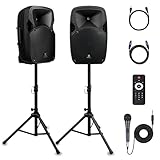 PRORECK Party 12 Powered PA System
A DJ is one of the biggest line items on any wedding budget. If someone you know can run a playlist, this is the difference between hiring one and not.
See it on Amazon →
PRORECK Party 12 Powered PA System
A DJ is one of the biggest line items on any wedding budget. If someone you know can run a playlist, this is the difference between hiring one and not.
See it on Amazon →
 Amazon Basics 46,000 BTU Patio Heater
Outdoor evening receptions live or die on this. Renting three for a night often costs more than buying two.
See it on Amazon →
Amazon Basics 46,000 BTU Patio Heater
Outdoor evening receptions live or die on this. Renting three for a night often costs more than buying two.
See it on Amazon →
 DazzlingStage Wireless Battery Uplights (6)
Battery uplights need no cable runs, so a venue that bans taped-down leads still lets you use them. The cheapest thing that changes how a room photographs.
See it on Amazon →
DazzlingStage Wireless Battery Uplights (6)
Battery uplights need no cable runs, so a venue that bans taped-down leads still lets you use them. The cheapest thing that changes how a room photographs.
See it on Amazon →
 Efavormart 8 ft Gold Hexagonal Arch
Heavy-duty metal rated to 100 lbs, and it resells afterwards, which is the part hiring one never does.
See it on Amazon →
Efavormart 8 ft Gold Hexagonal Arch
Heavy-duty metal rated to 100 lbs, and it resells afterwards, which is the part hiring one never does.
See it on Amazon →
 LED Fairy String Lights
 Eucalyptus Garland
 Wedding Planner Book
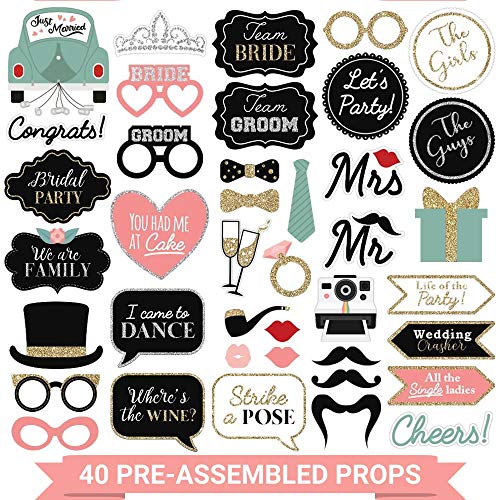 Photo Booth Props