The Decision Context
If you're comparing $20,000 and $30,000, you've likely accepted that your wedding will have professional vendors. The question isn't "can we afford vendors?" but rather "how good should those vendors be?" This is a fundamentally different decision than the $10K vs $20K comparison—you're already committed to a real wedding, now deciding how elevated it should be.
The $20K to $30K jump represents something significant: the shift from "solid, professional wedding" to "wedding that makes an impression." It's the difference between hiring competent vendors and hiring sought-after ones. Both produce beautiful results, but $30K weddings tend to show up on Pinterest boards while $20K weddings simply execute well.
That extra $10,000—50% more budget—doesn't deliver 50% more wedding. But it does open doors. Better venues become available. Photographers with waiting lists consider you. Caterers offer upgraded menus. Florists actually design rather than just arrange. Whether that matters to you is the real question.
This guide breaks down exactly where that $10,000 difference appears, how it affects your guest experience, and which choice makes sense for different types of couples. By the end, you'll have a clear framework for deciding which budget aligns with your priorities and financial situation.
Where couples actually cut the cost
Decor is the line item with the widest gap between hiring it and doing it yourself. These four move the budget most, and all of them resell afterwards.
 Efavormart 8 ft Gold Hexagonal Arch
Heavy-duty metal rated to 100 lbs, and resellable after the day, which is why it beats hiring one.
See it on Amazon →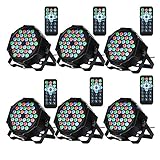 LUNSY LED Par Uplights (6 Pack)
Uplighting is the single biggest visual upgrade per dollar at any venue.
See it on Amazon → 3D White Rose Flower Wall Panels (12 Pack)
Covers a full backdrop for a fraction of a florist's install fee.
See it on Amazon → White Chiffon Arch Draping, 20 ft
The fabric that makes a bare rented arch look finished.
See it on Amazon →As an Amazon Associate we earn from qualifying purchases. Prices and availability change; check before you buy.
Direct Comparison
| Category | $20,000 Wedding | $30,000 Wedding |
|---|---|---|
| Guest Count Range | 70-90 guests | 85-110 guests |
| Per-Guest Average | $222-286 | $273-353 |
| Venue Tier | Basic event space ($3,000-5,000) | Character venue ($5,000-8,000) |
| Catering Quality | Good caterer ($5,000-6,500) | Quality caterer + upgrades ($7,000-9,000) |
| Photography | Solid professional ($2,000-2,800) | Established artist ($3,200-4,500) |
| Videography | Maybe partial ($0-1,200) | Full coverage ($2,000-3,000) |
| Florals | Professional basics ($1,200-1,800) | Designed arrangements ($2,200-3,500) |
| Entertainment | Professional DJ ($1,000-1,600) | Premium DJ or live ($1,800-2,800) |
| Overall Feel | Professionally executed | Distinctively beautiful |
Detailed Cost Breakdown by Category
Understanding exactly where your money goes at each budget level helps you make informed decisions about which areas matter most to you.
Venue Investment Comparison
At $20,000, venue budgets typically range from $3,000-5,000. This tier includes community centers, basic banquet halls, restaurant private rooms, and lower-tier event spaces. These venues are functional and appropriate, but rarely distinctive. They serve as backdrops rather than features of your wedding.
At $30,000, venue budgets expand to $5,000-8,000, opening doors to historic properties, boutique hotels, garden estates, vineyard spaces, and architecturally interesting locations. These venues photograph beautifully and create atmosphere without requiring extensive decoration. Guests notice and remember the setting.
The venue upgrade often reduces other costs. Character venues typically include better furniture, superior lighting, and more attractive existing decor. You may spend less on rentals, lighting, and decorations because the space provides visual interest on its own.
Photography and Videography
Photography represents one of the most significant quality jumps between budget tiers. At $20,000, you're looking at photographers charging $2,000-2,800—solid professionals with good portfolios who shoot competently and deliver reliable results. They capture your day accurately.
At $30,000, photography budgets of $3,200-4,500 access established artists with distinctive styles, editorial experience, and often award recognition. These photographers don't just document—they create. Their images have consistent artistic vision, sophisticated editing, and compositions that feel intentional rather than lucky.
Videography shows an even starker contrast. At $20,000, many couples skip video entirely or book partial coverage (ceremony only, highlight reel without full film). At $30,000, full cinematic coverage becomes affordable at $2,000-3,000, capturing the day in motion with professional audio, multiple cameras, and polished editing.
Catering Quality Differences
Food costs scale with both guest count and quality. At $20,000 with 80 guests, you're allocating roughly $5,000-6,500 for catering—about $65-80 per person for food and service. This buys solid food, professional service, and appropriate presentation. Guests won't complain, but they won't rave either.
At $30,000, catering budgets of $7,000-9,000 for similar guest counts mean $90-115 per person. This tier enables upgraded proteins (filet instead of chicken, premium seafood options), additional courses, craft cocktail programs, late-night snacks, and elevated presentation. Food becomes a talking point rather than just sustenance.
Floral and Decor Budgets
Florals at $20,000 typically mean $1,200-1,800 total—enough for bridal bouquet, bridesmaid bouquets, boutonnieres, a simple ceremony arrangement, and basic centerpieces. These arrangements are pretty and appropriate but generic. They fill spaces without transforming them.
At $30,000, floral budgets of $2,200-3,500 enable actual design. You might have a ceremony installation (arch, backdrop, or altar arrangement), lush centerpieces with intentional color stories, coordinated arrangements throughout the venue, and bouquets that feel cohesive with the overall aesthetic. A skilled florist at this level creates visual impact, not just flower presence.
Where the Extra $10,000 Should Go
Not all upgrades are equal. Here's the priority order for maximum impact, assuming you're moving from $20K allocation to $30K:
Photography +$1,000-1,500
Move from good professional ($2,000) to sought-after artist ($3,200-3,500). This isn't about technical skill—both shoot well. It's about creative vision, editing style, and the difference between nice photos and ones you actually hang on walls. This upgrade has the longest-lasting impact.
Venue +$2,000-3,000
Jump from functional event space ($3,500) to a venue with character ($5,500-6,500). This opens historic properties, boutique hotels, garden estates, and architectural spaces. Better venues also mean better existing infrastructure, potentially reducing rentals.
Videography +$2,000-2,500
If you're skipping video at $20K, adding it at $30K gives you the day captured in motion. More couples regret not having video than those who regret spending on it. Cinematic quality starts around $2,000-2,500.
Florals +$1,000-1,500
Move from florist basics ($1,200) to designed arrangements ($2,200-2,700). This means a cohesive floral vision—ceremony installation, lush centerpieces, coordinated bouquets—rather than "we provided flowers for each need."
Catering +$1,500-2,500
Upgrade menu options, add passed appetizers, include late-night snacks, or move to a higher-tier caterer. Food is remembered; great food creates conversation. At $30K, you can afford a menu worth talking about.
Guest Experience Comparison
Your guests experience your budget through their senses and comfort. Here's what shifts:
At $20,000
- Venue is appropriate but may lack distinctive character
- Food is good—no complaints, no raves
- Photos capture the day competently
- DJ plays the right songs, makes announcements
- Flowers are present and pretty
- Everything works; nothing stands out
At $30,000
- Venue has personality guests notice and remember
- Food is genuinely impressive—guests mention it after
- Photos feel artistic, not just documentary
- Entertainment creates energy, reads the room expertly
- Florals make visual impact, create atmosphere
- Multiple elements feel elevated above expectations
Real Couple Scenarios
These examples illustrate how different couples navigate the $20K vs $30K decision:
Scenario 1: Amanda and Chris - Staying at $20K Successfully
Amanda and Chris had access to $30,000 but chose to spend $20,000 and put $10,000 toward their house down payment. Their guest count was 65, making $20K feel comfortable at $307 per person.
Their approach: They prioritized photography ($2,800 for an established local pro), accepted a basic-but-nice venue ($3,500 country club), and skipped videography entirely. Catering was solid but not exceptional ($5,200), florals were minimal ($1,100 with some DIY supplementation), and they hired a quality DJ ($1,200).
The result: Beautiful wedding photos, happy guests, and $10,000 toward their future. They report zero regrets about the budget choice because their priorities (photos and house) both got funded appropriately.
Why it worked: Smaller guest count meant adequate per-person spending. Clear priorities (photography, future home) guided decisions. They didn't try to have a $30K wedding on $20K—they accepted trade-offs consciously.
Scenario 2: Jessica and Marcus - The Stretch to $30K
Jessica and Marcus initially budgeted $20,000 but expanded to $28,000 after touring venues and meeting vendors. Their guest count was 95, and $20K felt increasingly inadequate at $210 per person.
Their approach: The extra $8,000 went primarily to venue ($6,200 for a historic ballroom vs $4,000 for a banquet hall), photography ($3,400 vs $2,200), and videography ($2,400 added from zero). Other categories stayed similar to their original budget.
The result: A distinctively beautiful wedding in a stunning space with exceptional photos and video. Guests consistently commented on the venue and food. The couple felt the investment was worthwhile.
Why it worked: The stretch was modest (40%) and targeted specific priorities. They didn't inflate every category—they upgraded strategically. The additional spending solved real problems (inadequate per-person budget) rather than just adding luxury.
Scenario 3: Kevin and Sarah - Choosing $30K for Guest Count
Kevin and Sarah couldn't cut their guest list below 105 due to large, close families. At $20,000, that meant only $190 per person—below the threshold for professional vendors and proper food.
Their approach: They chose $30,000 specifically to maintain quality at higher volume. Per-person spending reached $285, enabling real catering ($8,500), appropriate venue ($6,000), solid photography ($3,000), and professional DJ ($1,400). They skipped videography and kept florals basic ($1,800) to stay on budget.
The result: A well-executed wedding for their large group with no obvious compromises. Food was good, venue was appropriate, photos were nice. Nothing felt under-funded or awkward.
Why it worked: They identified their non-negotiable (guest count) and funded it properly rather than trying to squeeze too many people into an inadequate budget.
Hidden Costs to Consider
Beyond the main vendor categories, additional costs affect which budget tier truly serves your needs:
Service Charges and Gratuities
Most catering quotes include service charges (18-22% typically) but not gratuities. Venue fees may exclude setup, breakdown, or overtime charges. These additions commonly add 15-25% to base quotes. A $20,000 budget with hidden fees becomes $23,000-25,000; a $30,000 budget becomes $34,500-37,500.
Day-Of Coordination
At $20,000, professional coordination often gets cut to save money. Couples rely on venues or friends to manage the timeline. This works sometimes but creates stress and risks problems. At $30,000, budget often exists for at least partial coordination ($800-1,500), reducing day-of burden significantly.
Rentals and Upgrades
Basic venue packages rarely include everything you need. Specialty chairs, upgraded linens, lounge furniture, ceremony arches, and lighting rentals add $1,000-3,000 at either budget level. At $20,000, these costs may force compromises elsewhere. At $30,000, rental budgets exist without squeezing other categories.
Invitations and Paper Goods
Quality invitation suites cost $500-1,500 depending on printing method and design complexity. Programs, place cards, menus, and signage add another $200-500. These costs exist at both budget levels but feel tighter at $20,000 when every category competes for limited funds.
The Psychology of This Decision
The $20K vs $30K comparison often triggers guilt. "We shouldn't spend $30K on one day." But consider the framing differently:
$20,000 is a significant wedding budget. You're already investing meaningfully in a single celebration. The question is whether $10,000 more—which represents a 50% increase—delivers proportional value. In many cases, it does. That $10,000 spread across 5-6 vendors adds $1,500-2,000 to each, pushing them into their next quality tier.
However, if $30,000 causes financial stress, or if that $10,000 has a more important purpose (emergency fund, debt reduction, home down payment), $20,000 still produces a beautiful wedding. This isn't about the minimum you can spend—it's about the right amount for your situation.
Time and Stress Considerations
| Factor | $20,000 Wedding | $30,000 Wedding |
|---|---|---|
| Vendor responsiveness | Good, professional | Excellent, proactive |
| Options per category | 3-5 quality choices | 8-12 quality choices |
| Booking urgency | 6-9 months comfortable | 9-12 months for best vendors |
| DIY requirements | Some (save $1-2K) | Optional (can outsource all) |
| Coordination support | Vendors manage themselves | May include planner/coordinator |
| Day-of stress | Moderate | Lower (better vendor autonomy) |
Expert Recommendations
Based on analysis of hundreds of weddings at both budget levels, here are the patterns that predict satisfaction:
Indicators You Should Stay at $20,000:
- Guest count comfortably fits under 80
- You've found vendors you genuinely like in your price range
- The $10,000 difference funds a specific, meaningful alternative (not just savings)
- You're comfortable with DIY elements and don't find them stressful
- Your venue options at $3-5K already match your aesthetic vision
- You don't have strong feelings about specific vendor prestige or style
Indicators You Should Move to $30,000:
- Guest count exceeds 85 with no realistic way to reduce
- You keep being drawn to vendors above your $20K category budgets
- Photography and videography are both significant priorities
- Venue character matters—you want a setting that photographs distinctively
- You can afford the increase without financial stress or debt
- You're particular about details and want professional execution
Warning Signs at Either Budget:
- Trying to fit 100+ guests into $20K (inadequate per-person budget)
- Spending $30K but allocating poorly (overfunding some categories, underfunding others)
- Taking on debt for the $30K budget when $20K would work
- Choosing $20K but constantly feeling deprived or disappointed during planning
Who Should Choose Which
Stay at $20,000 If:
• Guest count is 75 or under (adequate per-person budget)
• Photography matters less to you than most couples
• Your venue options at $3-5K already meet your aesthetic
• The extra $10K has a clear, meaningful alternative use
• You're comfortable with good-not-great across vendors
• Pinterest-worthy isn't your goal—a good party is
Go to $30,000 If:
• You want 85-110 guests without compromising quality
• Photography and videography are both priorities
• Venue character matters—you want a distinctive setting
• You can afford it without financial stress
• You've researched vendors and keep seeing $3K+ for your style
• You're particular about details and want them executed well
The Honest Bottom Line
A $20,000 wedding can be absolutely beautiful. Many couples at this budget level have their dream weddings. A $30,000 wedding tends to be noticeably more polished—guests feel it, photos show it, vendors deliver it.
The decision really comes down to: is that polish worth $10,000 to you? There's no wrong answer. Some couples genuinely don't care about vendor prestige and prefer to save. Others know they'll always wish they'd upgraded. Know yourself before deciding.
The worst outcome is spending $30,000 you can't afford or spending $20,000 while feeling deprived throughout planning. Honest self-assessment—about finances, priorities, and what genuinely matters to you—leads to satisfaction at either budget level.
Frequently Asked Questions
The jump from $20K to $30K shifts weddings from "competent vendors" to "quality vendors." Photography moves from good to excellent, venues upgrade from basic to character-filled, catering improves from adequate to memorable, and you can add videography or upgrade florals significantly.
At similar per-person quality, $30K supports 90-110 guests vs $20K's 70-85 guests. However, many couples keep guest count similar and upgrade vendor quality instead—you could have 80 guests at $375/person ($30K) vs $250/person ($20K).
$30,000 is slightly below the national average ($33,000-35,000 in 2024). It's enough for professional vendors across all categories, 80-100 guests, quality venue, and genuine florals—a well-rounded wedding without extreme luxury or extreme compromise.
Priority order: 1) Photography ($2,500 to $3,500 for award-caliber work), 2) Venue ($4,000 to $6,500 for character and amenities), 3) Videography ($0 to $2,000 to capture the day), 4) Florals ($1,200 to $2,500 for professional design), 5) Catering ($5,500 to $7,000 for upgraded menu).
Generally no. Starting your marriage with wedding debt creates financial stress that outlasts the memories. If $30K requires loans or credit cards, $20K is likely the wiser choice. The exception might be short-term financing you can pay off within 6-12 months without significant interest.
$25K is a reasonable middle ground. It allows better vendors than $20K while not stretching to $30K. Budget $4,000-5,500 for venue, $2,800-3,200 for photography, and proportional increases elsewhere. You'll get noticeable upgrades over $20K in 2-3 priority categories.
Warning signs include: feeling stressed about paying vendors, dipping into emergency funds, delaying other financial goals significantly, or choosing $30K because of external pressure rather than personal priorities. If the budget causes anxiety rather than excitement, reconsider the amount.
Calculate Your Ideal Budget
See exactly how $20K and $30K allocate across wedding categories.
Open Budget Calculator See $25K Budget